Smartwatch band wear and replacement checklist
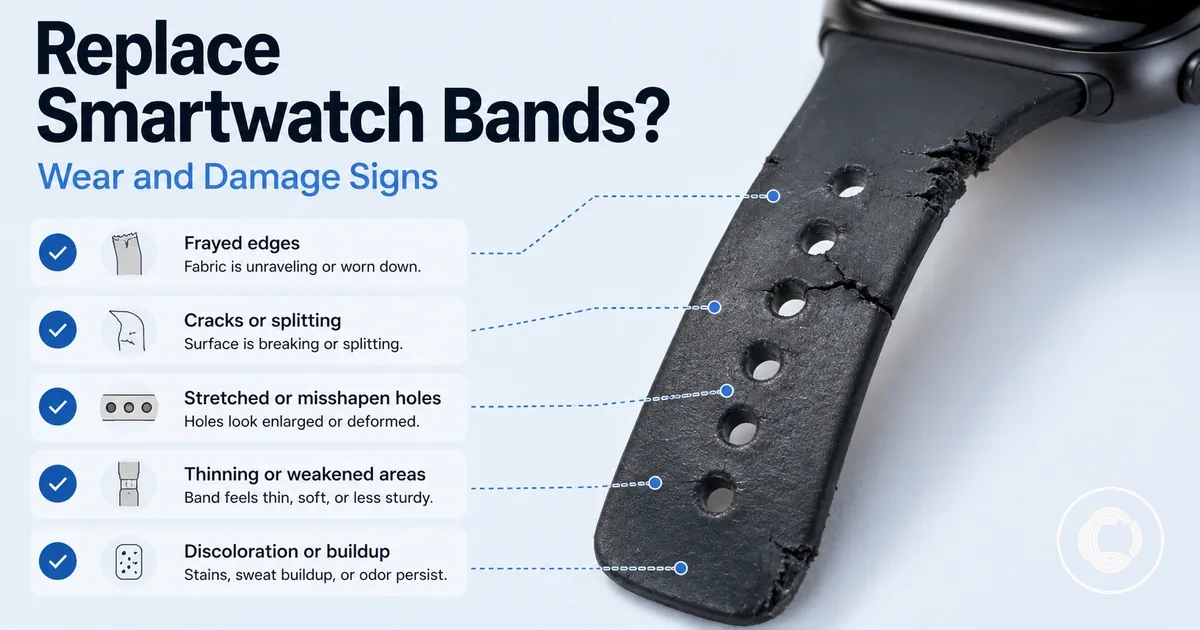
A smartwatch band should be considered for replacement when damage, stretching, cracking, odour that remains after cleaning, or a failing connector prevents a secure fit. Cosmetic marks can often be monitored, but a torn strap, broken loop, loose buckle, or unreliable pins change the decision standard to secure wear.
Smartwatch band wear includes visible damage on the strap material, fit changes from stretched holes or weakened loops, and holding-part problems around pins, buckles, clasps, and connectors. The replacement decision can vary by material, age, usage frequency, sweat exposure, cleaning history, and connector condition. This page focuses on diagnosing wear signs before choosing a replacement band, not on the band-changing steps.
Use this smartwatch band wear and replacement checklist to separate monitorable ageing from damage that may affect comfort or security. If care or minor parts cannot restore normal holding, the safer decision is to replace the damaged band before reviewing lifespan and visible-wear details.
- Torn or cracked strap: Damage at a flex point can weaken the band, so replacement is usually the safer decision when the strap no longer holds securely.
- Stretched holes or loose fit: Widened holes can make the watch slide or need repeated readjustment, so monitor minor wear and replace when secure fit is lost.
- Broken loops, pins, or connector parts: Failed holding parts can let the band separate from the watch or wrist, so replace the part or band when the hold remains unreliable.
- Odour or residue after cleaning: Persistent odour can depend on material and use history, so clean first and replace if the material still feels degraded or uncomfortable.
- Visible damage that keeps worsening: Cracking, stretching, peeling, fraying, or corrosion that continues after care is a replacement cue rather than normal cosmetic wear.
How long smartwatch bands usually last
Smartwatch band lifespan depends on material, wear frequency, cleaning habits, sweat exposure, and connector condition. How long it lasts can vary significantly between users, so there is no fixed calendar rule that applies to every smartwatch band.
Smartwatch band lifespan is the period during which a band maintains acceptable condition, comfort, and a secure fit. Different materials respond differently to moisture, friction, stretching, and repeated fastening. Daily wear patterns and care history can influence how quickly visible wear develops. How long smartwatch bands usually last is easier to assess when material and use intensity are viewed together.
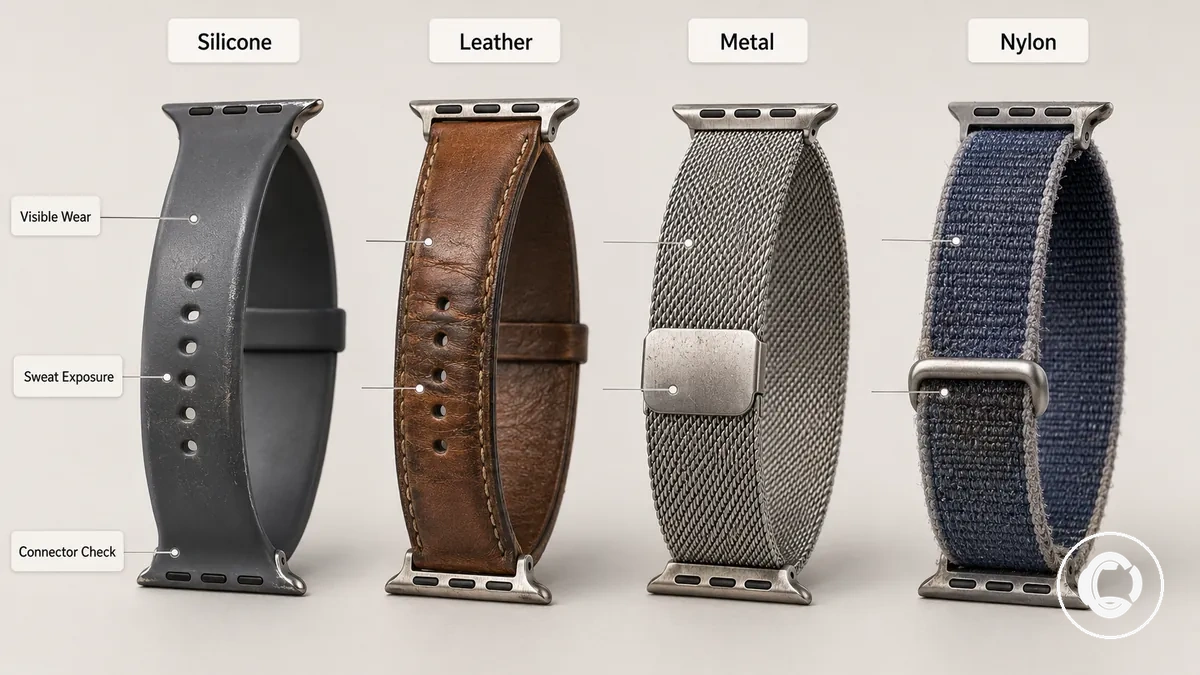
How long smartwatch bands usually last can vary by material and use condition. The table below organizes lifespan considerations by material and use intensity to highlight common wear patterns and decision cues.
| Material/use pattern | Common wear driver | Watch for | Decision cue |
|---|---|---|---|
| Silicone or rubber | Sweat exposure and repeated flexing | Cracking, stretching, persistent odour | Clean and monitor; replace if damage affects fit |
| Leather | Moisture, bending, and surface wear | Drying, splitting, shape changes | Monitor condition and replace if wear progresses |
| Metal or mesh | Friction and connector wear | Loose links, clasp issues, visible wear | Check connector condition and secure fit |
| Nylon or fabric | Dirt buildup and repeated tension | Fraying, stretching, retained odour | Clean and monitor for ongoing deterioration |
| Heavy workout use | Frequent sweat exposure and movement | Accelerated visible wear across materials | Inspect more often and assess condition regularly |
Daily wear can expose a watch strap to continuous bending and skin contact. Workout use may increase sweat exposure and cleaning needs, while occasional wear often places less stress on the material. These examples are illustrative because timing depends on condition, care history, and use patterns rather than a universal service life.
When visible wear remains minor and the smartwatch band still maintains a secure fit, monitoring condition may be appropriate. If visible wear affects comfort, fit, cleaning results, or connector condition, replacement may become the more practical decision. For broader context on materials and band types, see the smartwatch bands guide.
Wear signs that make a smartwatch band unsafe to keep wearing
A smartwatch band becomes unsafe to keep wearing when it can no longer hold the watch securely or remains against the wrist in a damaged condition. Unsafe wear begins when structural damage affects retention rather than appearance, making secure holding the threshold for continued use.
Cracks at load-bearing areas, stretched holes, loose clasps, and damaged connectors can reduce watch security because these parts help maintain a secure hold during normal movement. Sharp edges and broken holding parts may also reduce daily comfort while indicating deeper wear. Wear signs that make a smartwatch band unsafe to keep wearing are easier to assess when each sign is linked to its effect on watch retention and stability.
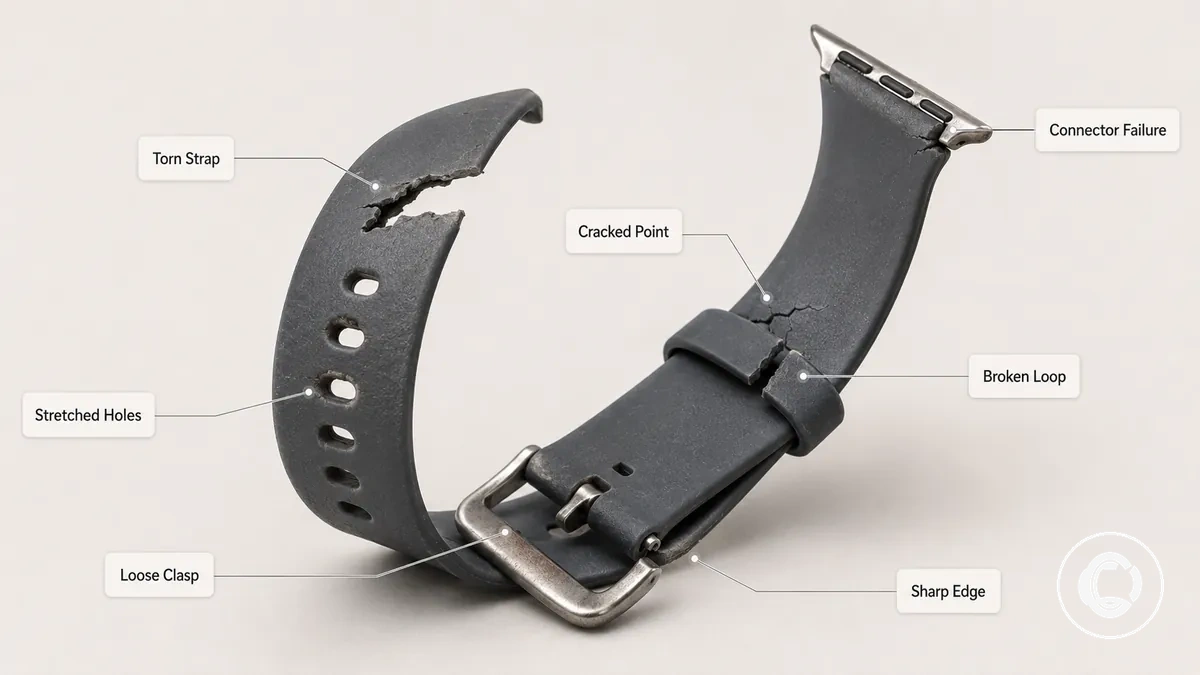
- Torn strap: The strap no longer supports normal tension, reducing secure hold; replacement is usually appropriate.
- Cracked load point: A crack near a fastening or stress area can spread with use and weaken support; replacement becomes appropriate when stability is affected.
- Stretched holes: The band may loosen during wear and create retention problems; monitor minor stretching and replace if fit becomes unreliable.
- Broken loop or loose clasp: The band may shift or release unexpectedly; replacement is appropriate when normal retention is affected.
- Sharp edge: Damaged surfaces can reduce wearing comfort and indicate material breakdown; stop wearing if the edge results from structural damage.
- Pin movement or connector failure: Attachment points no longer remain stable, affecting watch security; stop wearing until the damaged band is replaced.
During everyday wear, a damaged band may still appear usable until movement places stress on weakened parts. If a torn strap, failing connector, or unstable clasp can no longer maintain a secure hold, continued use is not advisable. That threshold is the clearest cue to stop wearing the band.
Cosmetic ageing such as light surface marks or minor colour changes does not automatically indicate unsafe wear. Functional damage is different because it affects holding strength, fit, or connector stability. When the condition is mostly cosmetic, monitoring may be sufficient, but structural damage often makes replacement the more appropriate choice.
Visible strap damage by band material
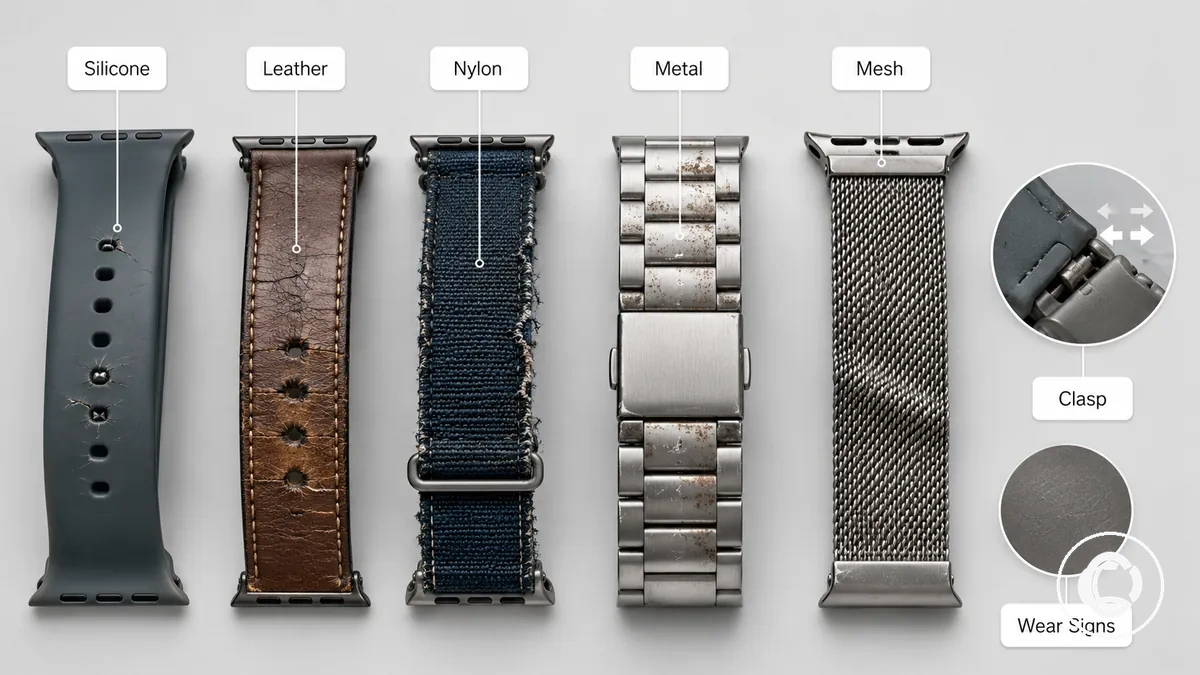
Visible strap damage by band material refers to the way different smartwatch band materials develop wear patterns that can influence replacement decisions. A band material can show different signs of deterioration because its structure, flexibility, and holding role vary. Visible strap damage by band material is easier to assess when damage patterns are compared before deciding whether a band remains suitable for continued use.
Visible strap damage by band material becomes clearer when similar wear signs are viewed across different materials. Silicone and rubber may show tearing, stretching, or persistent odour, while leather may show cracking or stretched holes. Nylon, metal, mesh, and clasp components often display different damage patterns, which is why the table below organizes material-specific replacement cues.
| Material | Common visible damage | What it may mean | Replacement cue |
|---|---|---|---|
| Silicone or rubber | Tearing, stretching, persistent odour | Material flexibility may be weakening | Damage affects fit or holding ability |
| Leather | Cracking, peeling, stretched holes | Strap condition may be deteriorating at stress points | Wear progresses beyond surface ageing |
| Nylon or fabric | Fraying, thinning, stretching | Material strength may be reduced | Wear affects retention or stability |
| Metal link bands | Corrosion, link wear, clasp play | Moving parts may no longer hold consistently | Holding function becomes unreliable |
| Mesh bands | Mesh distortion, wear marks, connector looseness | Structure may no longer maintain normal tension | Fit or holding performance declines |
| Clasp or connector parts | Movement, looseness, corrosion | Attachment security may be affected | Secure holding can no longer be maintained |
Replacement cues depend on both damage severity and the role that the material or component plays in holding the smartwatch securely. Minor wear can remain cosmetic, while structural wear may change the replacement decision. The following subsections examine these material-specific damage patterns in greater detail.
Silicone, rubber, and nylon wear signs
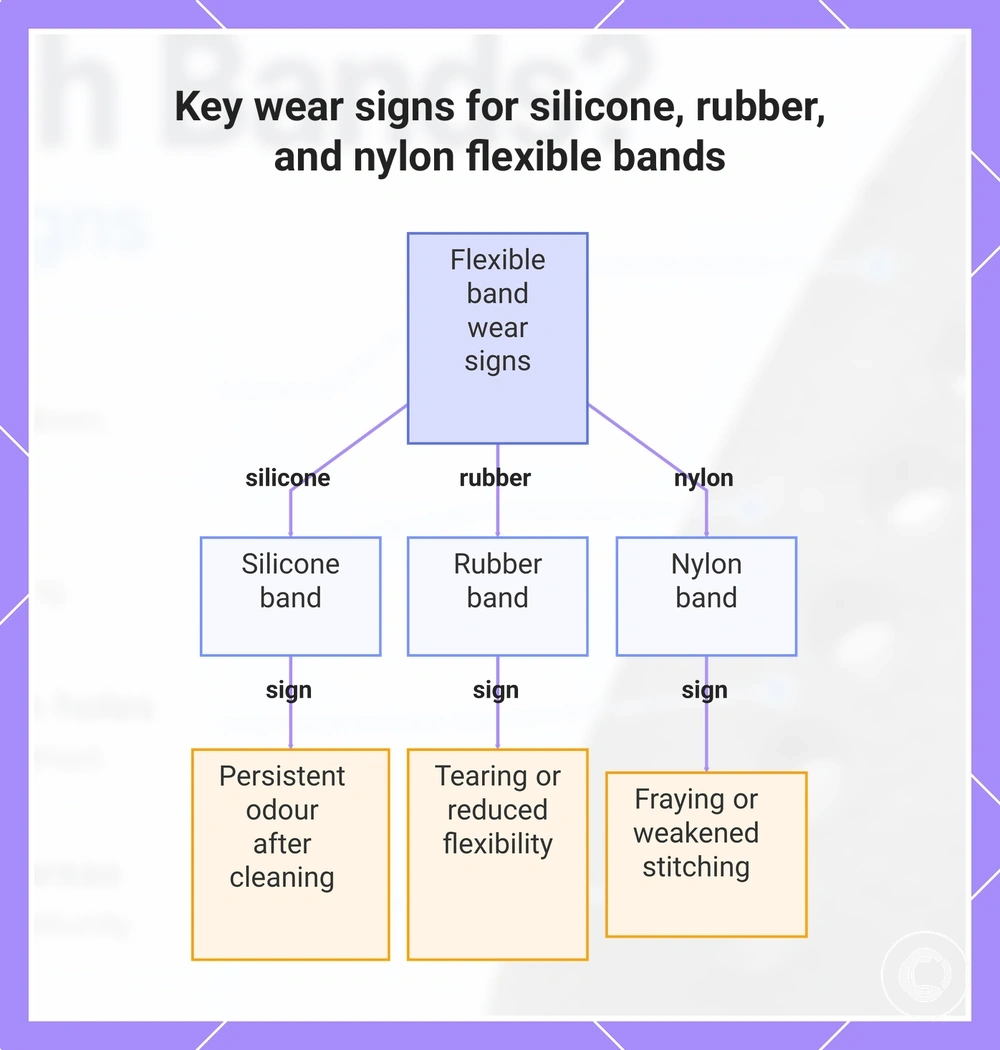
Silicone, rubber, and nylon wear signs refer to the visible changes that can develop in a flexible strap through regular use and ageing. A silicone band, rubber band, or nylon band may show texture change, stretching, persistent odour, tearing, fraying, or weakened holes. Cleanable buildup is different from material degradation because surface residue can often be removed, while degraded material may lose strength or flexibility.
Use the following checks to assess flexible-band wear signs. The condition behind each sign can help guide a clean, monitor, or replace decision.
- Silicone band: Persistent odour remains after cleaning while the strap stays structurally intact; clean first, then monitor for further changes.
- Rubber band: Tearing or reduced flexibility appears around stress points; replace when the damage affects strap integrity.
- Nylon band: Fraying or weakened stitching develops in high-wear areas; replace if the damage affects holding strength.
- Adjustment holes: Stretching creates a loose fit or reduces fastening stability; monitor minor wear and replace when holding becomes unreliable.
- Flexible strap surface: Texture change or surface grime is present without structural wear; clean and reassess before treating it as material failure.
- Flexible band material: Weakened holes, advanced fraying, or visible tearing affect retention; replacement is usually appropriate.
Discolouration, dust attraction, or surface residue does not necessarily indicate material failure. When a flexible strap remains structurally sound after cleaning, monitoring may be sufficient, but visible degradation that reduces strength or flexibility is a stronger replacement cue.
This chart shows the specific wear signs for silicone, rubber, and nylon flexible bands, helping identify the type of degradation.
Leather cracking, peeling, and stretched holes
Leather cracking, peeling, and stretched holes are visible signs that a leather strap may be progressing from surface ageing toward structural wear. A leather strap can develop cracking, stiffening, delamination, or hole distortion as moisture exposure, dryness, flex points, and care history affect the material over time. Leather strap condition is easier to assess when early dryness is separated from structural damage around flex points and buckle points.
Use the following checks to translate visible leather damage into care, monitor, or replace decisions. The severity of the condition helps determine whether the leather watch strap remains functional or shows signs of structural cracking.
- Dryness: Surface dryness or mild stiffening is present without visible cracking; conditioning may help as a care measure, then monitor strap condition.
- Surface cracking: Fine cracking appears around a flex point while the leather remains intact; monitor for progression and assess whether the cracking deepens.
- Peeling or delamination: Surface layers separate or peel away; replacement may be appropriate when the damage extends beyond surface wear.
- Stretched holes: Strap holes widen around the buckle point and create a looser fit; monitor minor stretching and replace if fastening stability declines.
- Weakened buckle points: Structural cracking, tearing, or severe wear develops near the buckle point; replace when the leather strap can no longer hold securely.
Conditioning may help address early dryness, but conditioning is not a repair for structural cracking, tearing, or advanced delamination. When a leather band shows structural cracking that weakens the strap, replacement is usually the more appropriate decision.
Metal links, mesh, clasp, and scratch damage
Metal links, mesh, clasp, and scratch damage should be assessed by separating cosmetic wear from structural damage that affects comfort or holding security. Scratches on a metal band are often cosmetic, while bent links, loose mesh, clasp play, corrosion, or sharp edges may indicate a more significant condition. The key threshold is whether the metal band continues to hold securely and wear comfortably.
Use the following contrast to distinguish cosmetic marks from structural problems before deciding whether to monitor, clean, repair, or replace a metal bracelet or mesh band.
- Scratches: Cosmetic wear on metal links or a stainless steel band; usually monitor unless structural damage is also present.
- Minor rust or surface marks: May be cleanable when limited to the surface; assess whether corrosion extends into functional components.
- Bent links: Structural deformation that can affect comfort or security; repair or replacement may be appropriate when normal movement or fit is affected.
- Loose mesh: Mesh looseness may increase snagging or reduce stability; assess whether the condition affects secure wear.
- Clasp play: Movement within the clasp can reduce holding security; repair or replacement may be appropriate when the clasp no longer holds reliably.
- Sharp edges or severe corrosion: Structural damage that affects comfort or safe wear; replacement is usually appropriate when the metal band can no longer be worn securely.
Corrosion, warped metal links, and clasp looseness become more important when they affect function rather than appearance. If a metal band shows structural wear that reduces comfort or holding security, repair or replacement is generally a more appropriate response than monitoring cosmetic marks alone.
Pins, loops, buckles, and connectors that stop holding securely
Pins, loops, buckles, and connectors matter because a worn or damaged holding part can make an otherwise usable smartwatch band insecure. When a pin, loop, buckle, clasp, or connector no longer maintains a secure connection between the band, wrist, and watch case, fall-off risk becomes the key threshold for replacement or further assessment.
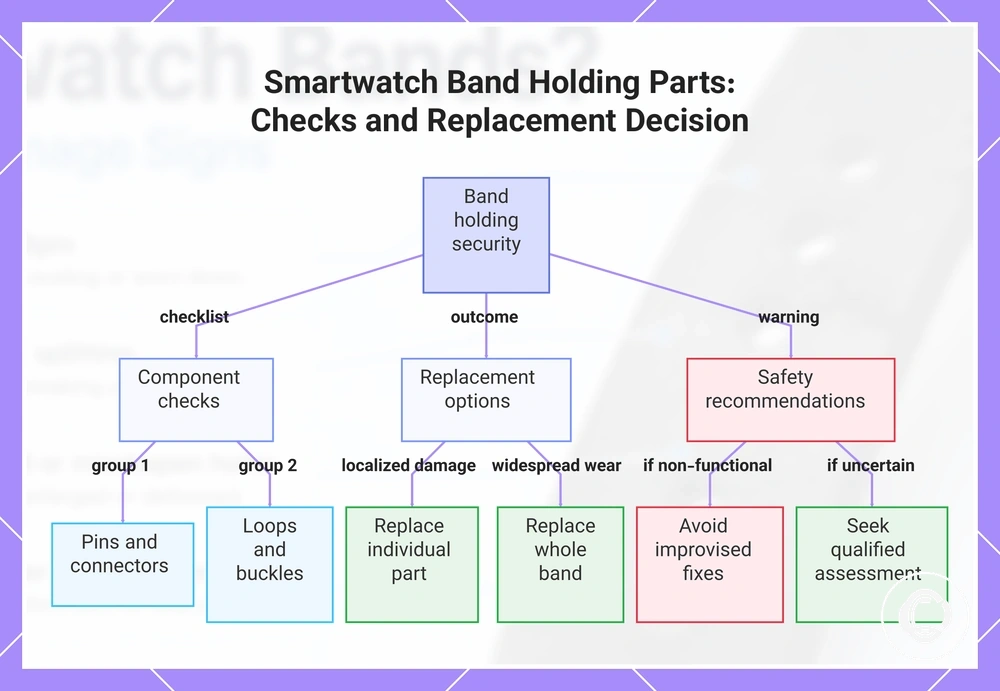
Pins, loops, buckles, clasps, connectors, quick-release pins, and spring bar components transfer holding force throughout the smartwatch band system. These holding parts help keep the watch attached during normal movement and daily wear. When a holding part shows wear, damage, or instability, the following checklist can help determine whether holding security is affected.
- Quick-release pins or spring bar: Looseness, bending, corrosion, or poor retention is visible; replace the part if it no longer holds securely.
- Loops: A broken loop or missing piece allows excess strap movement; replace the damaged loop or band when secure hold is affected.
- Buckles: A bent buckle tongue, sticking movement, or visible damage reduces fastening reliability; replace the hardware or band if fastening is no longer dependable.
- Clasp: Clasp play, looseness, or failure to remain closed affects holding security; repair or replacement may be appropriate depending on condition.
- Connectors: Corrosion, movement, breakage, or a missing piece at the connector parts increases fall-off risk; stop wearing the band if the connector no longer holds.
- Strap pins and band hardware: Repeated sticking, corrosion, or looseness may indicate broader wear; assess whether part-only replacement or whole-band replacement is the more appropriate decision.
Looseness, corrosion, bending, missing pieces, and sticking should be evaluated according to their effect on holding security rather than appearance alone. A damaged holding part may justify replacing the individual part, while widespread band hardware wear may make whole-band replacement more appropriate. Avoid improvised fixes when a holding part no longer functions as intended.
Proprietary connectors and certain quick-release pin systems may depend on model-specific connector parts. When repeated failures occur or connector fit remains uncertain, a qualified assessment can help determine the appropriate replacement path. If holding security cannot be restored with confidence, seeking assistance is the safer next step.
This chart outlines the key checks for smartwatch band holding components and the recommended replacement decisions based on damage severity.
Fit changes that come from band wear
Fit changes can happen because band wear alters how a smartwatch band holds its original position. A stretched strap, widened holes, broken loop, or loose clasp can change fit even when the original size remains the same. The key indicator is wear-based fit instability that affects a secure fit.
Fit changes that come from band wear refer to fit differences caused by visible changes in the strap or band hardware rather than wrist sizing or adjustment habits. Band wear affects how the smartwatch band maintains its position during use. Use the mini-checklist below to determine whether a fit problem is linked to observable wear.
- Stretched strap: Strap stretch creates a loose fit or increased movement; replacement may be appropriate when a secure fit can no longer be maintained.
- Widened holes: The buckle position no longer holds consistently and slipping becomes more noticeable; assess whether hole wear affects retention.
- Broken loop: Excess tail movement reduces strap control and may affect security; replace when the loop no longer performs its holding function.
- Loose clasp: The clasp no longer holds its original position and repeated readjustment becomes common; monitor minor looseness and replace if holding reliability declines.
- Repeated sliding: The band shifts during normal wear despite normal adjustment; check for visible band wear before treating it as a sizing issue.
Looseness, sliding, pinching, and repeated readjustment are most useful when evaluated alongside visible wear evidence. If these fit changes appear with a stretched strap, widened holes, or a loose clasp, band wear is a more likely cause. If fit instability occurs without visible band wear, broader fit problems may be more relevant to assess.
Widened holes can allow the buckle position to shift, while a broken loop can increase tail movement and reduce control. A loose clasp may contribute to repeated readjustment, and a stretched strap can create a persistent loose fit. When these conditions are visible, monitor minor wear and consider replacement if secure fit is affected.
Not every fit issue is caused by band wear. A loose fit or tight fit without visible damage does not automatically indicate a worn smartwatch band. When persistent fit changes occur without observable wear, a separate fit-problem check is often the more appropriate boundary assessment.
This chart shows the visible wear indicators, diagnostic steps, and exclusion criteria to determine if fit problems are due to band wear.
Band damage versus watch case damage
Band replacement is usually appropriate when the damage is on the band or a removable connector rather than on the watch itself. Band damage often affects replaceable parts, while watch case damage follows a separate path. The distinction matters because watch-side damage may require a different assessment than a simple replacement.
Band damage versus watch case damage depends on where the visible issue appears. A band, spring bar, quick-release part, or removable connector belongs to the strap-side attachment system, while the lug area, case edge, and sensor area belong to the watch body. Because damage location changes the next step, the comparison below helps separate replacement decisions from watch-side concerns.
| Damage location | What the next step usually means |
|---|---|
| Strap material | Band damage such as tearing, cracking, or stretching usually points toward band replacement. |
| Spring bar or quick-release part | A removable attachment point with a visible issue may allow part replacement when the surrounding attachment point remains intact. |
| Removable connector | Connector damage often depends on the connector type, but replacement may be possible when the issue is limited to the removable connector. |
| Lug area or case edge | Watch-side damage may require repair assessment or support because the attachment point belongs to the watch body. |
| Sensor area | A visible issue near the sensor area is usually outside normal band replacement decisions and may require separate evaluation. |
Damage location should guide the next action. A strap-side issue usually supports replacement of the affected band component. A case-side issue may require repair assessment or support depending on the condition and attachment point involved.
When a smartwatch repeatedly falls off or the attachment point shows stripped holes, the visible issue may not belong to the band alone. A spring bar, connector, lug area, or other watch-side damage can contribute to the problem even when the band appears usable. Checking damage location first can help prevent unnecessary band replacement.
When cleaning, conditioning, or small part replacement is not enough
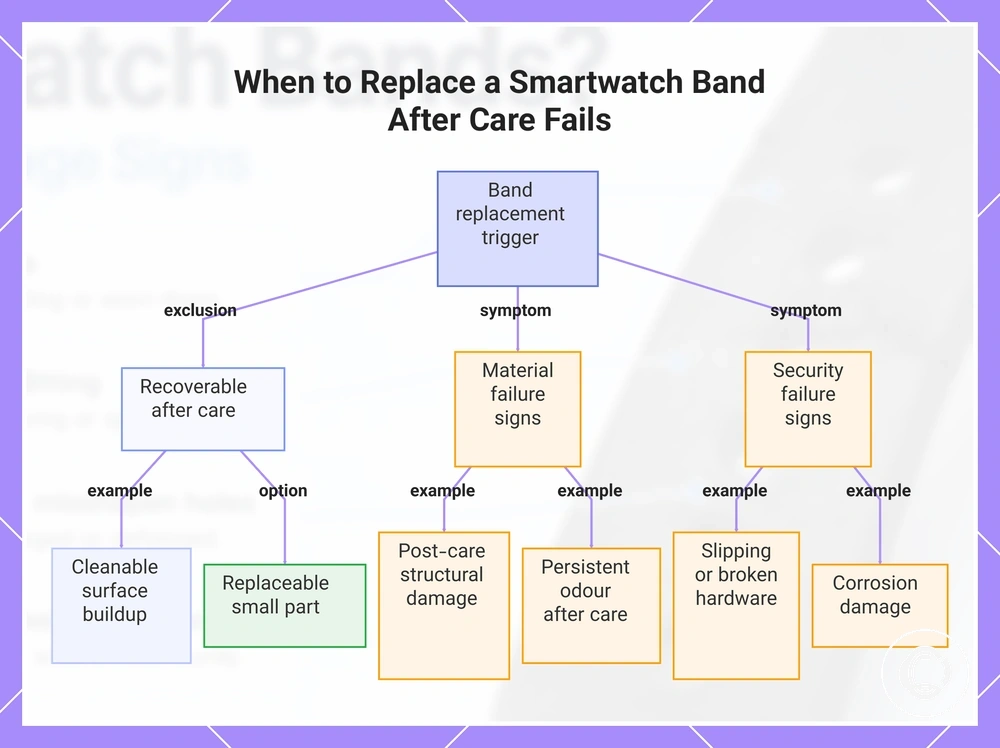
Cleaning, conditioning, or small part replacement is not enough when the smartwatch band still has persistent odour, cracks, stretching, slipping, corrosion, broken loops, loose clasps, or insecure holding after reasonable care. When the remaining condition affects comfort, material strength, or secure wear, remaining damage becomes the replacement trigger.
When cleaning, conditioning, or small part replacement is not enough, the difference is usually maintenance recovery versus material failure. Cleaning may address surface buildup or odour, conditioning may help early leather dryness, and small part replacement may resolve a worn pin, loop, or clasp. The decision ladder below separates a recoverable care issue from a band that still fails after the care attempt.
- Cleanable issue: Surface residue, mild odour, or grime improves after cleaning; monitor the band if no structural damage remains.
- Care attempt: Conditioning or cleaning has been tried, but cracks, stickiness, stretching, or persistent odour remains; reassess the material rather than repeating care indefinitely.
- Remaining sign: Slipping, corrosion, broken loops, loose clasps, or cracks still affect holding security; stop wearing if the band no longer holds securely.
- Part replacement option: A damaged pin, loop, clasp, or connector may justify small part replacement when the rest of the band remains sound.
- Whole-band replacement cue: Material failure across the strap, repeated slipping, cracked leather, sticky silicone, or corroded hardware may make replacing the band more appropriate.
Persistent odour or surface buildup may still be a maintenance issue when the material remains intact, so cleaning and odor prevention can be relevant before treating the band as failed. Cracking, slipping, corrosion, broken loops, and loose clasps become more serious when they remain after care or affect secure holding. In those cases, the decision shifts toward replacing the affected part or the whole band.
A silicone band that stays sticky after cleaning, a leather strap with cracks after conditioning, or pins with corrosion after a care attempt may show that maintenance recovery has reached its limit. A broken loop or loose clasp may be handled as a repair part only when the surrounding strap still holds securely. If the material itself has weakened or the band still fails to hold, replacing the whole band is usually the more practical decision.
This chart shows the signs that determine whether a smartwatch band should be replaced after cleaning, conditioning, or part replacement has failed.
Replacement timing checklist before choosing a new band
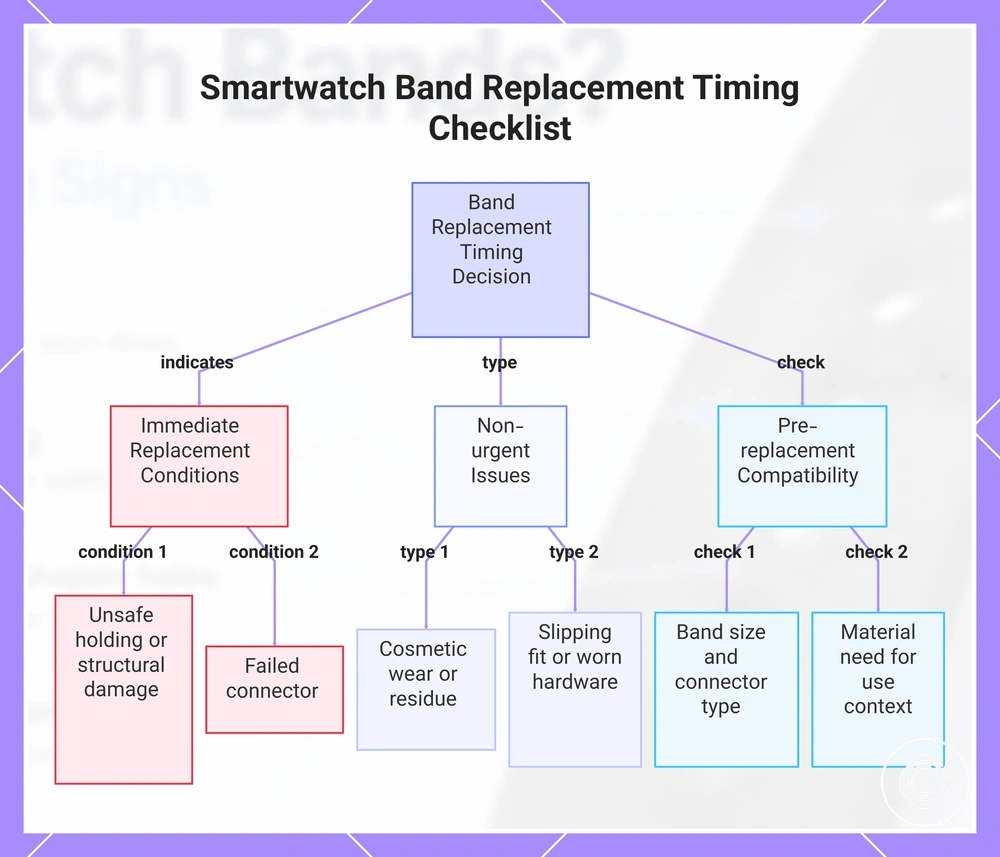
Replacement timing should be based on safety, material damage, fit stability, and whether maintenance can still restore normal use. A smartwatch band is ready for replacement when damage or failed care prevents secure, comfortable wear. Use safety, material damage, fit stability, and maintenance result as the checklist frame.
Replace now, monitor, clean, and small part replacement are separate decisions. Replace now applies when the band no longer holds securely or structural damage affects normal use. Monitoring may fit minor cosmetic wear, cleaning may fit residue or odour without damage, and small part replacement may fit worn pins or loops when the rest of the band remains sound. Replacement timing checklist before choosing a new band should compress these signals into a final decision.
Before choosing a new band, confirm band size, connector type, and material need. A compatible band depends on the watch connection and the type of strap needed for the use context. If the diagnosis points to replacement, these checks help move from damage assessment to a suitable replacement decision.
Use this final checklist before moving from diagnosis to replacement readiness: replace now when the smartwatch band has unsafe holding, severe material damage, or a failed connector; monitor when cosmetic wear is present but fit stability and secure holding remain normal; clean when odour or residue may be maintenance-related and no structural failure is visible; consider small part replacement when pins, loops, or hardware are worn but the band material still holds securely; assess fit when slipping or repeated readjustment points to wear-based instability; confirm band size, connector type, and material need before preparing a compatible band. For the next practical step after diagnosis, see how to change and replace bands.
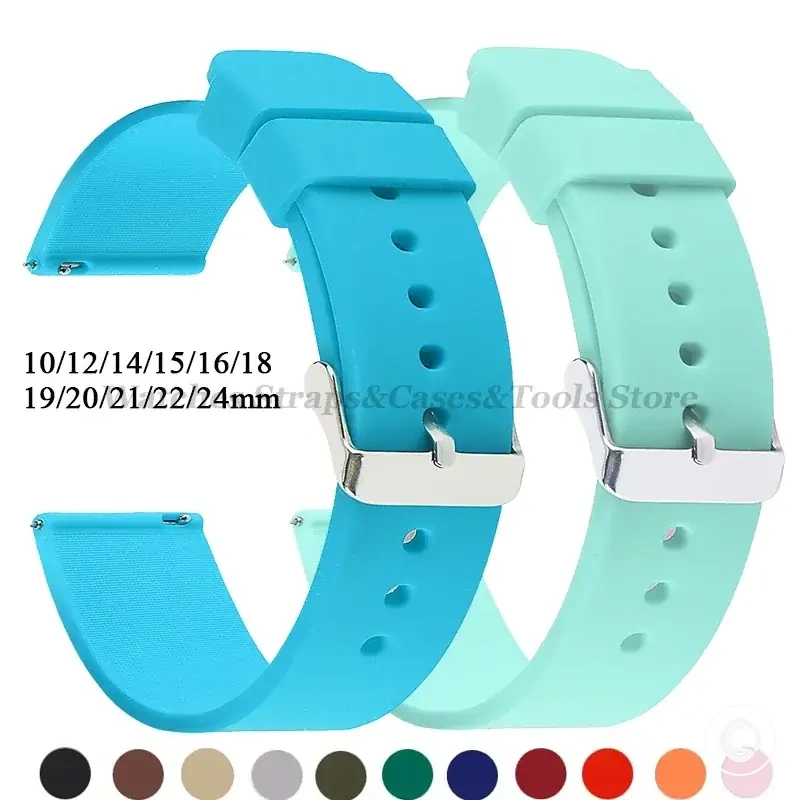
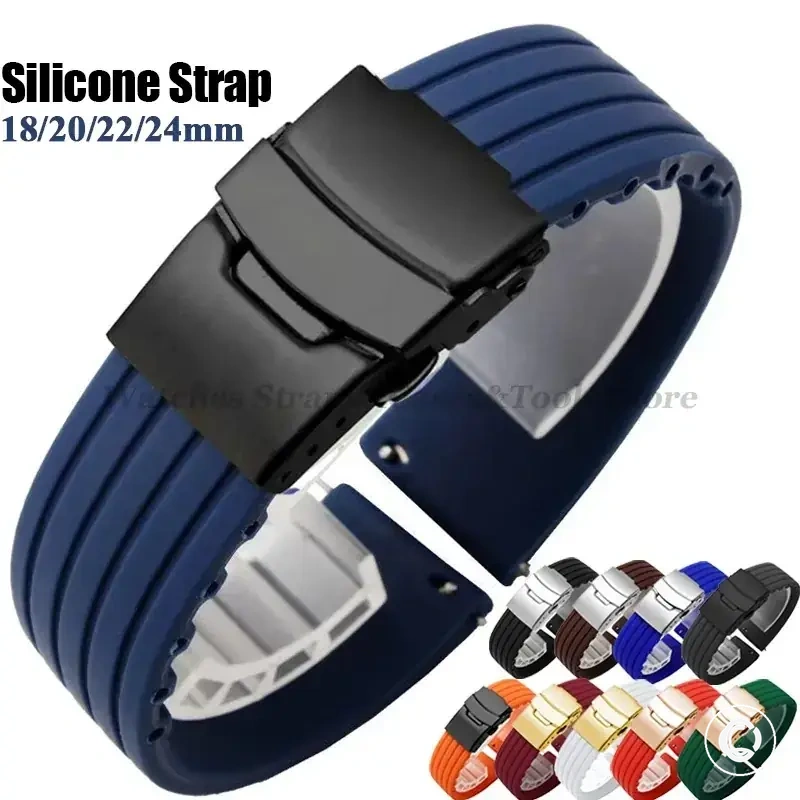
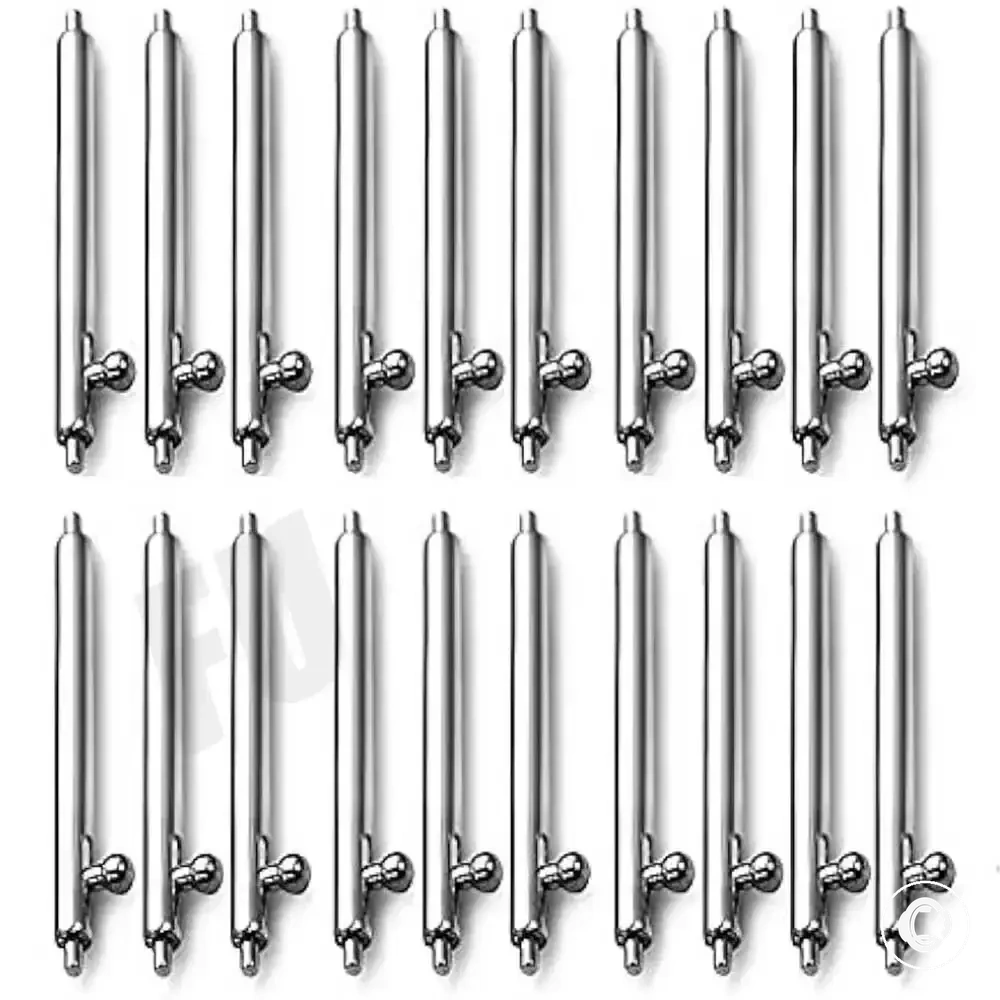
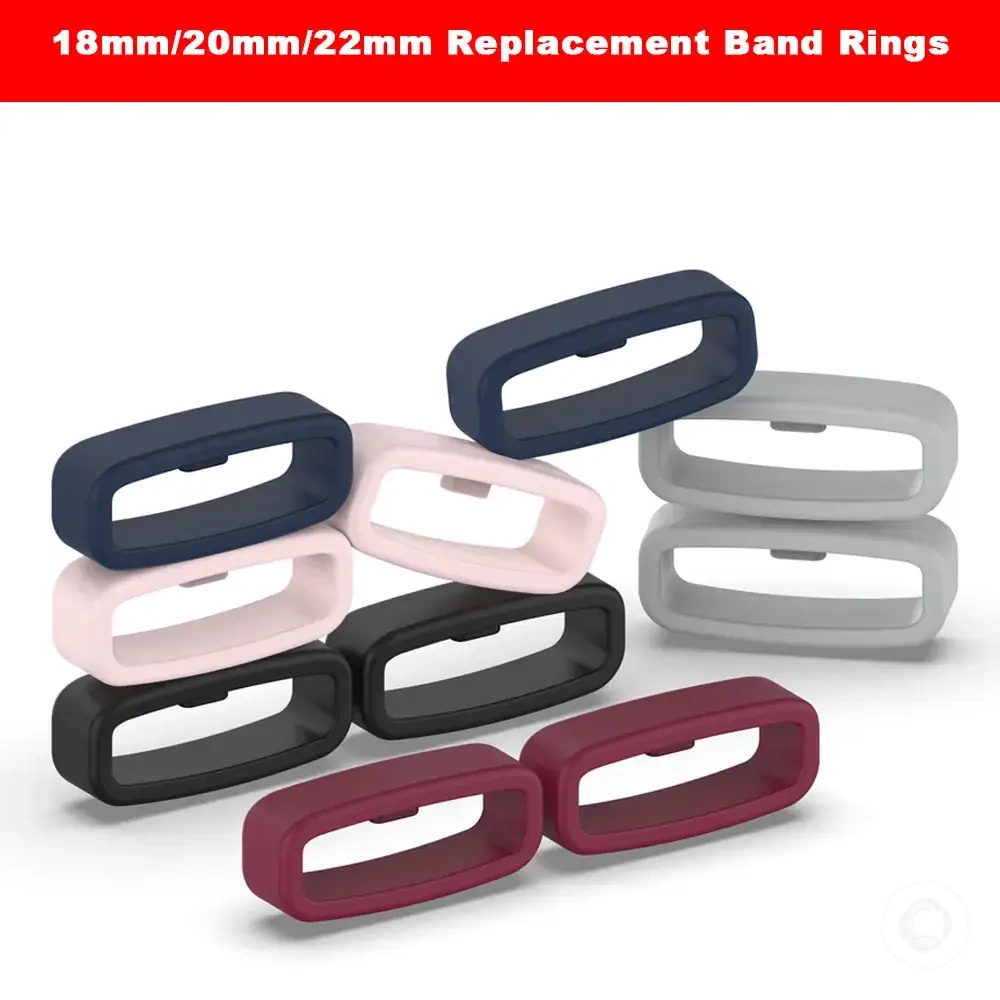
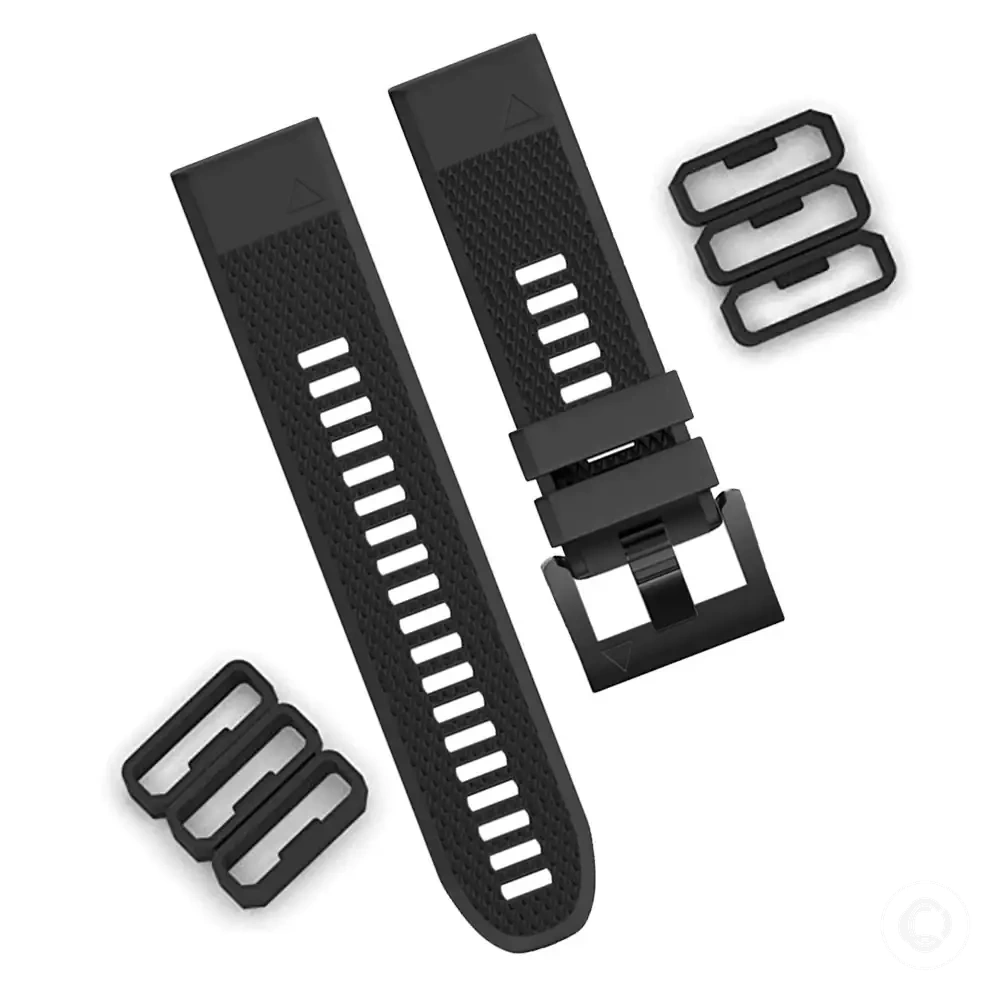
Here are product examples that may make comparison easier. Before buying, always review the compatibility criteria, essential features, and product details.
This chart shows the decision framework for when to replace a smartwatch band, covering severe damage triggers, minor issues, and final compatibility checks.