
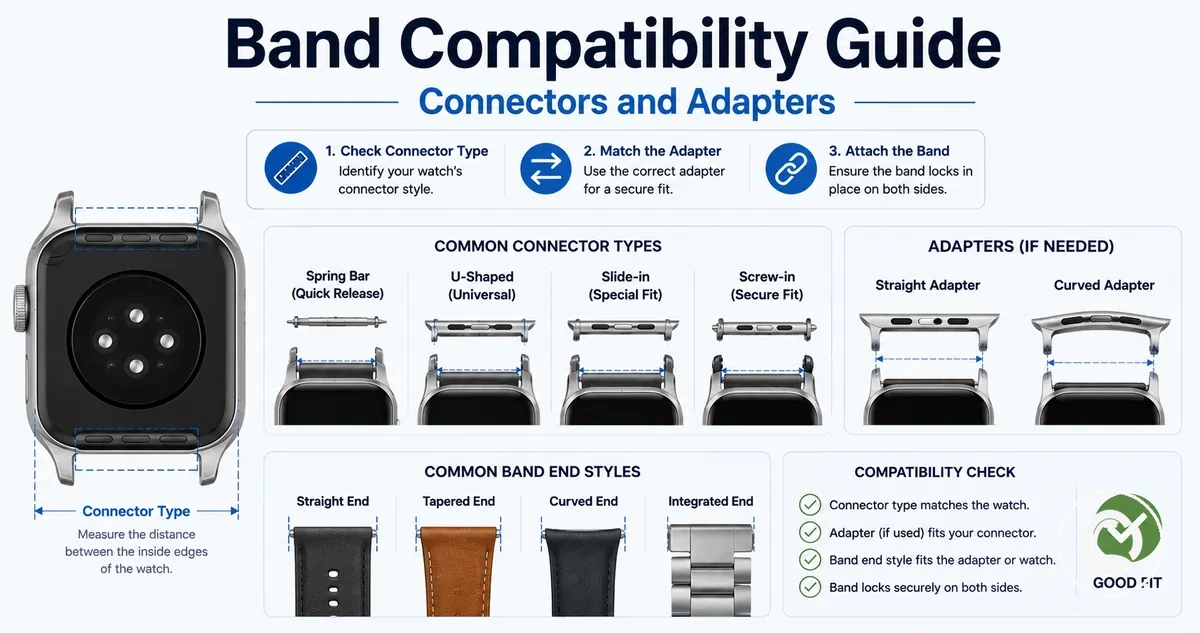
Smartwatch Band Compatibility by Connector, Lug Width, and Adapter Type
Smartwatch band compatibility depends on whether the connector system, lug width, adapter type, and watch model can work together as a conditional fit. A band may match the look of a smartwatch strap but still fail if the strap end, case size, spring bar, or proprietary connector does not suit the watch case.
A universal band can create confusion because “universal” often describes a broad strap style, not a universal match for every watch model. A quick release band may still need the correct lug width and spring bar format, while a band made for a proprietary connector may depend on a model-specific condition or a compatible adapter.
The practical decision frame is simple: check the watch model and case size first, then verify the connector system, lug width, strap end format, spring bar or quick release mechanism, and any adapter type before treating the band as compatible. This page keeps compatibility inside connector, measurement, and adapter conditions rather than treating replacement bands as automatic matches; for broader selection context, use the smartwatch bands guide.
What Smartwatch Band Compatibility Depends on
Smartwatch band compatibility is the match between the watch case connection and the strap end system that allows secure attachment. Compatibility depends on how the watch case, strap end, and connector work together rather than on appearance alone.
Smartwatch band compatibility depends on a set of fit conditions that determine whether a watch strap can attach correctly. The list below organizes the conditions behind compatibility and shows the attachment features that may affect band fit.
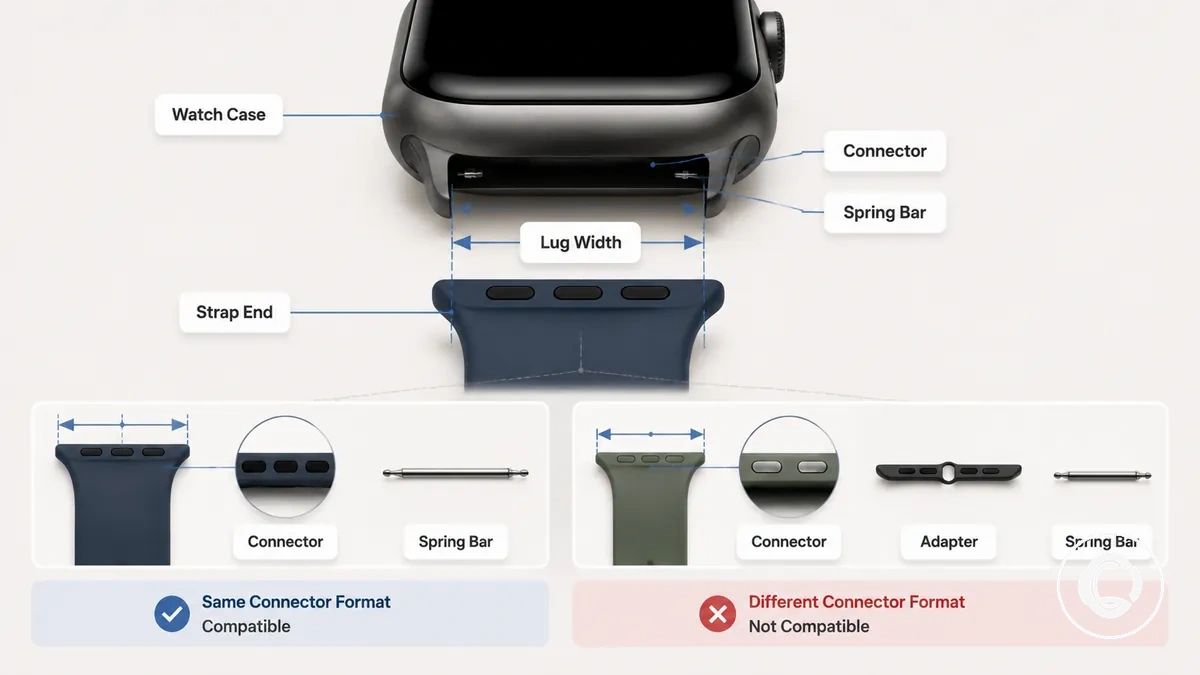
- Watch case: The watch case provides the attachment point that influences which band connection types may be used.
- Strap end and connector: The strap end must align with the connector format used by the watch case for secure attachment.
- Lug width: Lug width is a fit condition that affects whether the band end can align with the attachment area.
- Spring bar and release mechanism: A spring bar or release mechanism can affect how the band connects to the watch case.
- Adapter: An adapter may help bridge a proprietary connector and another strap connector format, but compatibility can still depend on the adapter design and connection limits.
Two bands can share a similar lug width yet attach differently when the connector format is not the same. A matching width alone may not be enough if the watch case, connector, or adapter condition differs.
Universal Smartwatch Bands and Compatibility Limits
A universal smartwatch band is only broadly compatible when the connector system, lug width, and case-side attachment conditions match. Compatibility limits remain because a matching strap width alone does not determine whether a band can attach to a watch case.
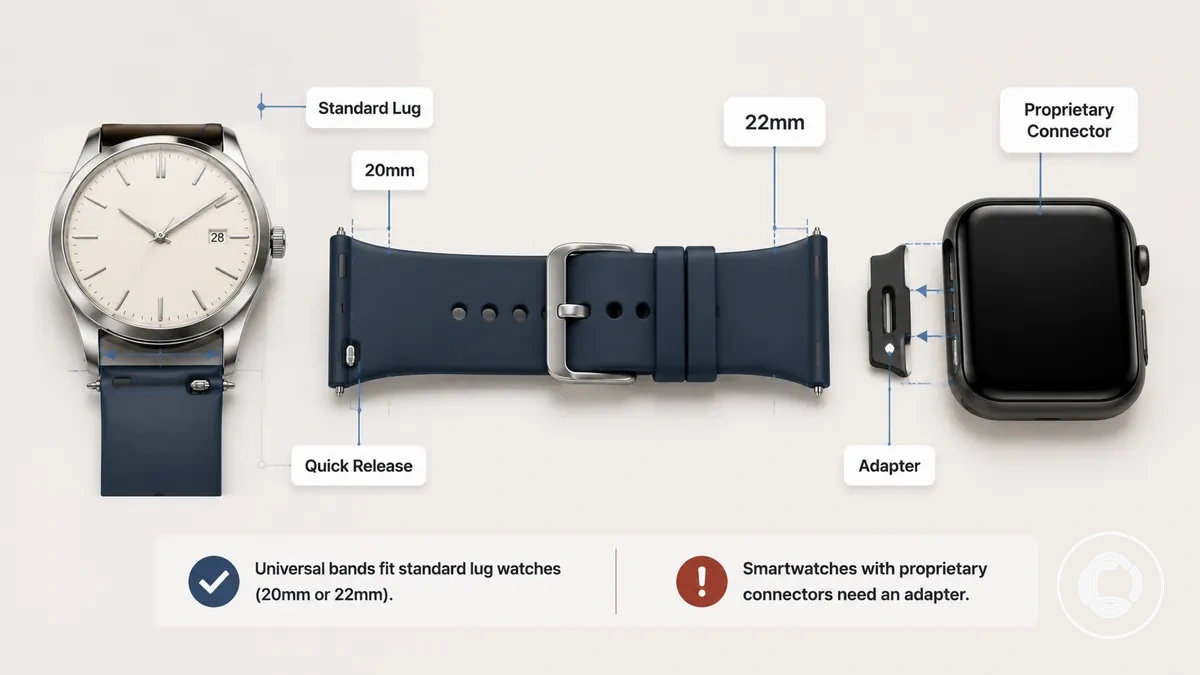
Broad fit: A universal watch band may suit a standard lug watch when the strap width, such as 20mm or 22mm, matches the attachment area and the quick release pin or spring bar format meets the fit requirement. Compatibility limit: Broad compatibility is not the same as a guaranteed fit because a proprietary connector can change the attachment method even when the strap width appears suitable.
When a smartwatch uses a proprietary connector, an adapter may be required between the watch case and an interchangeable band. In this scenario, the band can be universal on the strap side while compatibility still depends on the adapter, the case-side attachment design, and the resulting fit condition.
Lug Width, Strap Width, and Spring Bar Size
Lug width, strap width, and spring bar size are the main physical fit variables in smartwatch band compatibility. These measurements define how the strap end connects to the watch lugs and whether the attachment components can align for secure seating.
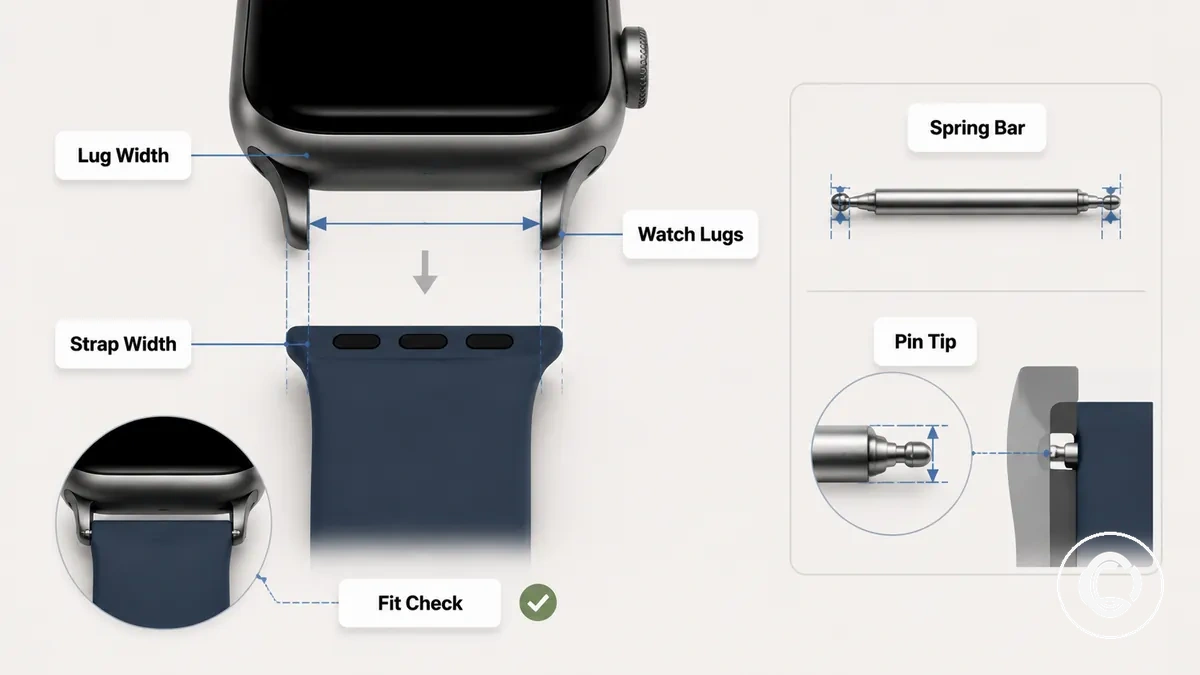
Fit depends on how the measurements relate to the band end and attachment points. Lug width and strap width are commonly measured in millimetre values such as 20mm and 22mm, while spring bar size depends on spring bar length, spring bar diameter, and pin tip fit within the watch lugs.
| Fit Variable | Related Attribute | Compatibility Condition |
|---|---|---|
| Lug width | Lug spacing in millimetre | Should correspond with the strap end size |
| Strap width | Band width at the strap end | Should align with the watch lugs |
| Spring bar size | Spring bar length, spring bar diameter, and pin tip | Should seat correctly within the attachment points |
When two bands have close measurements, connector verification is still important before treating them as compatible. A fit risk can remain when connector shape, spring bar diameter, or pin tip design differs from the attachment requirements; for broader sizing guidance, see band size and measurement.
Measuring Lug Width for the Band End
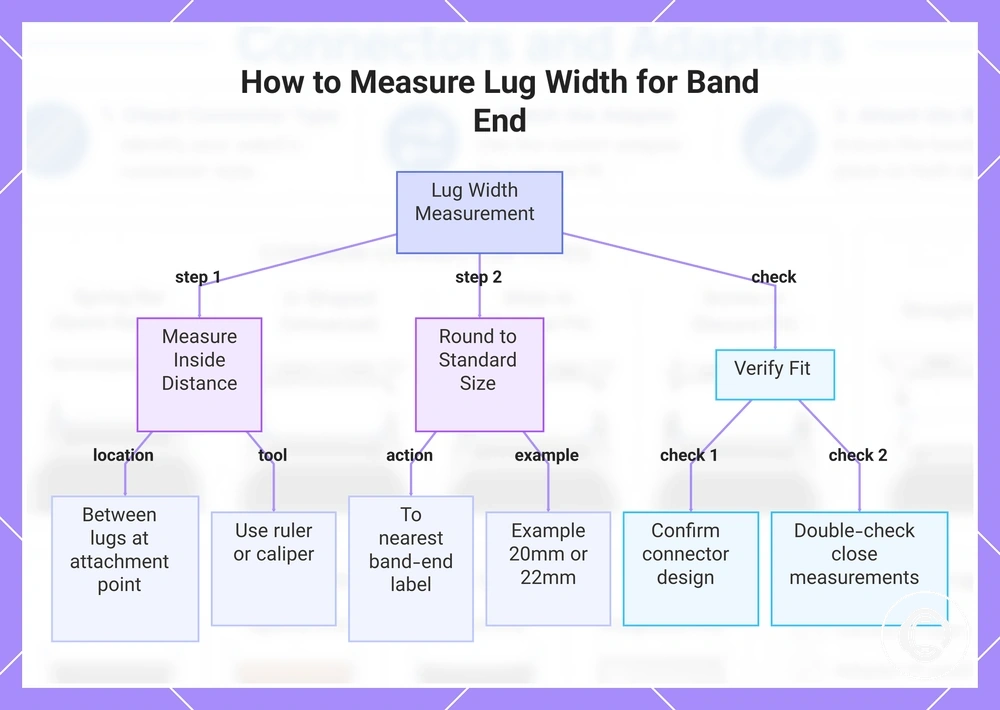
Lug width measurement starts with the inside distance between the watch lugs because that measurement identifies the required band-end width. Measure the inner gap where the strap end attaches to the watch case.
- Place a ruler or caliper between the watch lugs at the attachment point.
- Measure the inside distance from one inner lug surface to the other in millimetre units.
- Round the measurement to the nearest size label used for the band-end width, such as 20mm or 22mm when appropriate.
- Verify the connector style after measuring because band fit may still depend on the attachment design.
If a measurement falls close to another size label, confirm the lug width measurement and connector details before choosing a band. A matching band-end width can support fit, but compatibility may still depend on connector design and attachment conditions.
This chart shows the steps to measure the inside lug distance, round to standard sizes, and verify fit compatibility for selecting the correct band end width.
Spring Bar Length, Diameter, and Pin Format
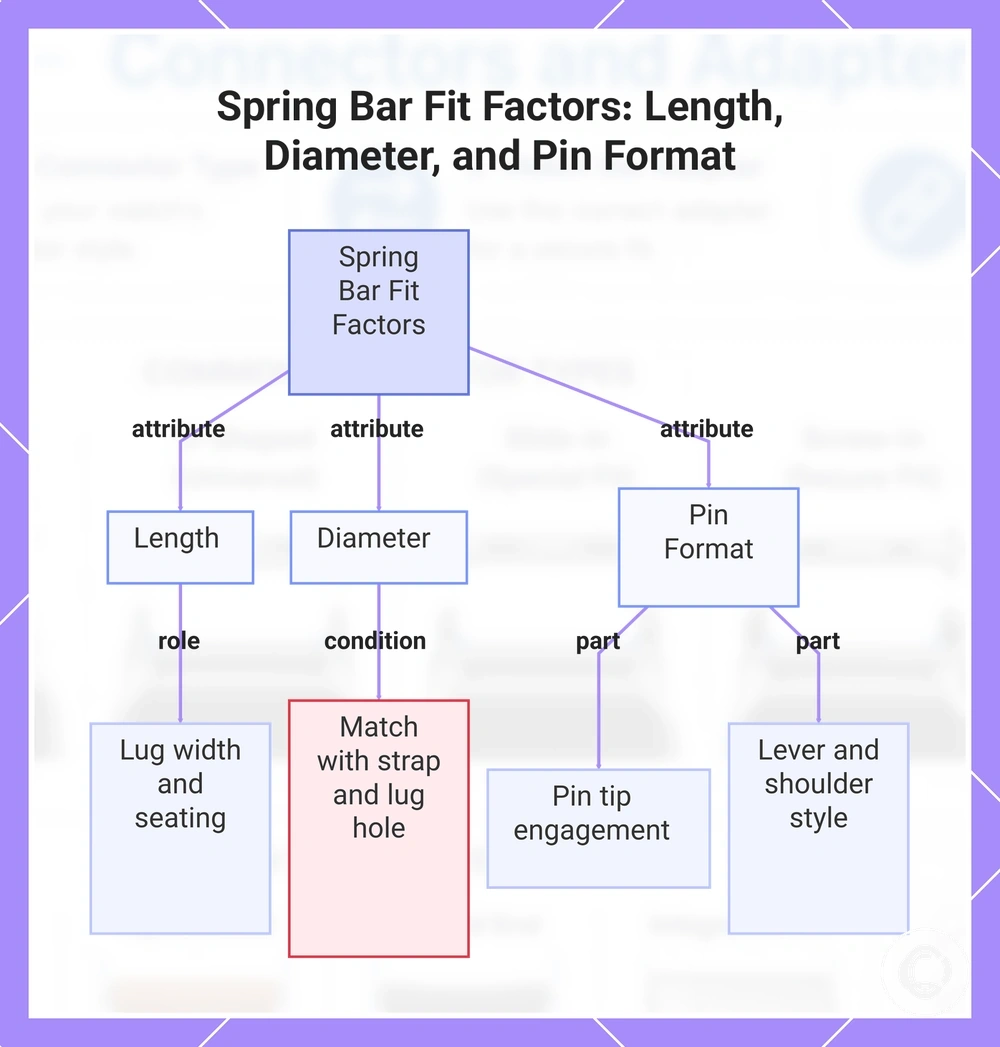
Spring bar length is the span that helps a spring bar seat across the lug width, while spring bar diameter describes the body thickness that must suit the strap end and lug hole. Spring bars are not only a length value because seating and secure attachment can also depend on diameter, pin format, and attachment details.
Pin format affects secure attachment because the pin tip, quick release lever, and shoulder style influence how the spring bar seats within the case connection. A fit outcome can change when the spring bar diameter does not suit the lug hole or when quick release lever clearance is limited by strap thickness.
- Spring bar length: Relates to lug width and affects seating across the attachment point.
- Spring bar diameter: May affect fit when the bar diameter does not match the strap end channel or lug hole.
- Pin tip: Helps determine how the spring bar engages with the lug hole.
- Quick release lever: Requires sufficient clearance for access and operation.
- Shoulder style: Can affect how the spring bar is positioned, accessed, or removed.
This chart shows the key dimensions and pin format details that affect spring bar fit and secure attachment.
Connector Systems Used by Smartwatch Bands
A connector system is the attachment architecture that determines how a strap end joins the smartwatch case through a case-side attachment. Connector systems should be evaluated separately from strap style because compatibility depends on the attachment system rather than the appearance of the band.
Standard and proprietary connector systems use different attachment methods. Standard lugs commonly use a spring bar or quick release spring bar and rely on width-based attachment conditions, while a proprietary rail, clip-in end, or similar case connector may depend on a specific lock mechanism, case size, or adapter to create a compatible connection.
| Connector System | Attachment Method | Compatibility Consideration |
|---|---|---|
| Standard lugs | Spring bar between lugs | Often depends on lug width and strap end dimensions |
| Quick release spring bar | Spring bar with integrated release mechanism | May depend on width and access around the attachment point |
| Proprietary rail | Model-specific sliding or locking connection | Usually requires a matching case-side attachment design |
| Clip-in end | Integrated clip connection | Depends on the corresponding case connector format |
| Adapter-based connection | Adapter links different connector systems | Compatibility can depend on both the adapter and watch attachment design |
Contrast: A connector system describes how the band attaches to the watch case, while a fastening style describes how the band closes on the wrist. For comparison of closures and wearable configurations, see strap styles and fastening.
Standard Lugs and Spring Bar Connectors
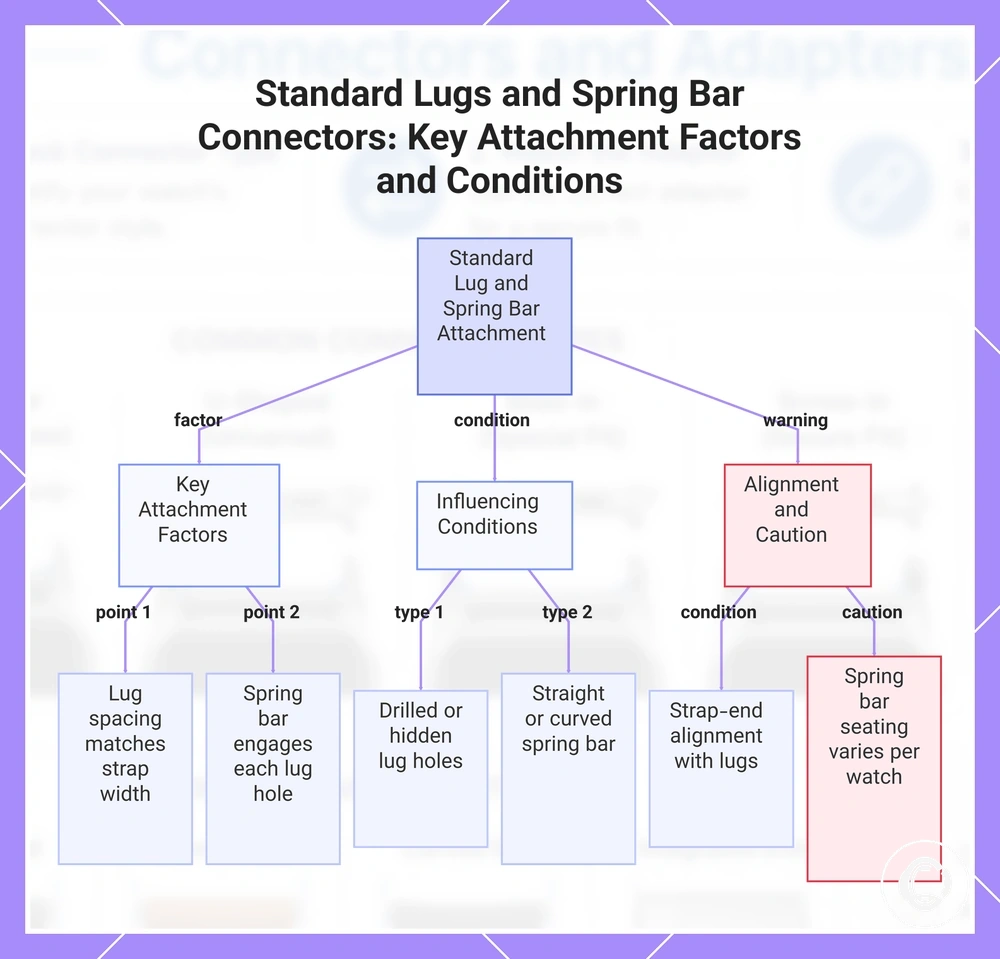
Standard lugs and spring bar connectors are attachment systems where a band connects between two watch lugs through a seated spring bar. The spring bar connector forms the connection point, while standard lugs hold the spring bar between the case attachment points.
When a band appears to match the lug spacing, secure attachment can still depend on spring bar seating and strap-end alignment. A specific spring bar may seat differently when the lug hole position changes or when a straight spring bar or curved spring bar creates a different fit condition within the watch lugs.
The lugs hold the spring bar, but the following attachment details can influence seating and alignment.
- Lug spacing: The distance between standard lugs should correspond with the strap-end width.
- Spring bar seating: Secure seating may depend on how the spring bar engages with each lug hole.
- Lug hole position: Drilled or hidden lug holes can change how the spring pin connector seats within the case.
- Bar shape: A straight spring bar and a curved spring bar may create different seating conditions depending on the strap end and case shape.
- Strap-end alignment: Secure attachment can depend on how the strap end aligns with the lug spacing and spring bar position.
A local caution is that standard-looking lugs may use different pin tip or seating conditions, so a spring bar that suits one watch may not seat the same way in another watch with a similar appearance.
This chart shows the main factors and conditions that influence secure attachment of a watch band using standard lugs and spring bar connectors.
Quick Release Bands for Standard Lug Watches
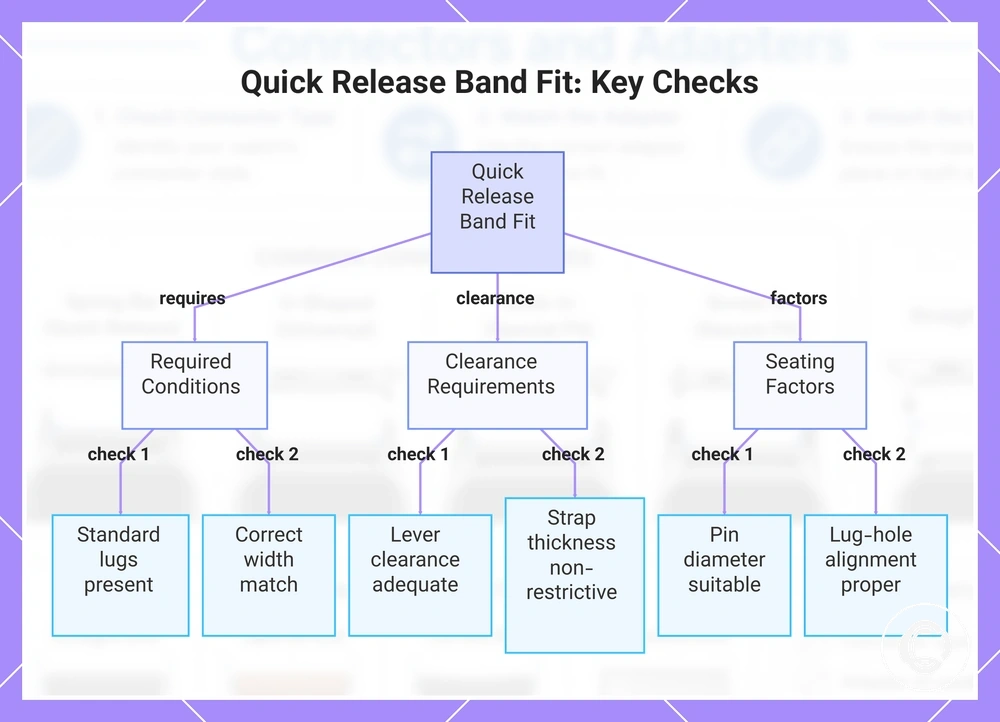
A quick release band usually requires standard lugs plus the correct width, pin diameter, and lever clearance to attach properly. A quick release band uses a quick release spring bar mechanism, but fit can still depend on whether the watch provides suitable standard lug conditions.
When lever clearance is limited, the quick release lever may be harder to access and operate. Strap thickness near the release tab can affect access to the mechanism, while spring bar length, pin diameter, and lug-hole alignment may influence how the quick release strap seats within the attachment points. Quick release is a mechanism, not a universal fit guarantee.
Quick release compatibility still depends on attachment conditions.
- Standard lugs: Confirm that the watch uses standard lugs intended for a spring bar connection.
- Width: Verify that the quick release band matches the required attachment width.
- Pin diameter: Check whether the pin diameter suits the lug hole and attachment points.
- Lever access: Ensure the quick release lever has enough clearance for movement and access.
- Strap thickness: Consider whether strap thickness near the lever may restrict access or increase attachment risk.
- Lug-hole alignment: Verify that spring bar length and lug-hole alignment support proper seating.
This chart outlines the essential checks to determine if a quick release band will fit a watch with standard lugs.
Proprietary Smartwatch Connector Systems
Proprietary connector systems are model-family attachment formats that replace standard lugs with a proprietary connector such as a rail, slot, clip, button-based attachment, or shaped strap end. A proprietary connector uses a case-side attachment design and locking mechanism that may require a matching connector shape before a band can attach correctly.
When watches belong to different case size families or model generations, attachment compatibility can still vary even when the overall design appears similar. A proprietary connector within one model family may use a different rail, slot, shaped strap end, or locking mechanism than another model family, creating a compatibility limit that depends on the specific case connector design.
Proprietary fit is case-side first and strap-side second.
- Connector shape: A rail, slot, clip, button-based attachment, or shaped strap end should correspond with the case connector design.
- Locking mechanism: The attachment method may depend on how the proprietary connector engages with the watch case.
- Case size family: Compatibility can vary when a model family uses different case size configurations.
- Model-generation differences: Attachment details may change between generations, which can affect compatibility within related product lines.
- Adapter requirement: An adapter requirement may exist when the band connector and case connector use different attachment formats.
This chart explains what proprietary smartwatch connector systems are, their key features, and the factors that affect band compatibility.

Watch Band Adapters and Replacement Connectors
Watch band adapters and replacement connectors are bridge parts used when a smartwatch case and a desired band end do not share the same attachment format. A watch band adapter can connect different attachment systems, while a replacement connector may restore attachment function when a damaged connector affects how the band attaches to the watch.
| Part Type | Primary Attribute | Compatibility Outcome |
|---|---|---|
| Watch band adapter | Adapter body connecting a case-side connector to a different strap-side width | May help bridge a connector mismatch when the attachment conditions align |
| Watch band adapter | Spring bar channel and locking mechanism | Compatibility can depend on adapter fit and attachment security |
| Replacement connector | Replacement connector for a damaged connector or damaged strap end | May restore the intended attachment format when the original connector no longer functions as intended |
An adapter is typically used when the smartwatch case and the desired band use different connection formats. A replacement connector is generally used when the existing band connector, replacement strap connector, or locking mechanism is damaged while the underlying attachment format remains suitable. The choice depends on whether the compatibility issue comes from a format mismatch or a damaged connector condition.
When a spring bar channel, strap-side width, or locking mechanism introduces multiple fit conditions, a different band format may be safer than adding a conversion connector. If adapter fit depends on too many attachment variables, a band that already matches the case-side connector can reduce compatibility uncertainty.
Adapters for Proprietary Watch Cases
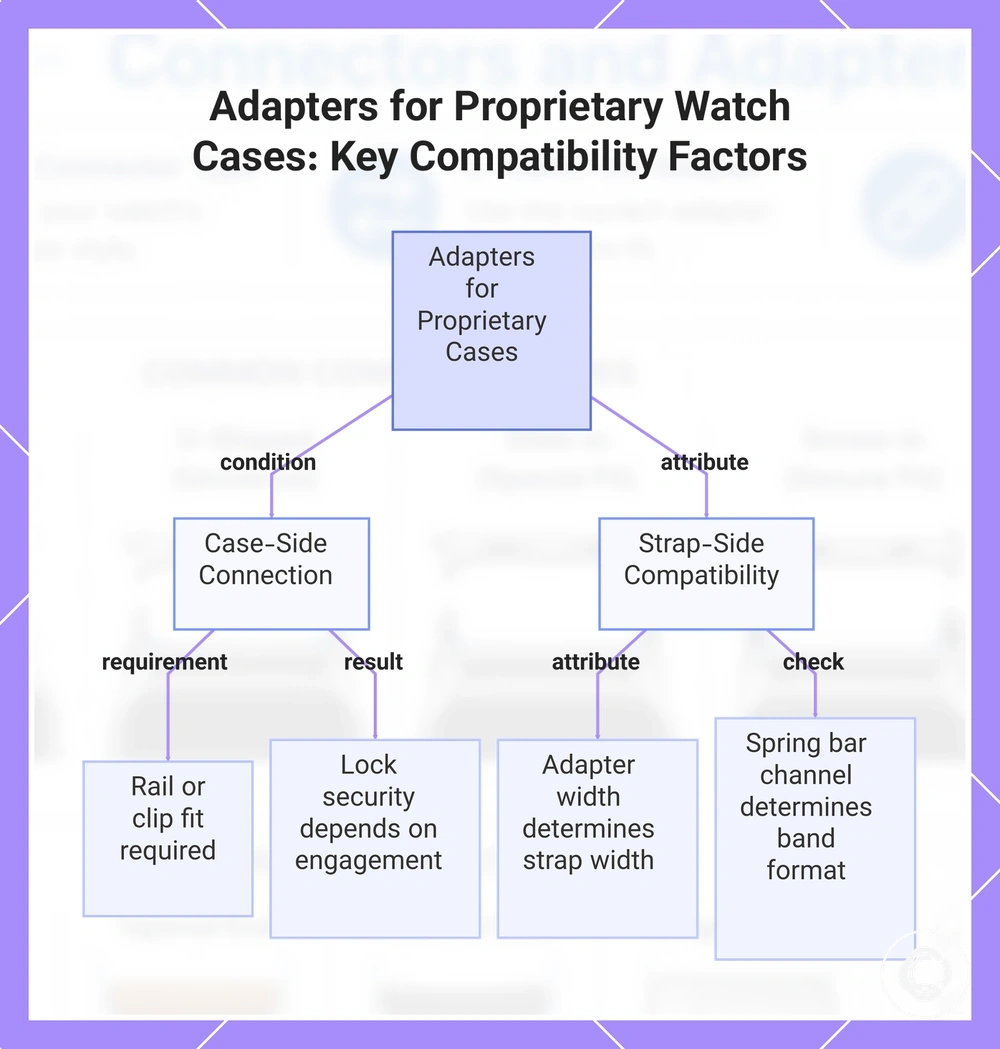
Adapters for proprietary watch cases depend on both the case-side connection and the strap-side width because the adapter serves as a conversion point between two attachment formats. An adapter for a proprietary case converts a model-specific rail or clip fit into a supported band format, while the case-side connection still determines whether the adapter may attach with adequate lock security.
- Case-side fit: Rail or clip fit should correspond with the proprietary case connection because lock security depends on correct engagement.
- Strap-side width: The adapter width determines which strap-side width may be used after the case-side conversion.
- Spring bar channel: A spring bar channel can determine whether a supported band format may attach to the adapter.
- Lock condition: Lock security may depend on adapter body material, rail alignment, clip fit, and attachment condition.
When a proprietary case accepts the adapter on the case side but the strap-side width differs from the intended band, band choice can still remain limited. A conversion adapter may provide access to another supported band format, yet the spring bar channel, strap-side width, and lock security continue to influence the final compatibility decision. The contrast is that case-side fit affects whether the adapter attaches to the watch, while strap-side width affects which bands may attach to the adapter.
This chart shows the main factors that determine whether an adapter for a proprietary watch case will attach securely and support the desired band format.
Replacement Connectors for Missing or Damaged Strap Ends
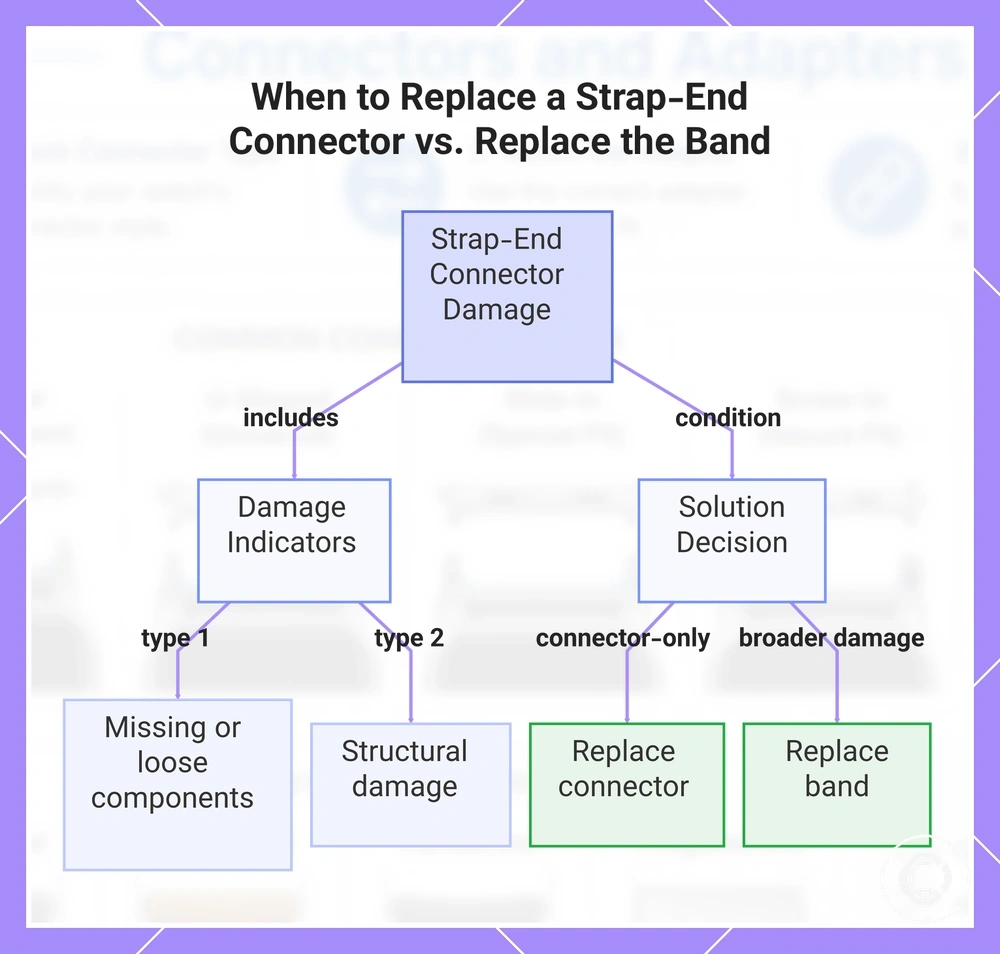
When a strap-end connector is missing, worn, bent, or no longer locking correctly, a replacement connector may help address the attachment problem more directly than treating it as a band-size mismatch. A damaged strap end can create a locking condition or attachment risk that differs from an ordinary width or fit mismatch.
- Missing spring bar: A missing spring bar can prevent the strap-end connector from remaining attached to the watch connection point.
- Loose pin: A loose pin may create movement at the connector and can contribute to locking failure symptoms.
- Damaged adapter tab: A bent or damaged adapter tab can reduce lock security and may affect connector retention.
- Worn rail: A worn rail may increase connector movement and can affect attachment stability.
- Cracked housing: A cracked housing around the strap-end connector can weaken the connector structure and may affect whether it continues locking correctly.
When the damaged strap end is limited to the connector area, a replacement connector, replacement band connector, or repair connector may be considered. If wear extends beyond the strap-end connector and affects the band structure, full band replacement may be a more suitable option. The decision depends on whether the attachment issue comes from a replaceable connector component or broader band damage that affects attachment stability.
This chart shows the common types of strap-end connector damage and the decision criteria for choosing between a replacement connector and a full band replacement.
How to Check Whether a Replacement Band Will Fit
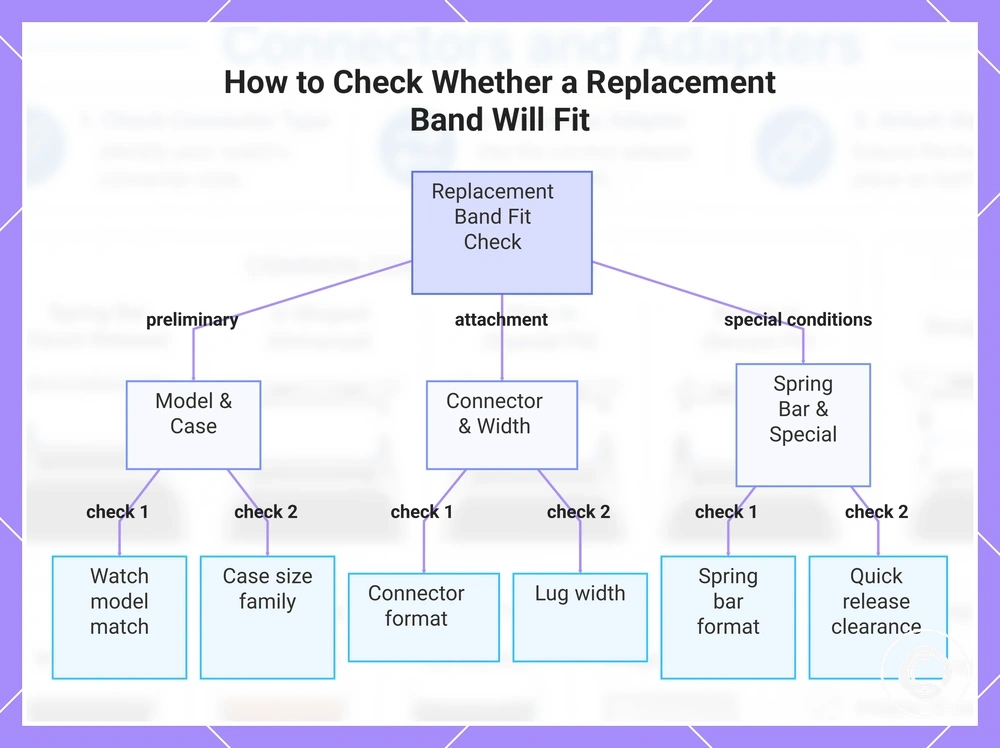
A replacement band fits only when the watch model, case size, connector format, lug width, and adapter requirement align. This fit check verifies compatibility before purchase or attachment decisions.
A compatibility problem often starts when the watch model, case-size family, or connector format is assumed instead of checked. Confirm the watch model and case size first, then compare the connector format with the band or compatibility chart when available. This helps separate a compatible band from a replacement strap that only looks similar.
- Watch model: Confirm that the replacement band matches the intended watch model or compatible model family.
- Case size: Verify that the band supports the relevant case-size family.
- Connector format: Check whether the watch uses standard lugs, a quick release system, or a proprietary connection.
- Lug width: Confirm that the lug width matches the required attachment spacing.
- Strap-end width: Verify that the strap-end width matches the watch attachment requirement.
- Spring bar format: Check whether the spring bar format suits the attachment points and connector design.
- Quick release clearance: Confirm that quick release clearance allows lever access and movement when applicable.
- Adapter requirement: Determine whether an adapter requirement exists between the watch connection and the intended band format.
The checklist should verify width, spring bar format, quick release clearance, and adapter requirement before treating the replacement band as suitable. A purchase decision carries more return risk when any attachment check depends on assumption rather than confirmed fit conditions.
For a standard-lug watch, the fit check usually depends on connector format, lug width, strap-end width, and spring bar format. For a quick release watch, quick release clearance adds another condition, while a proprietary-adapter watch may require confirmation of both the adapter requirement and the case-side connection.
Here are product examples that may make comparison easier. Before buying, always review the compatibility criteria, essential features, and product details.
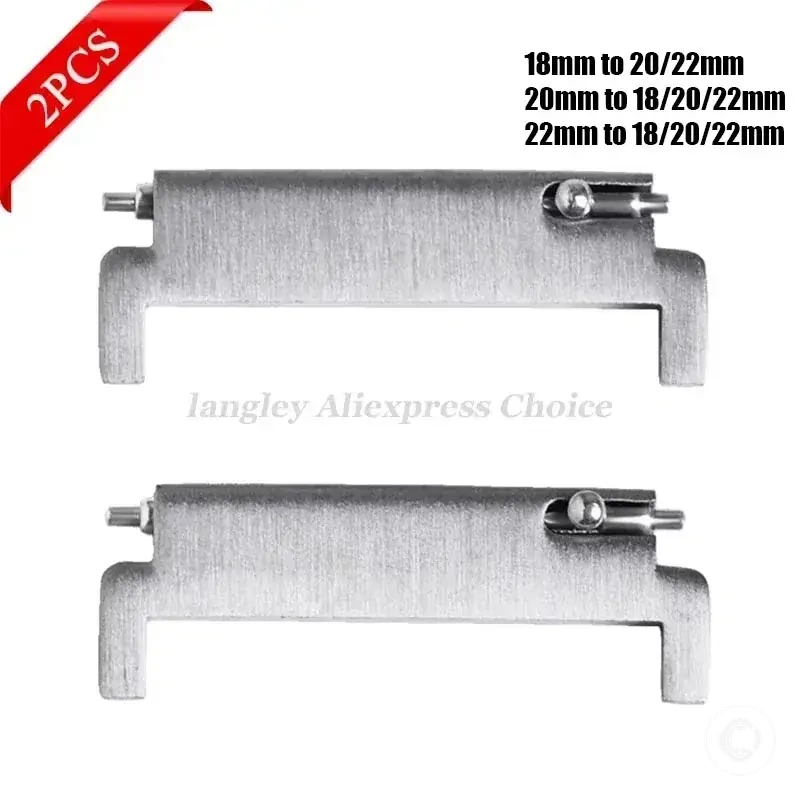
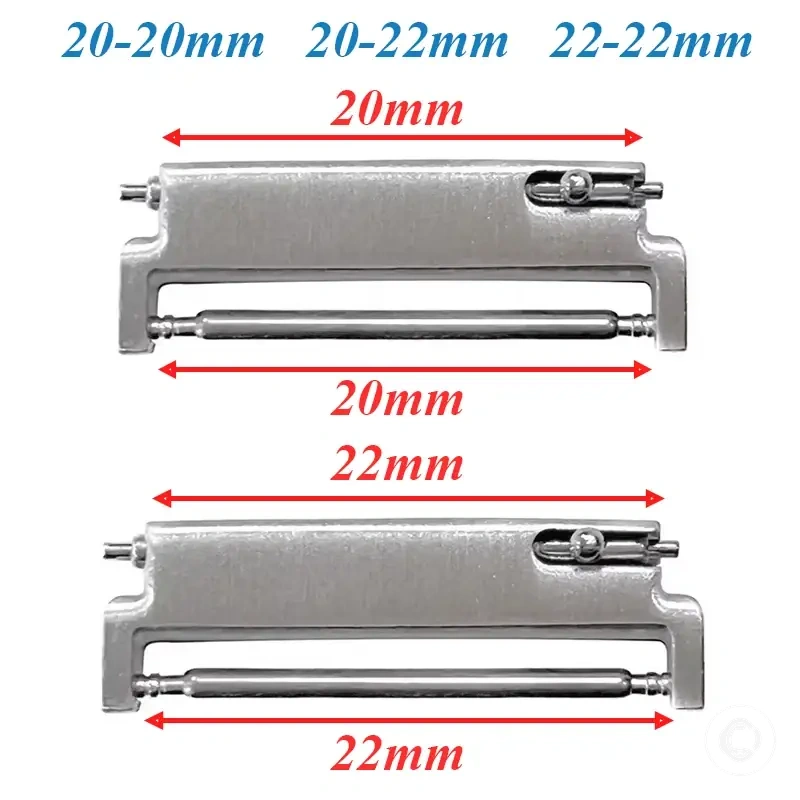
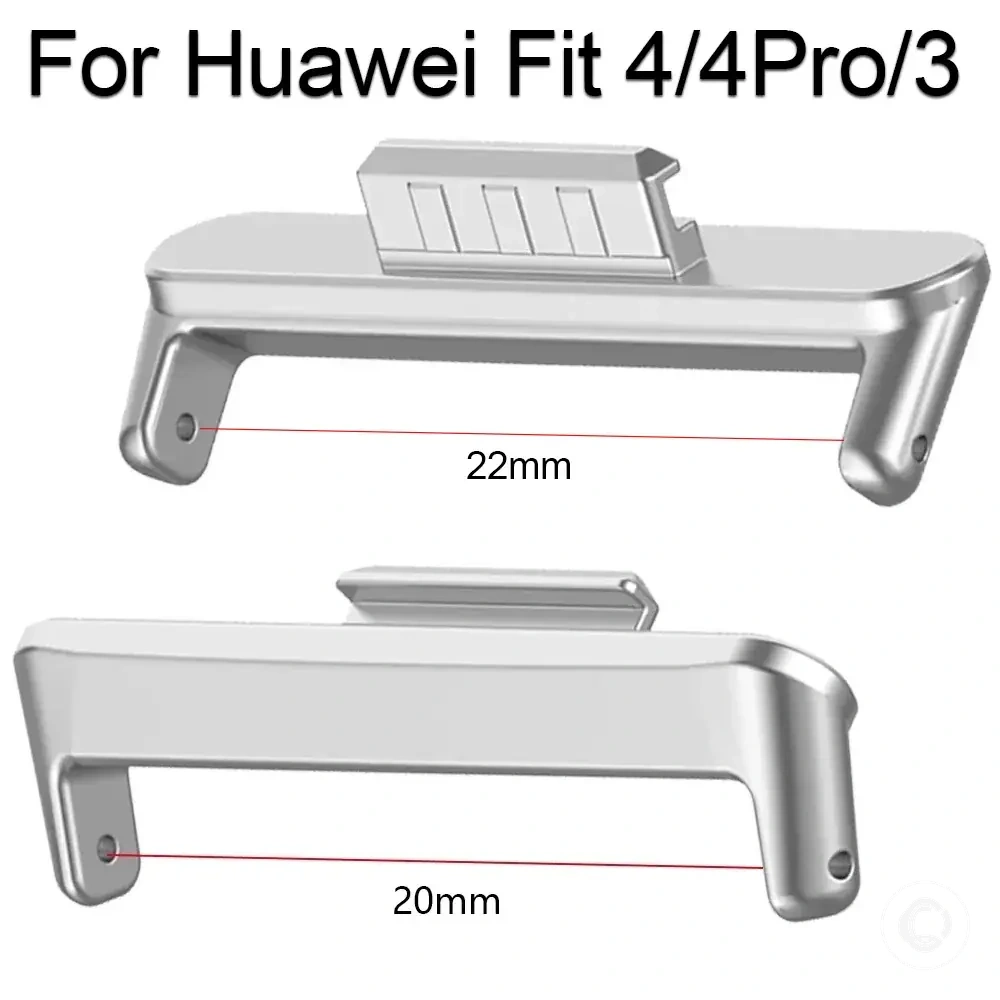
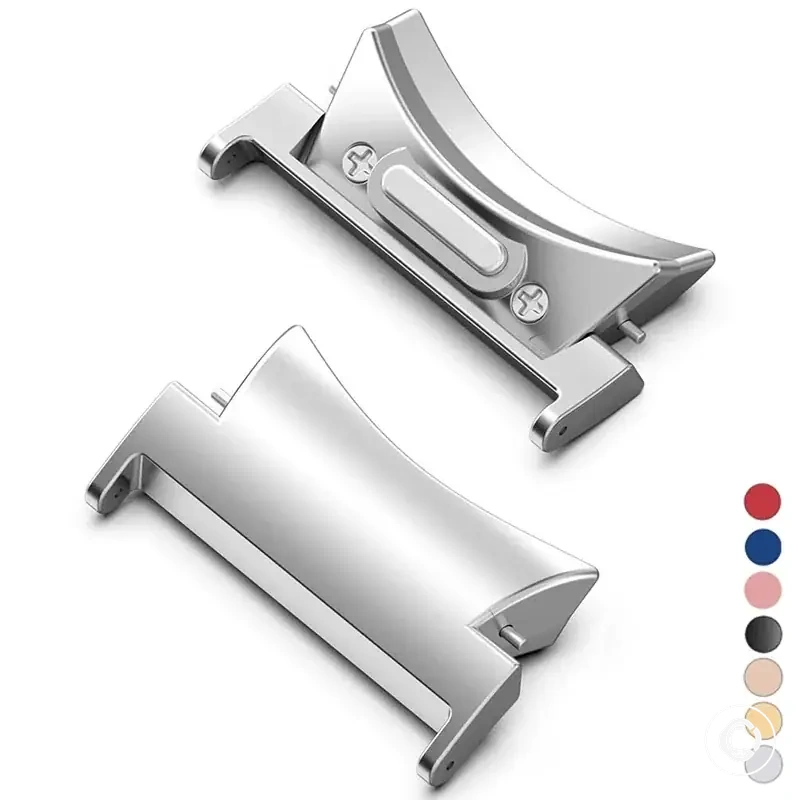
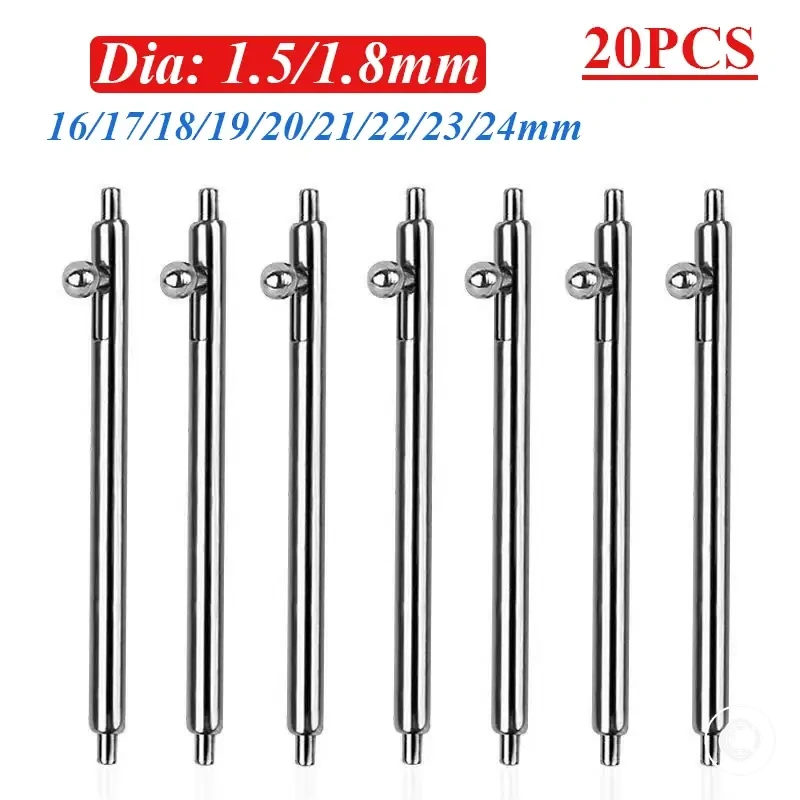
This chart shows the key checks to verify compatibility before purchasing or attaching a replacement watch band.
Watch Model, Case Size, and Compatibility Chart Checks
Watch model and case size validation should come before trusting a band label because a label can describe only part of the fit condition. A compatibility chart can help confirm whether the model family, case-size family, and connector expectation align before adapter or strap claims are used.
Model-family checks come before adapter or strap claims because similar band label wording may not cover each model generation or series exception.
- Watch model: Confirm the exact watch model before relying on a compatibility listing.
- Model generation: Check whether the model generation changes the connector or case-side fit condition.
- Case-size family: Verify that the case size belongs to the supported size family named in the compatibility chart.
- Chart wording: Treat the band label as conditional when wording depends on a listed model, case size, or compatibility chart note.
- Exception note: Watch for any series exception that limits fit for a related model family.
When a compatibility chart includes exceptions, the band label should be read as a fit signal rather than a complete confirmation. A label that appears compatible can still create fit risk when model generation, case-size family, or series exception details do not match the watch.
Connector Format and Lug Width Checks
Connector format and lug width both need to pass the fit check because attachment type and measurement verify different compatibility conditions. One check confirms the case-side attachment type, while the other verifies whether the band dimensions may align with the watch connection.
Use the attachment-type column to verify connection format and the measurement column to verify physical fit conditions.
| Attachment Type Check | Measurement Check |
|---|---|
| Confirm whether the watch uses standard lugs, a proprietary connector, or an adapter slot. | Perform a lug-width measurement and compare it with the intended strap-end width. |
| Check that the connector format matches the case-side fit requirement. | Verify that lug spacing supports the selected band width. |
| Inspect whether an adapter slot is required before band attachment. | Confirm that spring bar seating appears appropriate for the attachment points. |
| Review whether the attachment type creates a pass-or-fail compatibility condition. | Check that quick release lever access has sufficient clearance and does not introduce additional attachment risk. |
When a band appears compatible but attachment problems remain, inspect the connector format first and then verify the lug-width measurement. This approach can help identify whether the fit issue relates to attachment type, spring bar seating, or quick release lever access rather than relying on a width check alone.
Compatibility Problems After Attaching a Band
Compatibility problems after attaching a band usually come from a wrong connector, wrong size, weak spring bar seating, damaged adapter, or mismatched proprietary part. These symptoms should be checked as fit stability issues rather than general comfort concerns.
A wrong connector or wrong size can create a visible gap, loose band, or case-side mismatch after attachment. Re-check the connector format and band width before assuming the band is suitable, because a connector mismatch can look like a simple size issue. If the attachment points do not align, the safer next step may be a compatible replacement band rather than forcing the connection.
| Symptom | Likely Cause | Corrective Check |
|---|---|---|
| Looseness at the case | Wrong size or weak spring bar seating | Re-check lug width, strap-end width, and spring bar fit |
| Visible gap near the connector | Wrong connector or mismatched proprietary part | Confirm the connector format and case-side attachment requirement |
| Rattling after attachment | Loose spring bar, worn connector, or damaged adapter | Check spring bar seating, adapter condition, and connector retention |
| Lever obstruction | Blocked quick release lever or insufficient clearance | Check quick release lever access before treating the band as suitable |
| Incomplete locking | Damaged connector, damaged adapter, or proprietary part mismatch | Remove the band and inspect the lock point before continued use |
| Pin pop-out | Weak spring bar seating or unsuitable spring bar format | Replace the spring bar when the bar no longer seats reliably |
| Adapter wobble | Damaged adapter or poor adapter-to-case fit | Replace the connector or choose a band format that matches the case directly |
Weak spring bar seating can show as rattling, pin pop-out, or movement at the attachment point. A damaged adapter can create adapter wobble or incomplete locking, especially when the adapter body or locking area no longer holds the band firmly. These signs increase attachment risk because the band may not remain seated under normal movement.
When a band shows a visible gap, pin pop-out, incomplete locking, or adapter wobble, remove the band and re-check the connector before continued use. If the spring bar, connector, adapter, or proprietary part is damaged or mismatched, replacing that part or moving to a compatible replacement band may be more appropriate than repeating attachment attempts.
For a process-focused guide to removing and replacing bands without turning this section into an installation tutorial, see changing smartwatch bands.
Here are product examples that may make comparison easier. Before buying, always review the compatibility criteria, essential features, and product details.