
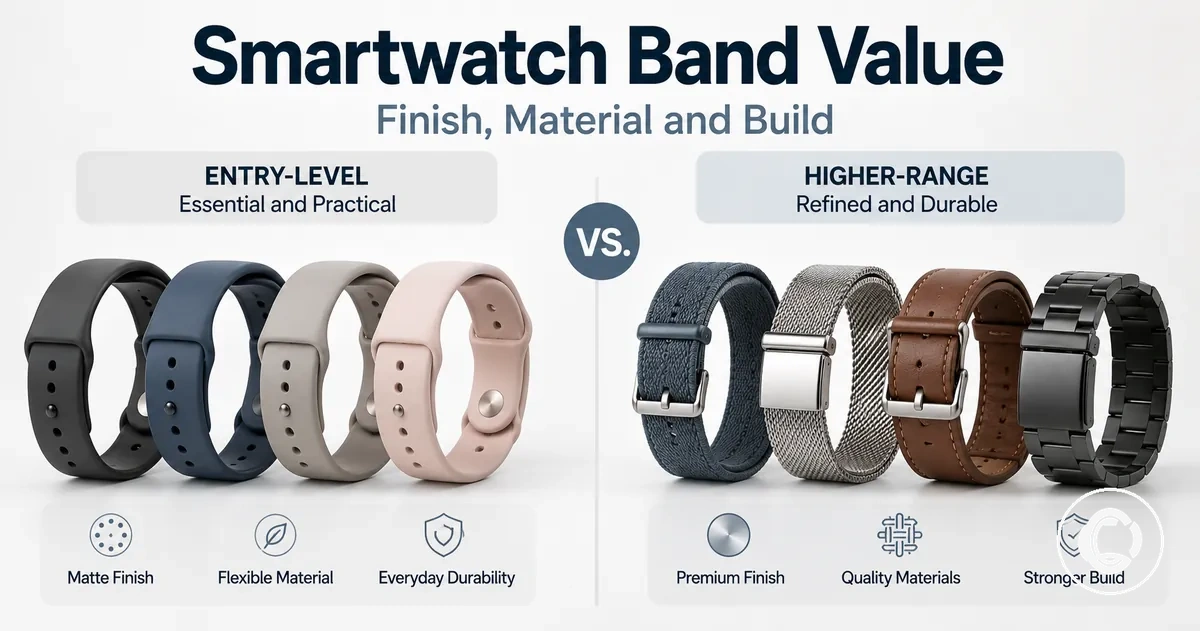
Smartwatch Band Value: Affordable vs Premium Choices Compared
Smartwatch band value depends on whether the band gives enough comfort, durability, and fit for its price. An affordable smartwatch band can be strong value, while a premium smartwatch band may be worth more only when the construction, material finish, and hardware justify the extra cost. Price, material, and build quality form the main decision frame.
For casual wear or rotation, a lower-priced watch band may be practical when the connector quality, clasp design, and finish feel secure enough for the way it will be used. For daily wear, a higher-priced band can make more sense when it offers steadier comfort consistency, cleaner edges, stronger hardware, or a material finish that may hold up better under frequent handling. Expensive can mean better construction or branding, while cheap can still be usable when fit and finish are acceptable. The value depends on how often the band will be worn.
The myth is that affordable, premium, official, and third-party labels automatically prove quality. The truth is that a label only starts the comparison; the evidence comes from connector quality, clasp security, comfort, material finish, build quality, and the realistic demands of daily wear. A price label is not the same as quality evidence.
What Smartwatch Band Value Means Beyond Price
Smartwatch band value depends on usable life, comfort, finish, hardware, and fit as much as purchase price. A low purchase price can look attractive, but usable value comes from how well the band holds comfort, appearance, and function during real wear.
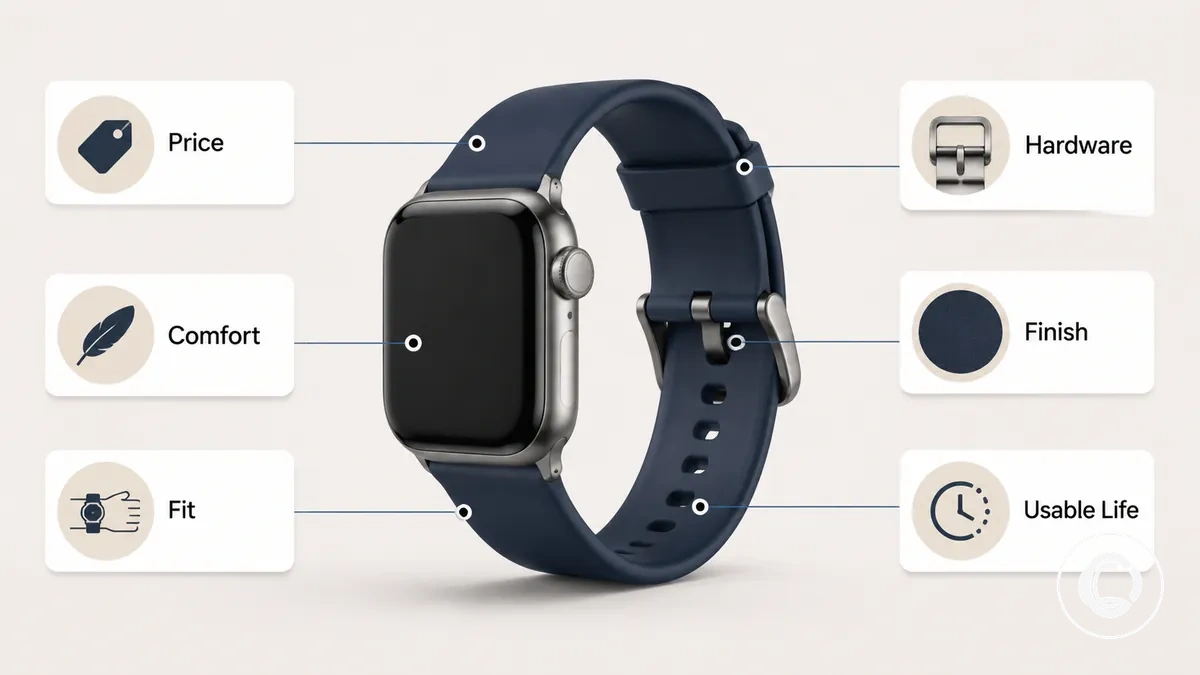
Smartwatch band value means the relationship between what the band costs and what the wearer can reasonably expect from the band over time. Price paid, quality received, and value over time are separate signals, so a band should not be judged by cost alone. The main non-price value factors are material condition, hardware quality, comfort, finish, fit, durability, appearance, and replacement frequency.
- Material condition: Clean texture, stable edges, and suitable flexibility can support comfort and delay early replacement when the band matches the wear pattern.
- Hardware quality: A secure clasp, connector, or pin can improve confidence during daily wear when the parts feel stable and fit the watch connection correctly.
- Comfort: Softness, weight, and clasp pressure can affect whether a band remains wearable through longer use.
- Finish: Surface finish and edge quality can influence appearance, skin feel, and how quickly wear signs become noticeable.
- Fit: Proper length, hole spacing, and adjustment range can make the band more useful because poor fit can reduce comfort even when the material looks good.
- Replacement frequency: A band that needs frequent replacement may become false economy if hardware, finish, or material condition weakens quickly under the intended use.
For occasional rotation, a low-price band can be good value when the fit is comfortable and the finish is acceptable for casual wear. For frequent daily wear, the same low-price band may become false economy if hardware quality, clasp pressure, or material condition leads to earlier replacement. For the broader category context, use the smartwatch bands buying guide as the next reference point.
The myth is that cheap means poor value and expensive means strong value. The truth is that each value factor needs evidence from the band itself, not from the price label alone. A low-price band used in a small rotation may be sensible, while a low-price band worn every day may cost more in practice if comfort, finish, or hardware quality fails the use case.
What Changes Between Affordable and Premium Smartwatch Bands
Affordable smartwatch bands and premium smartwatch bands usually differ in material grade, finishing, hardware tolerance, comfort consistency, and long-term wear. Not all bands follow the same pattern, but these categories are where the most noticeable quality difference tends to appear.
What Changes Between Affordable and Premium Smartwatch Bands becomes clearer when value signals are compared side by side rather than judged by labels alone. The image below highlights visible finish, hardware, and construction differences, while the table compares common value signals.
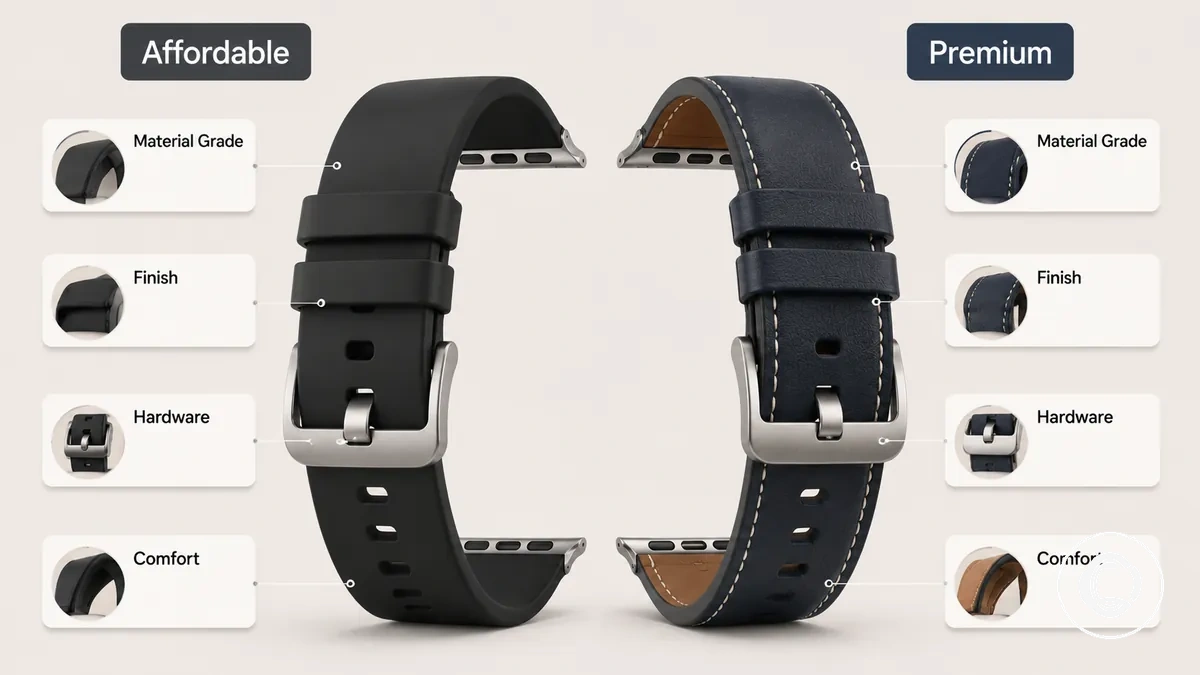
| Difference area | Affordable band signal | Premium band signal | Value implication |
|---|---|---|---|
| Material | May use simpler material grade or surface treatment | May use more refined material grade or finishing process | Can influence appearance, feel, and wear patterns |
| Finish | Visible condition may vary more between products | Finishing may appear more consistent | Can affect appearance during regular use |
| Hardware | Connector and clasp details may show wider hardware tolerance | Connector and clasp details may show tighter hardware tolerance | Can affect stability and perceived construction quality |
| Comfort | Comfort consistency may vary by fit and construction | Comfort consistency may remain steadier during daily wear | Can influence wearing experience |
| Wear | Replacement timing may depend more heavily on use conditions | Long-term wear characteristics may remain more predictable | Can affect replacement frequency over time |
A quality difference is the relationship between a band tier, a quality attribute, a visible or tactile condition, and a likely effect. Material grade, finishing quality, hardware tolerance, and comfort consistency become meaningful when they create noticeable differences in wear, appearance, stability, or replacement timing. Visible and tactile signals matter because they provide practical evidence beyond a simple label.
For rotation use, casual wear, or planned short-term replacement, affordable smartwatch bands can perform well enough when fit, finish, and connector stability match the intended use. In these situations, the difference between budget bands and higher-priced bands may be smaller than expected. The value outcome depends on wear conditions and expectations for casual or rotation use.
The myth is that premium smartwatch bands are automatically superior and affordable smartwatch bands are automatically inferior. The truth is that material grade, finishing, hardware tolerance, comfort consistency, and long-term wear should be judged through evidence rather than automatic cheap-bad or premium-good logic.
Material Grade, Finish and Wear Resistance
Material grade is the combination of material quality, coating, texture, and surface finish that influences value within the affordable-versus-premium comparison. Material Grade, Finish and Wear Resistance affect how consistently a band maintains its appearance and feel during use. Material grade and finish are closely linked to wear resistance, although ageing can vary by coating condition, texture, care, and wear patterns.
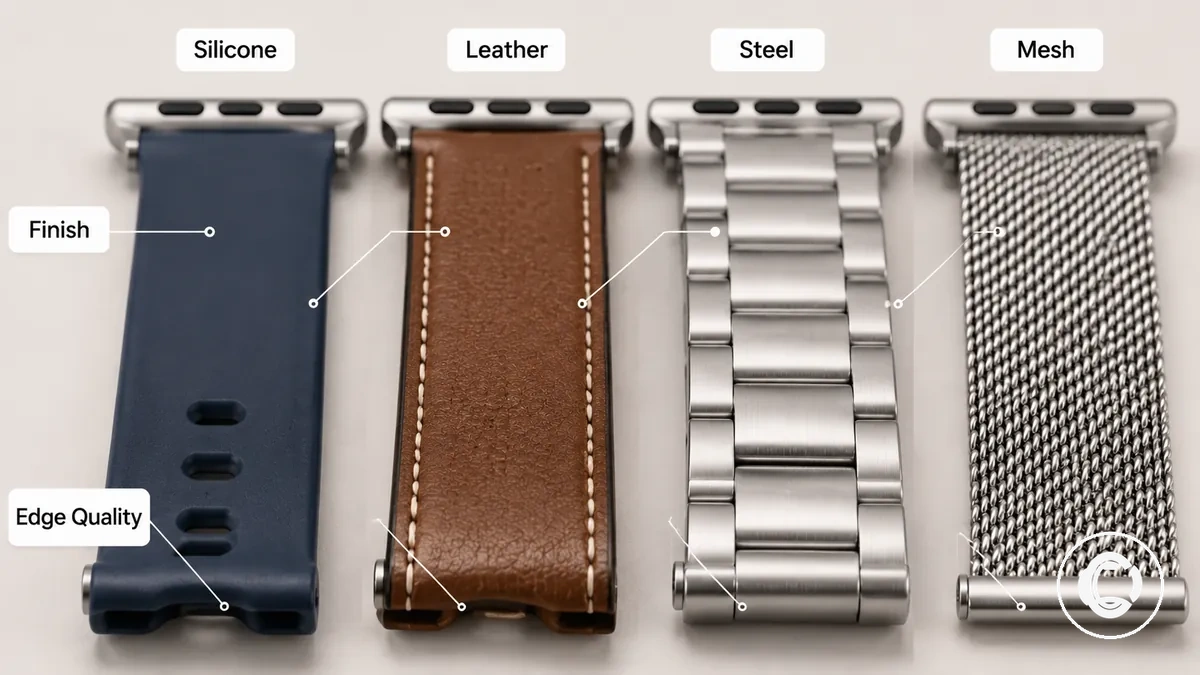
Material Grade, Finish and Wear Resistance can be assessed through visible finish signals and wear conditions. The table below organizes material signals that may influence long-term value.
| Material | Finish signal | Wear condition | Value implication |
|---|---|---|---|
| Silicone | Even texture and consistent coating appearance | May show discoloration, cracking, or surface wear over time | Finish consistency can support perceived material quality |
| Leather | Uniform surface finish and edge treatment | May develop patina, stiffness, or edge wear with ageing | Surface condition can influence long-term appearance |
| Stainless steel | Consistent brushing or polishing | May show scratching or finish wear during use | Finish quality can affect appearance retention |
| Mesh | Uniform weave, texture, and coating condition | May show deformation or surface wear depending on use | Construction consistency can influence perceived value |
Check finish consistency, edge quality, texture uniformity, and coating condition before focusing on material labels. Early wear signs such as uneven discoloration, rough edges, patina changes, scratching, deformation, or coating irregularities provide useful inspection cues. For a broader comparison of material quality differences, review how material characteristics vary across smartwatch band types.
Stitching, Edges and Hardware Quality
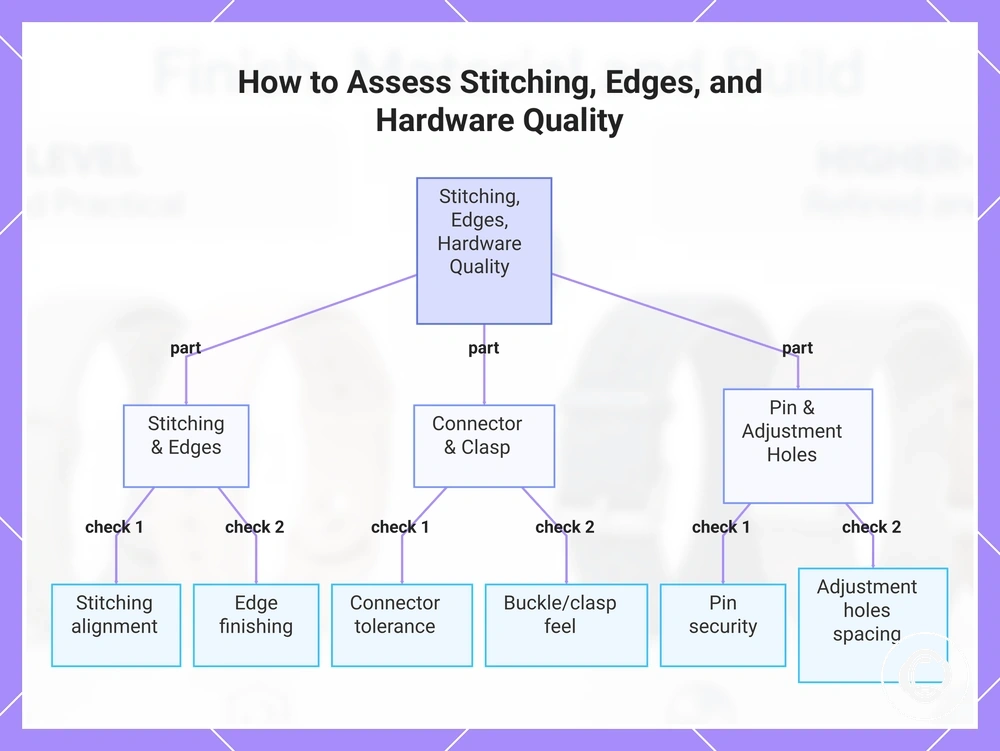
Stitching, edges, and hardware often reveal quality differences that price alone may hide. Small construction details can show how consistently a band is assembled and can serve as practical quality signals before purchase.
Visible flaws do not automatically indicate a poor outcome, but visible flaws can help identify areas that deserve closer inspection. Uneven stitching alignment, rough strap edges, loose hardware feel, or inconsistent adjustment holes may increase uncertainty about long-term wear, while consistent construction details can improve confidence in the overall build. Use the following mini-checklist to assess stitching, edges, and hardware quality before making a decision.
- Stitching alignment: Even alignment across the strap is a confidence signal, while irregular spacing may indicate less consistent construction.
- Edge finishing: Smooth strap edges are an inspection cue, while rough or uneven edge finishing may suggest a higher risk of early wear signs.
- Connector tolerance: Stable connector fit is a confidence signal, while noticeable movement may indicate tolerance variation.
- Buckle or clasp: Consistent buckle or clasp feel can support confidence, while looseness or uneven pressure may affect the fastening experience.
- Pin security: Secure pin placement is a positive signal, while visible movement may warrant closer inspection.
- Adjustment holes: Evenly spaced adjustment holes indicate attention to construction details, while irregular hole shape or alignment may affect adjustment consistency.
In some cases, a plain affordable band can have better hardware quality than a decorative premium-looking option when connector tolerance, clasp feel, and pin security are more consistent.
This chart shows the key quality checks for watch band stitching, edges, and hardware to evaluate before purchase.
Comfort, Stability and Daily Wear Feel
Comfort and stability directly affect perceived value because a band that feels uncomfortable during frequent use loses value regardless of price. Softness, flexibility, weight, breathability, adjustability, clasp pressure, and sensor stability can influence daily wear feel and contribute to perceived value over time.
For office wear, casual rotation, and longer daily wear, comfort and stability signals can help explain why two bands with similar appearance may feel different in use. Comfort, Stability and Daily Wear Feel can be assessed through practical wear signals rather than labels alone. The checklist below highlights attributes that may affect wear comfort, secure feel, looseness, or confidence during daily-wear conditions.
- Softness: Appropriate softness can improve wear comfort during longer use, while excessive firmness may increase pressure awareness.
- Flexibility: Good flexibility can help a band follow wrist movement, while limited flexibility may affect comfort during extended wear.
- Weight: Lower perceived weight may reduce wrist fatigue for some users during daily wear.
- Breathability: Better airflow can improve skin feel during longer wear, although comfort depends on material, fit feel, and conditions.
- Adjustability: Consistent adjustment options can support a secure feel, while limited adjustability may increase looseness or pressure.
- Clasp pressure and sensor stability: Balanced clasp pressure can support sensor stability and wearing confidence when the band is adjusted appropriately.
The myth is that one material automatically delivers the best daily wear experience. The truth is that comfort and stability depend on how softness, flexibility, weight, breathability, adjustability, clasp pressure, and sensor stability combine for the individual wearer.
This chart shows the key attributes that influence comfort and stability during daily wear, including the common myth and the actual truth about material choice.
Smartwatch Band Price Ranges and Value Signals
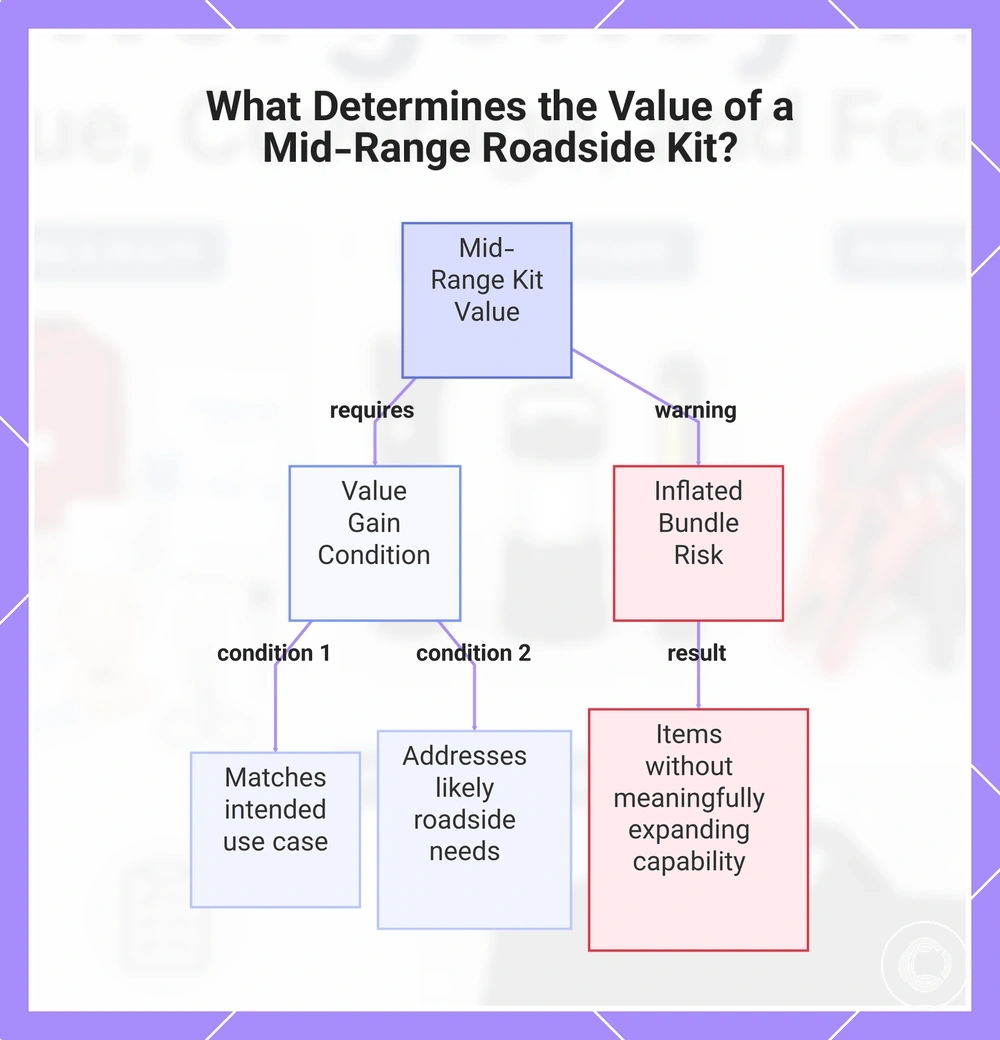
Price ranges are useful only when they are matched to material condition, hardware condition, compatibility, and expected use. A price tier is a starting signal rather than proof of quality, so price must be read with material and construction.
Smartwatch Band Price Ranges and Value Signals should be interpreted as criteria-based value cues rather than live market pricing. The table below organizes non-live value signals that help compare price tiers through material condition, hardware condition, durability, comfort, finish, and replacement risk. Each price tier represents a comparison framework rather than a current price level.
| Price tier | Common value signal | Check before trusting it | Risk to qualify |
|---|---|---|---|
| Low | Acceptable comfort and basic material condition | Inspect connector fit, clasp feel, and finish consistency | Replacement risk may be higher when construction quality varies |
| Mid | Balanced durability, comfort, and hardware condition | Compare material condition against construction details | Value may vary when finish quality exceeds build quality |
| Higher | Refined finish, material presentation, or hardware feel | Verify durability and construction rather than appearance alone | Price premium may reflect branding, licensing, or finish |
The myth is that a higher price tier automatically means better value. The truth is that value signals still require verification through material condition, hardware condition, durability, comfort, finish, and replacement risk. A higher price can reflect branding, official licensing, or finish quality rather than a longer usable life.
For casual rotation, daily wear, or extended use, the most useful price signal is the relationship between expected use and construction quality. Interpreting price ranges through value signals helps prepare a clearer comparison of material trade-offs.
Material and Durability Value Trade-Offs
Material choice affects value through durability, maintenance, comfort, and visual ageing rather than material type alone. The same material can deliver different value outcomes under different use conditions, making material choice a durability and comfort trade-off rather than a universal answer.
Material and Durability Value Trade-Offs can be compared by linking each material type to durability strength, maintenance burden, comfort, visual ageing, and use condition. The table below compares material value conditions rather than ranking materials. Each material presents a different balance between durability, maintenance needs, comfort, and visual ageing, so value depends on context.
| Material | Durability strength | Trade-off | Best value condition |
|---|---|---|---|
| Silicone | Often supports frequent daily wear | May show surface ageing and replacement needs over time | Daily wear where lower maintenance is preferred |
| Leather | Can maintain an attractive appearance when cared for appropriately | Visual ageing and care burden may increase with use | Dress use and occasional rotation |
| Stainless steel | Often provides strong structural durability | Weight and scratching may affect comfort or appearance | Frequent wear where appearance retention is valued |
| Mesh | Can combine flexibility with a refined appearance | Wear characteristics may vary by fit and use condition | Rotation use and appearance-focused wear |
For daily wear, silicone may offer value through comfort and a lower maintenance burden. For dress use, leather may provide value through appearance, while stainless steel or mesh may suit users who prioritize a different balance between durability, comfort, and visual ageing. For rugged conditions, durability attributes may become more important than finish, so the most suitable value outcome changes by wear context.
The myth is that one material automatically provides the highest value. The truth is that durability, maintenance, comfort, and visual ageing create different trade-offs, so material choice should be matched to use conditions rather than one-material-fits-all advice.
Silicone Band Sets and Replacement Packs
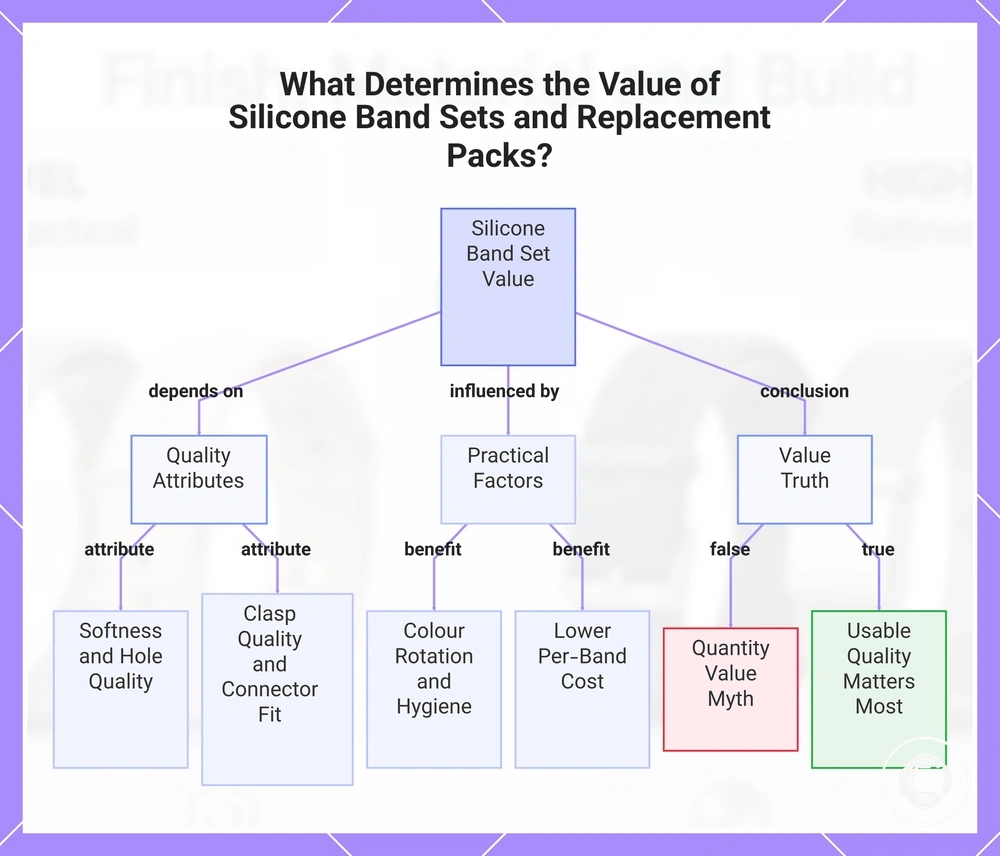
A silicone band set or replacement pack creates value when rotation, easy replacement, and lower per-band cost are more important than relying on a single band. More bands do not automatically mean better value because usable quality remains the main factor behind pack value.
Silicone Band Sets and Replacement Packs depend on pack size, softness, hole quality, clasp quality, connector fit, and colour rotation rather than quantity alone.
- Lower per-band cost: A replacement pack can improve value when multiple silicone straps are used regularly instead of remaining unused.
- Colour rotation and hygiene: Colour rotation may support casual wear variety and make rotation easier when bands are changed frequently.
- Softness and hole quality: Comfort can depend on softness and consistent hole quality, even when a multi-pack includes many bands.
- Clasp quality and connector fit: Replacement convenience may improve when clasp quality and connector fit remain consistent, while weaker components can increase breakage risk.
- Pack size limitation: A larger replacement set may provide less value when usable quality varies or when only a small portion of the pack is used.
For casual wear, a silicone band set may make sense when colour rotation and spare-band availability matter. For frequent band changes, a replacement pack can reduce replacement inconvenience when connector fit and clasp quality remain acceptable. In contrast, one higher-quality silicone band may provide stronger daily-wear value than a multi-pack when softness, hole quality, clasp quality, and connector fit are more consistent.
The myth is that a larger pack automatically delivers greater value. The truth is that usable quality matters more than quantity alone, which rejects quantity-only value comparisons.
This chart shows the key factors that influence the value of silicone band sets, explaining why usable quality matters more than the number of bands.
Leather Strap Craftsmanship and Long-Term Finish
A leather strap creates value when craftsmanship, leather quality, lining, stitching, and finish ageing support the intended use over time. Premium value comes from construction evidence rather than leather labels alone, so leather value depends on craftsmanship and finish ageing.
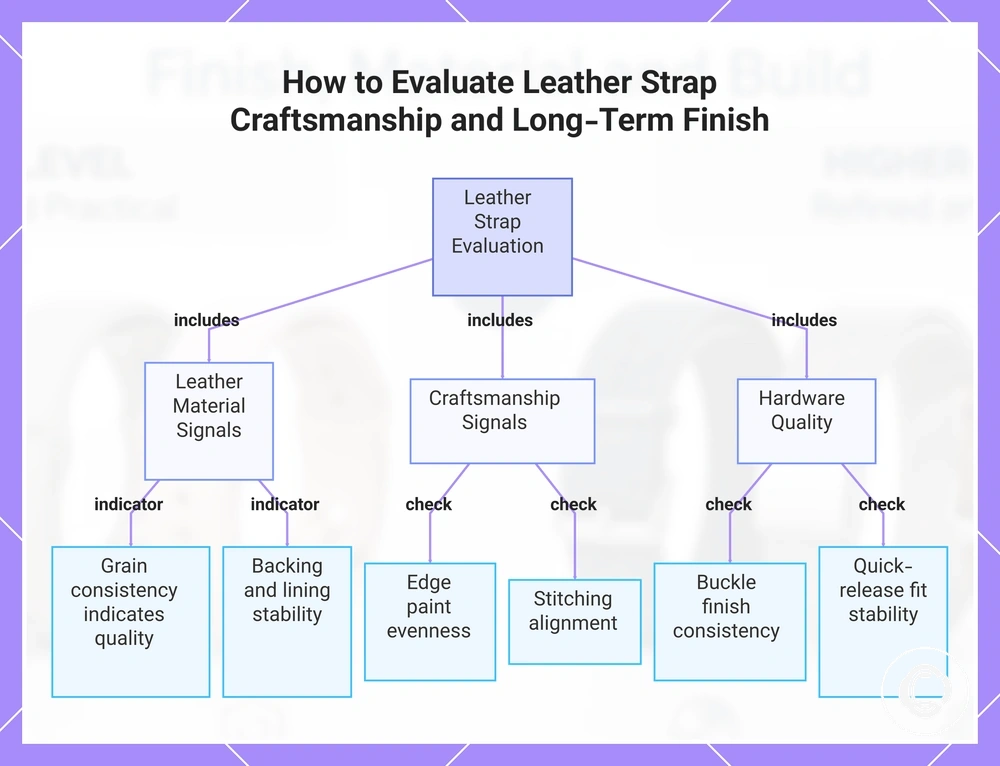
Leather Strap Craftsmanship and Long-Term Finish can be evaluated through visible construction signals that help verify premium value. The checklist below focuses on grain, backing, edge paint, stitching, buckle quality, and quick-release hardware because each inspection point relates to leather quality, formal appearance, patina development, or finish ageing. These inspection signals provide a practical way to assess construction rather than relying on label-based assumptions.
- Grain: Consistent grain appearance can indicate better leather quality, while finish ageing may influence how patina develops over time.
- Backing and lining: A stable backing and lining can help maintain structure, although stiffness may still vary with wear intensity.
- Edge paint: Clean and even edge paint is a direct craftsmanship signal, while irregular edges may increase the likelihood of peeling or appearance changes.
- Stitching: Consistent stitching alignment is a visible construction signal that supports craftsmanship evaluation.
- Buckle: A well-finished buckle contributes to a more consistent formal appearance and provides a useful inspection point.
- Quick-release hardware: Stable hardware fit can support convenient strap changes and reflects overall construction attention.
For dress wear, a leather band may provide value through formal appearance and gradual patina development. For occasional wear and daily wear, finish ageing, cracking, peeling, or stiffness can vary by leather quality, lining, craftsmanship, and use intensity, so value depends on finish expectations as much as appearance.
This chart shows the key visible inspection points for assessing leather strap quality and craftsmanship, based on grain, backing, edge paint, stitching, buckle, and quick-release hardware.
Stainless Steel and Metal Mesh Band Durability
Stainless steel and metal mesh create value when durability signals are supported by construction quality rather than material labels alone. Long-term value depends on durability, finish, clasp design, weight, and adjustability because each factor affects daily wear, appearance retention, and wearing experience differently.
When a metal band appears durable but feels heavy, or when a metal mesh band offers adjustability but raises snagging concerns, construction details become the key evaluation criteria. Link construction, mesh construction, coating quality, clasp design, sizing method, and edge smoothness provide practical signals for judging scratching risk, wrist weight, long-term appearance, and potential comfort trade-offs. Stainless Steel and Metal Mesh Band Durability can be judged through the comparison signals below.
| Durability signal | Value caution |
|---|---|
| Stainless steel link construction feels solid and stable | Higher weight may affect wrist comfort depending on wear duration and wrist preference |
| Metal mesh construction provides flexible adjustability | Mesh band surfaces may snag or pull on fabrics in some conditions |
| Consistent finish and coating support long-term appearance | Coated finishes may show visible scratching or wear over time |
| Secure clasp design improves wearing confidence | Magnetic clasp performance may vary by activity and wear conditions |
| Smooth edges indicate careful construction | Rough edges can reduce comfort and affect perceived quality |
The myth is that stainless steel or metal mesh automatically means premium value. The truth is that durability should be evaluated alongside finish, weight, adjustability, clasp design, and construction details, especially when coated-finish wear or mesh snagging risk may influence long-term expectations.
Official vs Third-Party Smartwatch Band Value
Official smartwatch band value and third-party smartwatch band value depend on evidence such as fit confidence, connector design, finish consistency, return support, and price rather than source label alone. Source type can influence buyer confidence, but source type is not a quality grade by itself.
Official vs Third-Party Smartwatch Band Value can be compared by evaluating the signals below rather than assuming that one source type automatically provides better value. The comparison focuses on fit confidence, finish consistency, material claims, return support, and price premium because these factors affect value, risk, and buyer confidence. This comparison separates source type from fit confidence, finish, and support context.
| Official band value signal | Third-party band value signal |
|---|---|
| Fit confidence may be stronger when connector design closely follows the intended watch connection | Fit confidence can vary by manufacturer and connector design quality |
| Finish consistency may remain more predictable across product lines | Finish consistency can vary, but strong construction quality may still be available |
| Support context may provide additional buyer confidence in some situations | Return support depends on the individual supplier and support process |
| Price premium may reflect source type, finish, or support expectations | Lower pricing may improve value when quality and fit confidence meet expectations |
| Style options may be more limited in some ranges | Rotation choices and style variety are often broader across different designs |
When compatibility confidence is the main concern, an official smartwatch band may provide stronger value because connector design and fit expectations can be easier to evaluate. When finish consistency and support context are priorities, buyer confidence may also favor an official smartwatch band. These conditions represent situations where official value may be stronger.
The myth is that official bands are automatically worth more and third-party bands are automatically compromises. The truth is that a third-party smartwatch band can provide strong value when fit confidence, finish consistency, return support, rotation needs, and style variety align with the intended use.
How to Judge Smartwatch Band Quality Before Buying
Judge smartwatch band quality through material, hardware, connector fit, finishing, comfort, and realistic wear-resistance evidence before relying on price or source type. A useful quality check reviews material, hardware, connector fit, finishing, comfort, and wear resistance.
Pre-purchase quality can be difficult to judge when listings use vague claims, limited photos, or broad material wording. How to Judge Smartwatch Band Quality Before Buying is to verify close-up photos, stated materials, connector type, customer-use context, and support cues before treating a band as good value. Use this mini-checklist to connect each band part or claim to an observable condition and decision signal.
- Connector fit: Inspect connector type and visible fit detail because loose or unclear connector evidence can increase compatibility uncertainty.
- Clasp: Check clasp shape, closure style, and pin security because fastening parts affect confidence during wear.
- Stitching: Compare stitching alignment and spacing because uneven construction can signal inconsistent finishing.
- Surface finish: Review close-up photos for smooth edges, coating consistency, and material texture because finish quality affects appearance and wear expectations.
- Sizing: Verify stated size and band length because unclear sizing can reduce fit confidence before purchase.
- Adjustment range: Inspect adjustment holes or adjustment method because limited range may affect comfort and secure feel.
- Return cues and warranty cues: Treat return cues and warranty cues as confidence signals only when the support terms are clear and relevant.
- Vague claims: Qualify broad claims by looking for stated materials, close-up photos, connector type, and customer-use context.
When two bands look similar, the stronger option is usually the one with clearer evidence for connector fit, clasp quality, surface finish, and realistic wear context. Customer-use context can help interpret whether comfort or durability claims match daily wear, rotation, or occasional use. Evidence should be read as a risk-reduction signal, not as a guarantee of durability or comfort.
The myth is that a short product description or premium label is enough to prove quality. The truth is that a practical buying checklist should verify material evidence, connector fit, finishing, sizing, adjustment range, return cues, warranty cues, and vague claims before value is trusted.
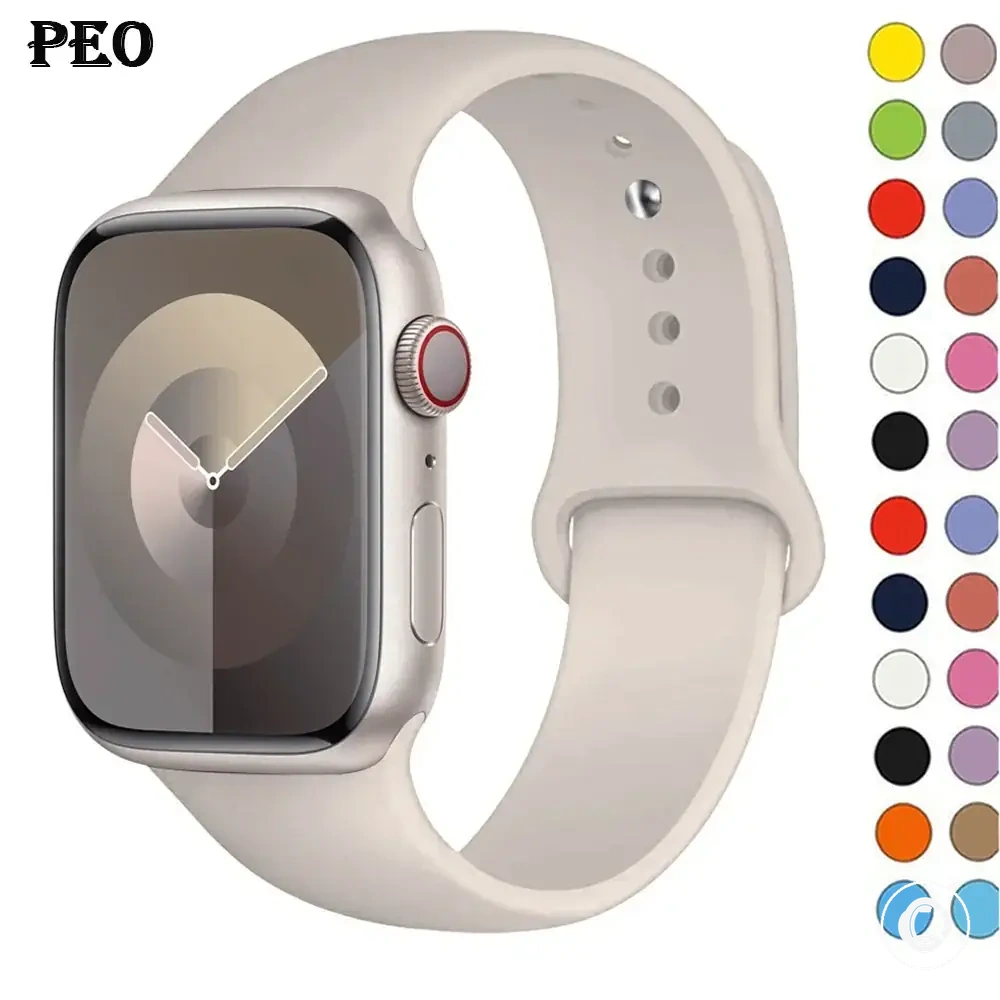
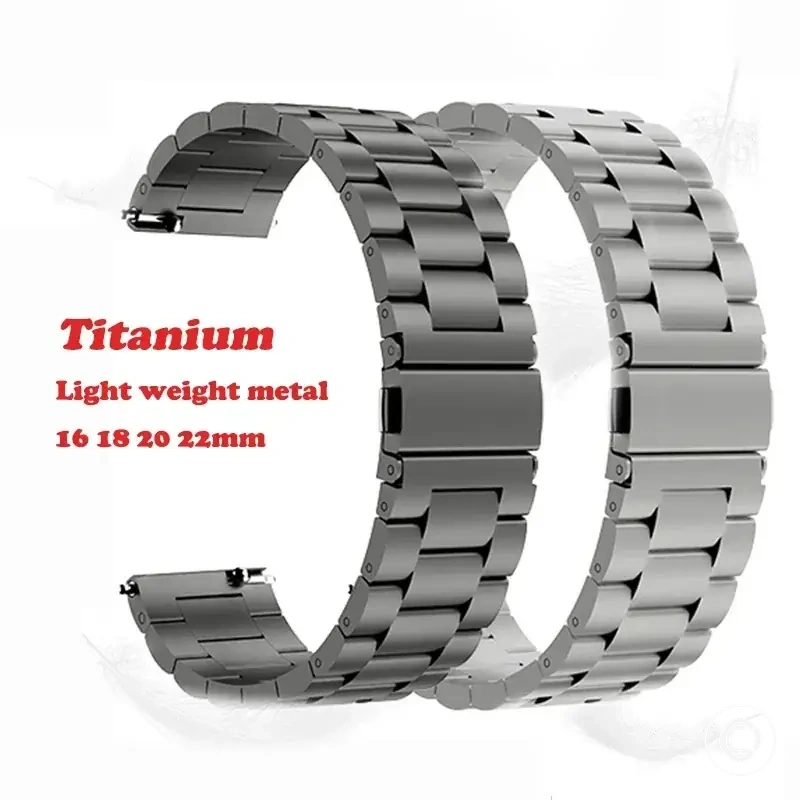
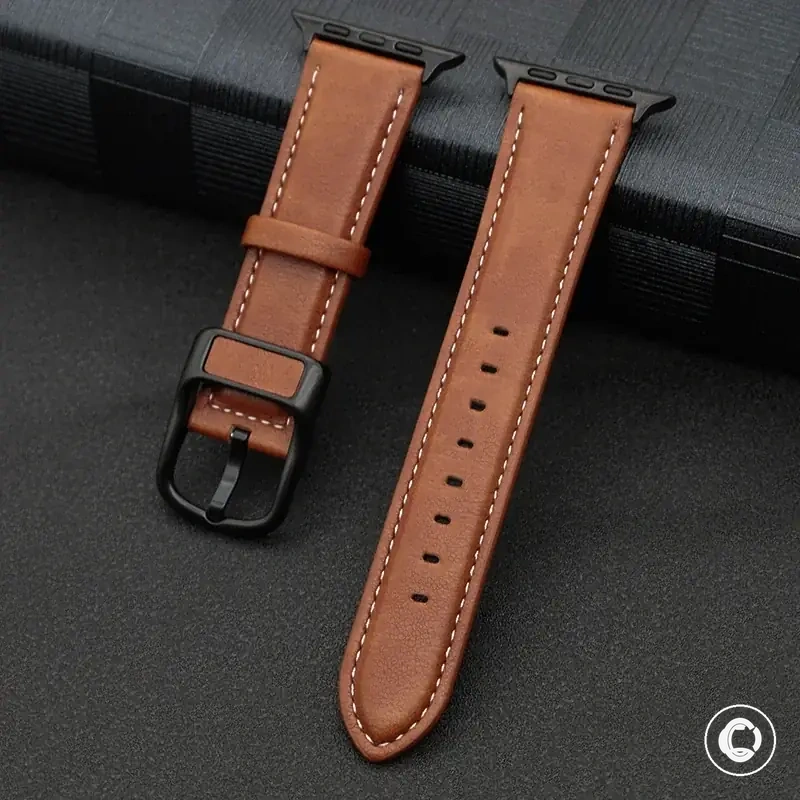
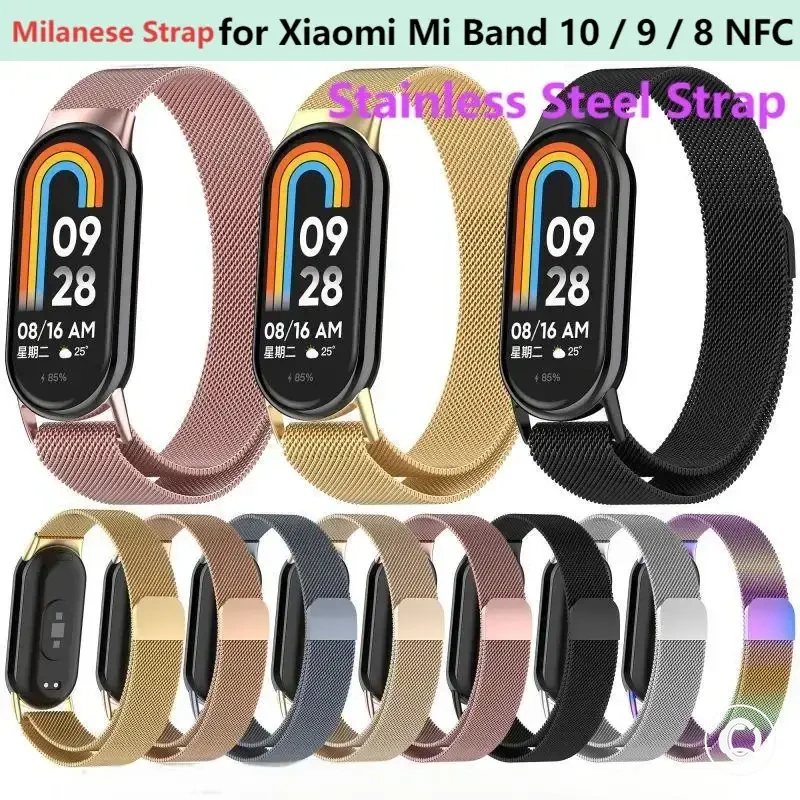
The products below are useful examples for comparing available options. Before buying, check that the compatibility criteria, key features, and product details match your needs.
This checklist helps you evaluate smartwatch band quality by focusing on hardware integrity, surface and sizing details, and fit support cues.
When Affordable or Premium Smartwatch Bands Are Better Value
Affordable bands are usually better value for rotation, trial, and replacement needs, while premium bands can be better value for finish consistency, comfort consistency, durable hardware, or formal wear. The affordable-versus-premium decision depends on use case, wear frequency, material demand, style need, risk tolerance, and replacement cost.
When the same band will not be worn every day, lower-cost bands can make rotation easier without tying all value to one daily band. When Affordable or Premium Smartwatch Bands Are Better Value becomes clearer when the choice is matched to use case, budget pressure, material expectations, and durability expectations. The matrix below compares those conditions for rotation, trial, or replacement needs.
| Use situation | Value priority | Affordable fit | Premium fit |
|---|---|---|---|
| Rotation | Colour variety and spare bands | Often useful when several lower-cost bands will be worn regularly | Less necessary unless finish consistency matters across fewer bands |
| Daily wear | Comfort consistency and dependable hardware | Useful when fit and construction are acceptable for frequent wear | Can be stronger when durable hardware and steady comfort matter more |
| Formal appearance | Cleaner finish and dressed-up style | Works when the finish meets the occasion and risk tolerance is higher | Can be stronger when finish consistency and formal wear are priorities |
| Replacement urgency | Fast replacement and lower replacement cost | Often practical for trial, spare use, or quick replacement needs | Useful when the replacement must feel closer to a dependable daily band |
| Durability demand | Hardware strength and material resilience | Depends on connector fit, clasp quality, and material demand | Can be stronger when construction quality reduces replacement uncertainty |
For rotation, trial, or replacement needs, affordable bands can make sense when several bands will be used and replacement cost matters. For higher wear frequency, formal wear, or lower risk tolerance, premium bands may justify their price when finish consistency, durable hardware, and comfort consistency are clear. For choosing bands by need, match the band type to use case before treating price as the main signal.
The myth is that premium bands are the automatic upgrade and affordable bands are only temporary options. The truth is that one dependable daily band may be better value for frequent use, while several lower-cost bands may be better value for rotation when each band still meets the required quality level.
Choose affordable bands when rotation, trial, replacement needs, and lower risk per purchase matter most. Choose premium bands when finish consistency, durable hardware, formal wear, and daily comfort justify the higher commitment.
The products below are useful examples for comparing available options. Before buying, check that the compatibility criteria, key features, and product details match your needs.