Smartwatch Band Cleaning and Odor Control
A smartwatch band needs cleaning when sweat, moisture, and daily wear leave residue on the wrist-side surface. Cleaning helps manage odor control while respecting the band material. This page focuses on the watch band, not watch-case cleaning, skin treatment, sizing, compatibility, or replacement. Treat cleaning as routine maintenance rather than watch repair.
Odor often develops when sweat and skin residue stay against the smartwatch band and do not dry fully. The safe cleaning method depends on material, surface texture, moisture retention, and care limits. Silicone, rubber, leather, metal, mesh, nylon, and fabric can respond differently to water, brushing, soap, drying, coatings, adhesives, or finish treatments.
Safe preparation starts with separating the band from the watch body when possible, then choosing a material-safe cleaning method. A soft cloth, mild cleaning setup, and careful drying can usually handle light residue without turning the process into harsh chemical treatment. More detailed steps should change when the band is leather, coated, absorbent, textured, or not meant for much moisture.
Cleaning may reduce smell and buildup, but odor control depends on how much residue is present, how often the band is worn, and whether the material can dry completely. Dirty or damp bands can also affect comfort during daily wear. The next section explains why smartwatch bands smell after sweat, moisture, and repeated contact with the wrist.
Why Smartwatch Bands Smell After Daily Wear
Smartwatch bands usually smell after daily wear because sweat, skin oils, moisture, dirt, and bacteria can collect on the band and stay close to the wrist. smartwatch bands are worn against the skin for long periods, which increases contact with residue from everyday activity. When that residue is not fully removed or allowed to dry, odor can develop over time. The main cause is the buildup of sweat, skin oils, moisture, dirt, and bacteria.
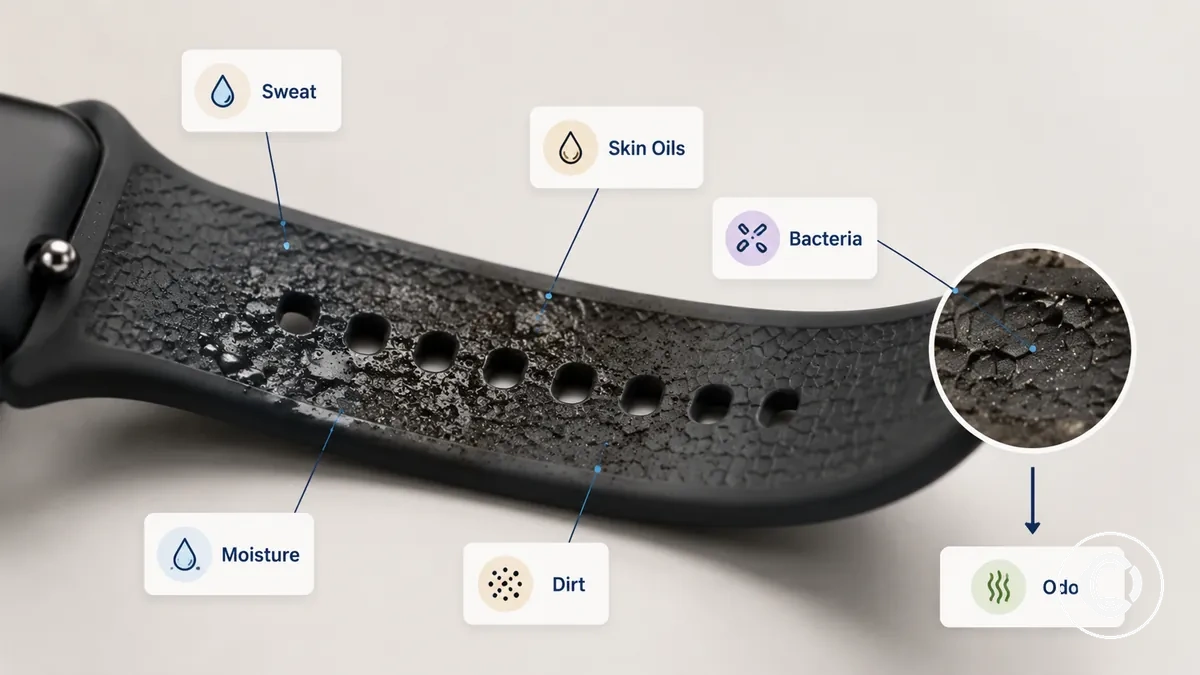
Sweat and skin oils naturally transfer from the wrist to the watch band during daily wear. Fresh sweat may have little smell on its own. Odor often becomes more noticeable when sweat mixes with skin oils, dirt, and residue that remain on the band surface. Bacteria can contribute to that odor when moisture stays trapped for longer periods.
Band material and surface texture can affect how moisture behaves after use. Smooth materials may release moisture more easily, while textured surfaces can hold residue in small grooves or woven areas. Moisture retention and drying time often vary by material, finish, and construction. When a band stays damp, moisture can hold residue against the wrist for longer, which may increase odor risk.
Common situations that can increase odor buildup include:
- Daily wear that repeatedly exposes the band to sweat, skin oils, and dirt.
- Workouts that create heavier sweat exposure and more moisture on the wrist.
- Humid conditions or a damp band after cleaning that slow drying time and leave moisture on the surface for longer.
Odor severity can vary with wear patterns, moisture levels, and material characteristics. A dirty or damp band may feel less pleasant against the wrist even when no other issue is present. For more on comfort and skin feel, it helps to remember that band cleanliness and drying conditions can influence everyday wear comfort.
Safe Cleaning Supplies for Smartwatch Bands
Cleaning supplies are tools and cleaners that help remove sweat and residue from a smartwatch band without creating unnecessary risk for the material. Safe choices depend on the type of residue and the band surface being cleaned. Cleaning supplies should match the band material.
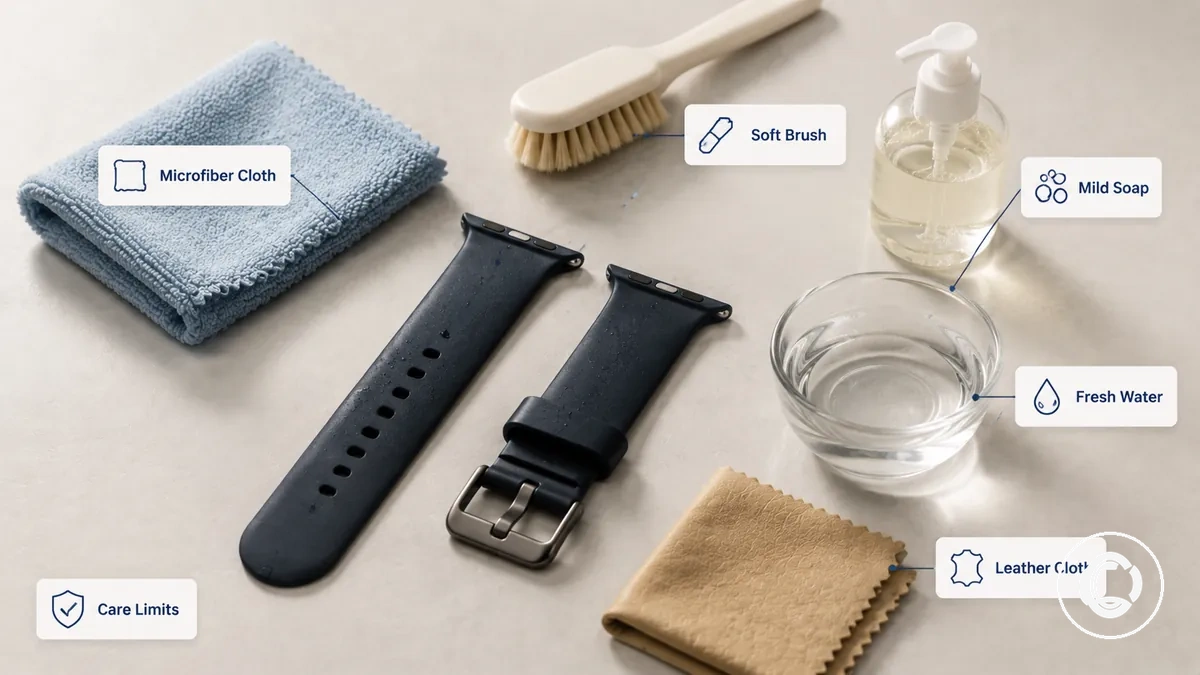
Safe Cleaning Supplies for Smartwatch Bands depend on how the material reacts to moisture, wiping, brushing, and cleaners. The table below matches common supplies to appropriate use conditions before cleaning begins.
| Supply | Best suited for | Use carefully when | Avoid when |
|---|---|---|---|
| Microfiber cloth | Wiping surface residue and moisture | Residue is trapped in textured areas | Abrasive rubbing would be required |
| Lint-free cloth | Routine wiping and drying | Heavy buildup remains in grooves | Deep cleaning is required |
| Soft brush | Texture, grooves, and metal links | Delicate finishes may scratch from excessive pressure | The material manufacturer advises against brushing |
| Mild soap | Washable materials with sweat or dirt buildup | Coatings, finishes, or adhesives may be affected | Care limits restrict soap use |
| Fresh water | Rinsing washable materials after cleaning | Drying is difficult or moisture may remain trapped | The material has low water tolerance |
| Leather cloth | Leather bands that require low-moisture care | Conditioners or treatments vary by leather finish | Care limits discourage added treatments |
| Alcohol-based options | Materials that specifically allow alcohol use | Coatings, finishes, or color treatments may react differently | Manufacturer guidance limits alcohol use |
Mild soap and fresh water can help remove sweat and residue from many washable materials when used carefully and followed by proper drying. Water exposure may not suit every material, especially when moisture can remain trapped beneath textured surfaces or around attachments. Alcohol limits vary by material, coating, finish, and manufacturer guidance. When uncertainty exists, the more conservative option is to follow the stated care limits.
A cleaning tool set can be useful when it contains a microfiber cloth, lint-free cloth, soft brush, leather cloth, or other appropriate tools for the band material. Its value depends on whether the included tools match the cleaning task and the manufacturer's care limits rather than the fact that the items are packaged together.
Soft Cloths, Brushes, and Mild Cleaning Solutions
Soft Cloths, Brushes, and Mild Cleaning Solutions are basic cleaning tools that help remove light residue from smartwatch bands when matched to the material and cleaning purpose. Soft cloths handle surface wiping, brushes reach textured gaps, and mild solutions help loosen residue on suitable materials.
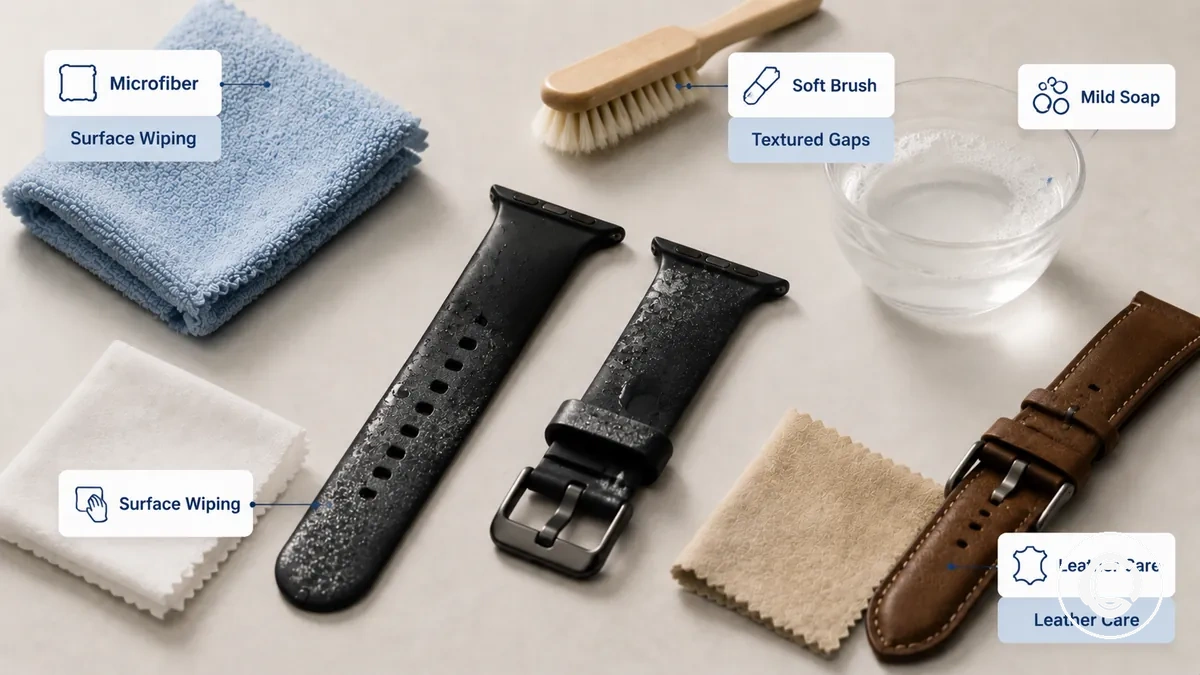
- Soft cloth or microfiber: Use for surface wiping when a sweat film or light residue remains on the band surface.
- Lint-free cloth: Use for routine wiping and drying when moisture or light surface dirt needs removal.
- Soft brush: Use in textured gaps, around metal links, or on patterned surfaces where dirt collects beyond normal wiping.
- Mild soap solution: May help loosen residue or light discoloration on washable materials when followed by appropriate rinsing and drying.
- Dry cloth for leather straps: Use a dry care cloth and a low-moisture approach when surface residue appears on leather straps.
Tool choice depends on the material and the type of residue being removed. Excessive scrubbing can increase the risk of affecting finishes or forcing moisture deeper into textured areas. Mild soap solution and water may suit washable materials, while leather straps often benefit from lower-moisture care.
Cleaners and Methods to Avoid
Cleaners and methods to avoid are cleaning approaches that can increase the risk of affecting finishes, coatings, adhesives, or moisture-sensitive materials. Risk varies by band material and construction. Washable silicone or metal bands may tolerate more cleaning options than leather, fabric, coated, or glued components.
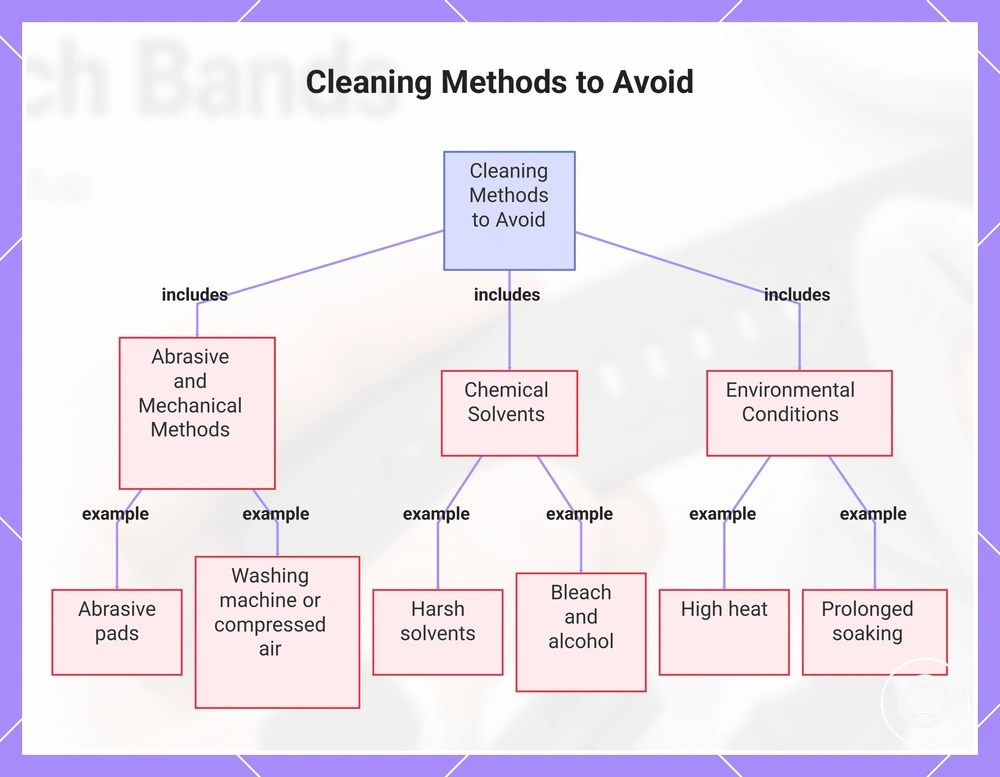
Caution: The checklist below highlights common methods that may require extra care or avoidance when material sensitivity or manufacturer limits are unclear.
- Abrasive pads: Can create scratches or finish damage, especially on coated surfaces.
- Harsh solvents: Can affect a coating and may increase adhesive risk in glued components.
- Bleach: May affect material appearance and surface finishes on certain bands.
- Excessive alcohol: Can increase drying or surface stress on sensitive materials and finishes.
- High heat: Can affect leather finishes, adhesives, and materials that are sensitive to deformation.
- Prolonged soaking: Can leave trapped moisture in fabric layers or around assembled components.
- Washing machine or compressed air: May introduce unnecessary stress when manufacturer limits are unclear.
Material sensitivity varies by coating, finish, adhesive use, and moisture tolerance. When uncertainty exists, checking manufacturer care limits can help guide cleaner and method selection.
This chart shows cleaning methods to avoid due to potential damage to finishes, coatings, adhesives, or moisture-sensitive materials, grouped by mechanical, chemical, and environmental factors.
How to Clean a Smartwatch Band Safely
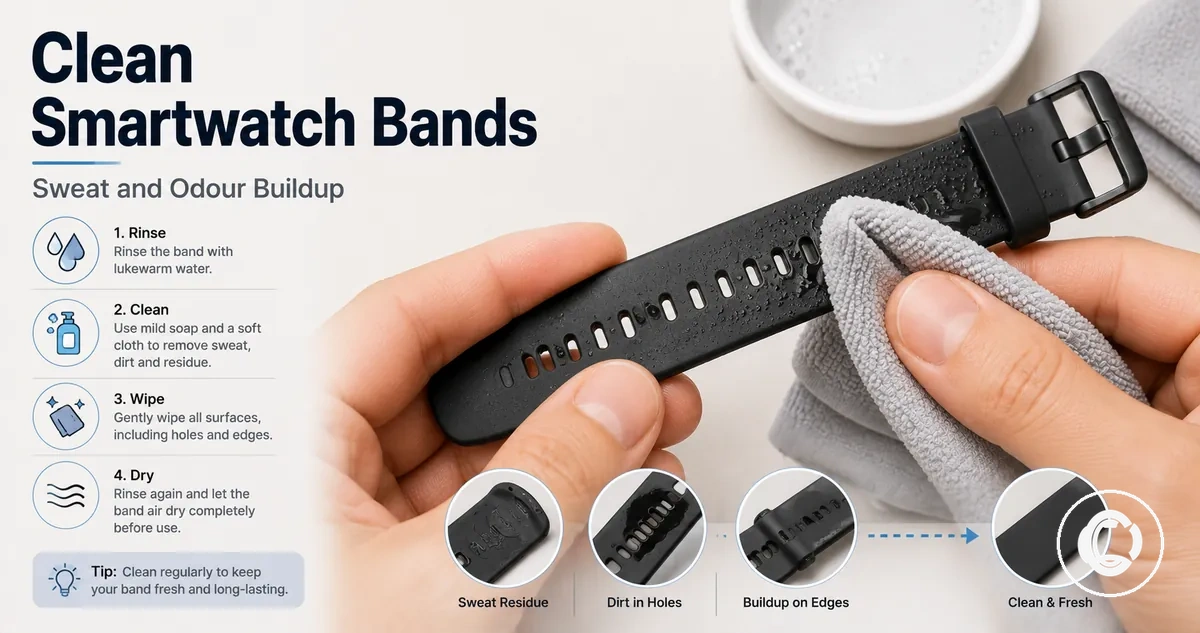
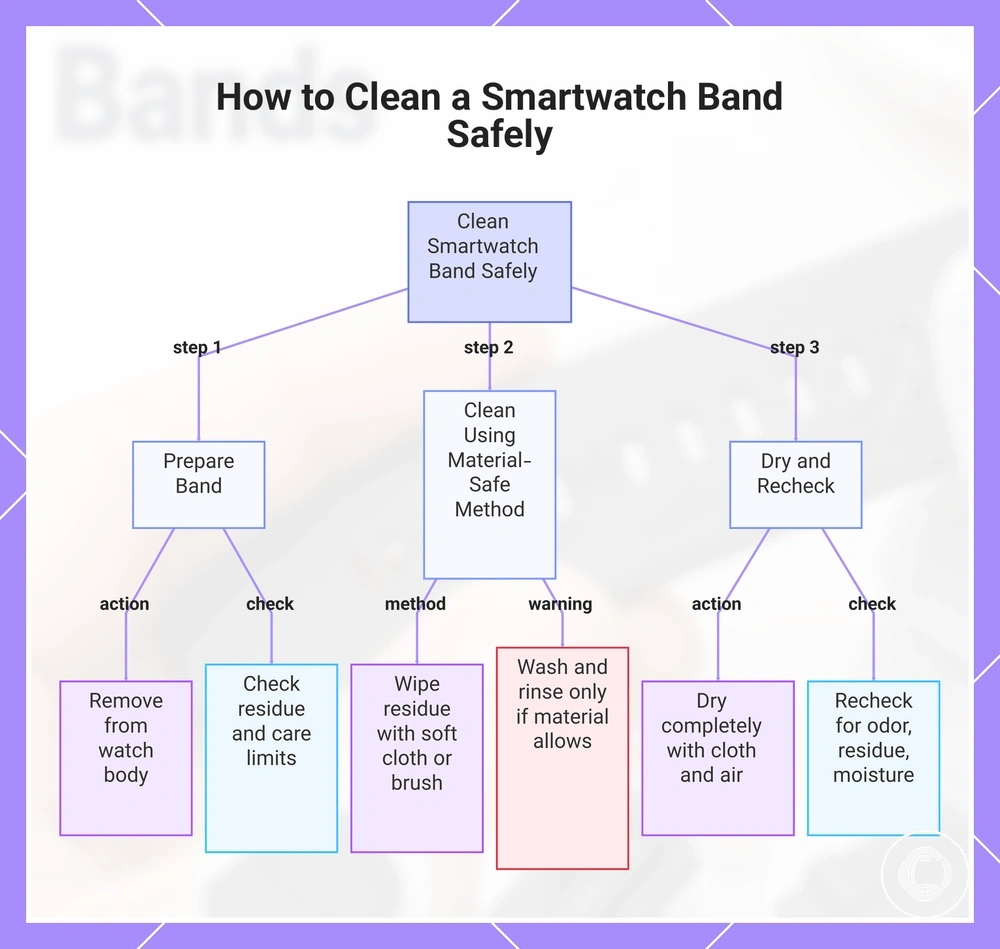
The safest way to clean a smartwatch band is to remove the band when possible, clean it with a material-safe method, and dry it completely before wearing it again. Different materials can respond differently to water, brushing, and cleaning products. A material-safe cleaning process helps reduce residue while respecting band construction and care rules.
-
Prepare the band: Remove the band from the watch body when the design allows safe handling. Check for visible residue, moisture, and any manufacturer-specific care limits before cleaning.
-
Wipe residue: Wipe residue, sweat film, and lint from the band surface with a soft cloth. If residue remains in textured areas, use a soft brush with light pressure.
-
Choose a material-safe method: Wash, brush, or wipe the smartwatch band according to the material. Leather, fabric, coated, or adhesive-based designs may require lower-moisture cleaning methods.
-
Wash when appropriate: If the material allows washing, use mild soap and fresh water to clean the band surface. Limit water exposure when care rules advise against it.
-
Rinse when appropriate: Rinse away remaining soap with fresh water when the band material supports rinsing. Skip rinsing methods that do not match material-specific care guidance.
-
Dry completely: Dry the smartwatch band with a clean cloth and allow remaining moisture to air dry. Metal links, fabric layers, and areas near attachments may need extra attention before the band is dry completely.
-
Recheck before wear: Recheck the band for odor, residue, or remaining moisture before reattaching it. Wear the band again only after it is dry completely and no visible residue remains.
This chart shows the safe cleaning process for a smartwatch band, including preparation, material-safe cleaning, and final checks before wear.
Remove the Band and Wipe Loose Residue
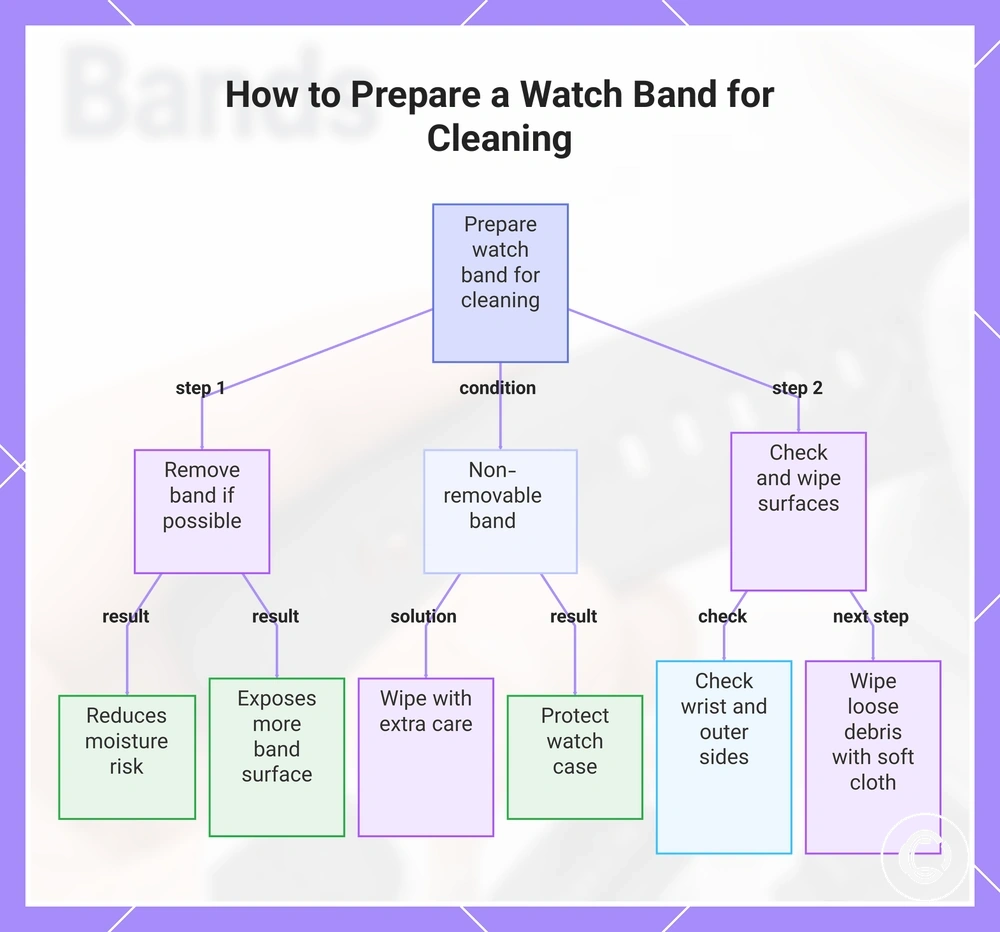
Remove the band when possible before adding moisture to the cleaning process. Band removal can reduce moisture risk to the watch body and expose more of the band surface for cleaning. This preparation step helps make material-safe cleaning easier.
Check the wrist side and the outer side before cleaning. Wipe loose residue, sweat film, lint, and visible dirt from both surfaces with a soft cloth. A surface check helps clear loose debris before moisture is introduced.
A non-removable band requires a more careful approach. Wipe loose residue from the band surface while avoiding unnecessary moisture near the watch body. Careful wiping can help protect the watch case when the band cannot be separated.
This chart outlines the key preparation steps for cleaning a watch band, including band removal, handling non-removable bands, and wiping surfaces.
Wash, Brush, or Wipe Based on Material
Wash, brush, or wipe the smartwatch band based on its material rather than using the same action for every band. Silicone, rubber, metal links, leather, nylon, and fabric can each respond differently to moisture, pressure, and drying. The local cleaning method depends on material.
The comparison below separates washable, brushable, wipe-only, and absorbent materials so the cleaning action stays matched to the band surface. More force or a harsher cleaner does not automatically make cleaning safer.
| Material | Local method | Main caution |
|---|---|---|
| Silicone/rubber | Wash with mild soap when the material allows it | Rinse and dry without using more force than needed |
| Metal/mesh | Brush gently around metal links, gaps, and clasp areas | Coating or mixed-material parts may limit brushing or water exposure |
| Leather | Wipe with a damp cloth or dry cloth using low moisture | Leather finish and care limits can change how much moisture is suitable |
| Nylon/fabric | Hand wash or wipe carefully when care guidance allows it | Fabric can hold moisture, so air dry fully before wearing |
Rinse and Dry the Band Completely
Drying is the final step that helps prevent moisture from keeping odor and residue active on the band. A damp band can contribute to discomfort during wear, so the band should dry completely before reattachment or use.
Rinse only when the band material is among the water-tolerant materials and the cleaning method allows fresh water. Use fresh water to remove remaining soap or residue when appropriate. Not every material benefits from rinsing, so the method should follow the material's care limits.
After rinsing, pat dry the band with a clean cloth and allow it to air dry. Avoid heat while drying, and check creases, links, and other areas where hidden moisture may remain. Moisture can stay trapped in damp spots on metal links, fabric bands, or porous silicone surfaces even when the outer surface feels dry. Wait until the band is dry completely before wearing or reattach it.
- No damp fabric remains.
- No wet links remain.
- No moisture remains near connectors.
- No visible soap residue remains.
Cleaning Methods by Smartwatch Band Material
Smartwatch band material determines how a band should be cleaned, how much moisture it may tolerate, and how drying affects odor control. Band material influences water tolerance, drying tolerance, and residue removal because different surfaces respond differently to cleaning. For that reason, band material determines method.
Material, water tolerance, surface texture, and residue type can change the cleaning method and drying process. For a broader comparison of band materials and care, the table below focuses only on cleaning, drying, and odor-control considerations.
| Band material | Cleaning method | Drying caution | Odor-control note |
|---|---|---|---|
| Silicone/rubber | May be cleaned with mild soap when material care guidance allows it | Dry moisture from textured areas and contact surfaces | Sweat film can contribute to odor when residue remains on the surface |
| Leather | Usually benefits from low-moisture wiping and material-specific care | Moisture may increase drying requirements depending on the finish | Odor absorption can vary by leather condition and care approach |
| Metal/mesh | Residue may be removed with wiping or a soft brush around links | Check links and gaps for trapped moisture | Odor may persist when residue remains between contact points |
| Nylon/fabric | May require careful hand washing or wiping depending on care limits | Fibers can extend drying time when moisture remains trapped | Odor control depends on residue removal and complete drying |
Cleaning care can overlap with comfort during workouts and long-term band condition, but those topics involve factors beyond cleaning alone. Material-specific cleaning and drying logic should remain the focus when selecting a maintenance method.
Silicone and Rubber Watch Bands
Silicone and rubber watch bands are generally washable and can be cleaned when sweat film, discoloration, or odor retention develops on a flexible band. Routine cleaning can help manage surface buildup, but silicone and rubber are washable and not indestructible.
Silicone straps and rubber straps can usually be cleaned with mild soap and lukewarm water when care guidance allows it. A soft brush can help remove residue from textured grooves and surface patterns. Discoloration may improve with gentle cleaning, but results can vary according to material condition and care limits.
After cleaning, rinse away remaining residue when appropriate and allow full drying before wearing the band again. Persistent odor retention or surface stickiness may be a sign of buildup or material degradation after repeated wear. Full drying can help limit moisture-related odor, although stain or odor persistence may remain in some cases.
Leather Watch Straps
Leather watch straps require low-moisture cleaning because leather can absorb moisture and may dry, stain, or deform when exposed to excessive water or harsh cleaners. The porous surface can retain residue and odor over time. Leather watch straps need low moisture.
Leather's porous surface makes gentle handling important during routine cleaning.
- Do: Use a dry cloth or care cloth to remove surface dirt with a gentle wipe. Avoid: Excess moisture that may increase staining or deformation risk.
- Do: Use a lightly damp cloth when appropriate for the leather finish and care guidance. Avoid: Cleaning methods that leave the leather heavily wet.
- Do: Use a leather-safe cleaner only when suitable for the material and finish. Avoid: Cleaners that may not match leather care limits.
- Do: Apply conditioner only when appropriate for the leather finish and care guidance. Avoid: Overuse that may not suit every leather strap.
Use a dry cloth first to remove surface dirt and residue. A lightly damp cloth may help with remaining marks when care guidance allows it. Wipe gently rather than using aggressive cleaning pressure.
Allow leather watch straps to dry naturally away from heat after cleaning. Odor absorption can persist in leather, especially with sweat-heavy use, and complete odor removal may not always be possible. Compared with washable sport materials, leather can be harder to keep odor-free because moisture and odor may remain within the material.
Metal and Mesh Watch Bands
When residue becomes trapped between metal contact points, cleaning should focus on the areas where buildup collects. Metal and mesh watch bands often hold sweat and dirt around links, gaps, and clasp areas.
- Wipe metal bands, mesh bands, and clasp surfaces with a soft cloth to remove visible residue, then check links and contact points for remaining buildup.
- Use a soft brush between metal links, mesh openings, and narrow gaps where dirt can remain after surface wiping.
- If care guidance allows it, use limited mild soapy water on residue-prone areas, paying attention to links, gaps, and clasp components where sweat and dirt can collect.
- Use careful rinsing only when appropriate for the band construction, then check that no residue remains around metal contact points.
- Complete thorough drying around links, gaps, clasp areas, and mesh surfaces before wearing the band again.
A mesh strap, metal bracelet, or stainless steel band may benefit from a soft brush when residue remains between contact surfaces. Mild soapy water can be appropriate in some cases, but cleaning methods depend on band construction and care guidance. Focus on residue removal rather than stronger cleaning treatments.
Thorough drying helps reduce moisture that can remain between metal links, inside gaps, or around a clasp. Plated, coated, or mixed-material bands require caution because metal care rules may change according to surface finishes and component materials. Use mild cleaning methods when uncertainty exists.
Nylon and Fabric Watch Bands
Nylon and fabric watch bands can retain moisture longer than non-woven materials because woven bands can hold sweat inside their fibers. Sweat absorption and odor retention often depend on how completely residue is removed and how thoroughly the band dries. Woven bands can hold moisture inside fibers even after the surface feels dry.
Gentle cleaning may help reduce residue when care instructions allow hand washing. Use mild soap and clean water to hand wash the nylon strap or fabric strap without using harsh detergents. Rinse residue from woven fibers carefully because remaining soap can increase drying time or contribute to odor retention.
- Soap residue has been rinsed from the woven fibers.
- Excess water has been pressed out without twisting.
- The band appears fully dry before reuse.
- No damp odor remains after air drying.
After cleaning, press out water gently and allow full air drying before wearing the band again. A post-workout fabric band may benefit from a faster rinse because sweat can remain within woven fibers, but longer drying may still be needed before reuse. Drying time depends on fabric construction, moisture level, and care limits.
How to Remove Sweat and Odor Buildup
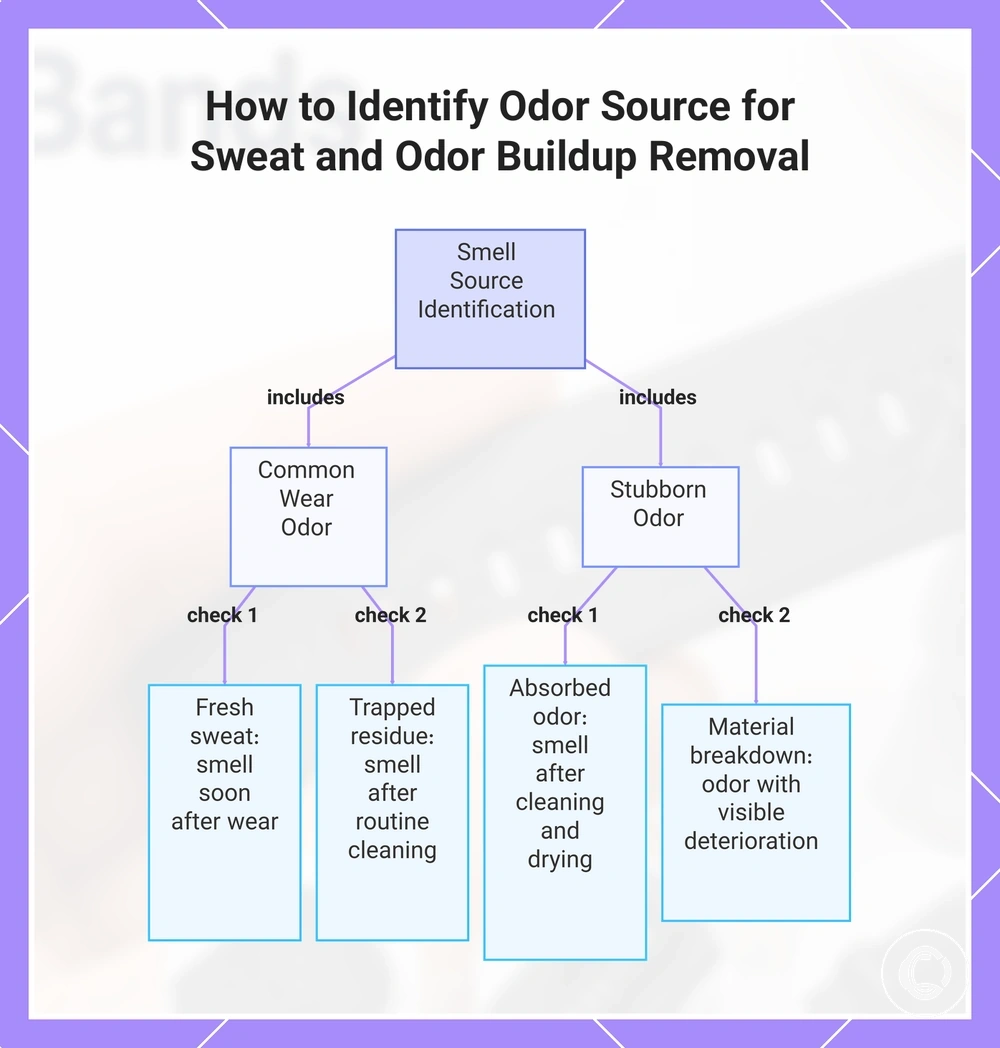
When odor buildup occurs, odor removal depends on whether the smell comes from fresh sweat, trapped residue, porous material, or material breakdown. Different smell sources respond to different cleaning and drying approaches. Identifying the smell source should come before choosing a response path.
Fresh sweat and trapped residue are common causes of odor buildup after regular wear. Sweat residue can remain in seams, textured surfaces, or contact points where cleaning is incomplete. When trapped residue remains, odor retention may continue even after light surface cleaning.
- Fresh sweat — Likely attribute issue: recent moisture. Check: smell appears soon after wear. What it means: sweat and moisture may still be present.
- Trapped residue — Likely attribute issue: buildup in seams or contact points. Check: smell remains after routine cleaning. What it means: residue may still be trapped below the surface.
- Absorbed odor — Likely attribute issue: fabric absorption or porous material. Check: smell remains after cleaning and drying. What it means: odor retention may exist within the material.
- Material breakdown — Likely attribute issue: wear-related change. Check: persistent odor accompanies visible deterioration. What it means: cleaning may have limited effect.
Porous material can retain odor longer because moisture and residue may remain below the surface. Porous silicone, fabric absorption, leather moisture, and bacteria-prone moisture can contribute to odor retention when incomplete drying leaves dampness behind. A damp smell often points to incomplete drying rather than fresh sweat alone. Cleaning buildup and allowing full drying may help when moisture remains trapped.
Material breakdown creates a different condition from sweat residue or trapped residue. Persistent odor that remains after repeated cleaning and complete drying may indicate wear or damage within the material. Stronger cleaners are not automatically a better solution because they may increase material risk when care limits are uncertain, and deodorizing a material may not produce the same result as removing buildup.
This chart shows how to identify the type of smell source—common wear odor or stubborn odor—based on simple checks, before choosing a cleaning approach.
Fresh Sweat Residue After Exercise
Fresh sweat after exercise is easiest to manage when addressed soon after activity. A quick response can help reduce sweat residue before it settles into contact surfaces and seams. Fresh sweat is easiest to handle quickly.
Wipe the band and the wrist side soon after exercise to remove fresh sweat and surface residue. If care guidance allows it, rinse compatible bands with clean water or use a quick rinse to remove remaining sweat. Dry before reuse so moisture does not remain trapped against the band surface.
Heavy sweating can change the band-care rhythm because sweat exposure occurs more often and residue can build up faster. Cleaning frequency may need to increase depending on material type and sweat exposure. Users comparing sweaty workout bands should still treat prompt post-exercise cleaning and drying as part of regular maintenance.
Persistent Odor in Porous or Silicone Bands
When persistent odor remains after normal cleaning, trapped residue or absorbed smell is often the cause. Porous silicone and repeated sweat exposure can allow odor retention to remain below the surface. Persistent odor should be diagnosed before additional cleaning because the source may be trapped residue or absorbed smell.
- Symptom: Persistent odor after routine wiping. Check: Seams and contact points for trapped residue. Safe next action: Repeat gentle cleaning and inspect hidden buildup.
- Symptom: Lingering smell in porous silicone. Check: Whether odor remains after complete drying. Safe next action: Allow longer drying before repeating cleaning.
- Symptom: Odor retention around textured areas. Check: Grooves, patterns, and recessed surfaces. Safe next action: Use gentle cleaning to remove residue from textured areas.
- Symptom: Damp smell returning after wear. Check: Signs of moisture remaining after cleaning. Safe next action: Extend drying time and confirm the band is fully dry before reuse.
- Symptom: Odor remains despite careful cleaning. Check: Surface changes, stickiness, or visible wear. Safe next action: Consider whether material degradation may be contributing to odor retention.
Persistent odor caused by trapped residue may respond to repeated gentle cleaning when care guidance allows it. Longer drying can help when moisture remains within porous silicone or other absorbent surfaces. Safe deodorizing may be considered only when the material and care limits permit it.
Material degradation creates a different condition from residue buildup. When persistent odor remains after careful cleaning and longer drying, the smell may be linked to material degradation rather than removable residue. In that edge case, replacement may be a safer option than additional cleaning methods that exceed material care limits.
How Often to Clean Smartwatch Bands
Cleaning frequency should increase when daily wear, sweat, moisture exposure, or odor recurrence increases. A band worn often may collect visible residue faster than a band worn occasionally. How often to clean depends on use, material, and moisture exposure.
The table below gives a conditional cleaning schedule based on wear pattern and band material. Treat these rhythms as care cues, not a universal rule or medical hygiene standard.
| Wear pattern | Suggested cleaning rhythm | Material caution | Clean sooner if |
|---|---|---|---|
| Daily wear | Wipe down regularly and clean more deeply when buildup appears | Use a method that matches the band material | Visible residue, sticky feel, or odor recurrence appears |
| Workout use | Use post-workout cleaning after sweat-heavy sessions | Rinse only when the band material allows it, then dry fully | Sweat, dampness, or odor returns after exercise |
| Occasional wear | Clean when residue, moisture, or smell appears | Avoid unnecessary water exposure on moisture-sensitive materials | The band feels damp, dirty, or uncomfortable against the wrist |
| Leather/fabric use | Use a gentler routine based on leather care limits or fabric care limits | Moisture and drying time can affect leather and fabric differently | Odor, visible residue, dampness, or skin discomfort appears |
Odor recurrence, visible residue, sticky feel, dampness, or skin discomfort are signals to clean sooner than the usual routine. Washable daily bands may tolerate weekly cleaning when buildup is present, while leather or fabric bands may need gentler care based on care limits. Cleaning frequency should follow the band’s condition rather than a universal rule.
Cleaning Mistakes That Can Damage Watch Bands
When cleaning mistakes happen, material damage or lingering odor can become more likely than effective cleaning. Different smartwatch bands respond differently to moisture, cleaners, and drying methods. Damage risk depends on material, coating, water tolerance, and manufacturer care limits.
- Over-soaking: Trapped moisture can remain inside certain materials and contribute to odor. Safer behavior: Use only the amount of moisture appropriate for the material and allow thorough drying.
- Harsh cleaners: Harsh cleaners may affect a coating, finish, or surface condition. Safer behavior: Follow manufacturer care limits and use material-appropriate cleaning products when permitted.
- Abrasive scrubbing: Abrasive scrubbing can increase scratches or wear on a finish. Safer behavior: Use gentle cleaning tools and light pressure.
- Heat drying: Heat drying may increase deformation risk on leather and other heat-sensitive materials. Safer behavior: Allow the band to air dry according to care guidance.
- Using one method on every material: A universal cleaning approach may not suit every band type. Safer behavior: Match the cleaning method to the material and manufacturer care limits.
Harsh cleaners can increase the risk of coating wear or material damage when the cleaner does not match the band material. Abrasive scrubbing can leave scratches on delicate finishes. Ignoring manufacturer care limits can increase the chance of unnecessary wear.
Over-soaking can leave trapped moisture in areas that dry slowly. Heat drying may affect certain finishes, adhesives, or leather surfaces depending on the material. Wearing a damp band can allow moisture and odor to remain in contact with the band for longer.
Most cleaning mistakes are easier to prevent than correct because damage risk varies by material condition, finish, and age. A damp band or dirty band can sometimes contribute to discomfort during wear, but maintenance concerns involving irritation from dirty bands should be evaluated separately from cleaning-related material care. Preventing common errors can help reduce both material damage and odor recurrence.
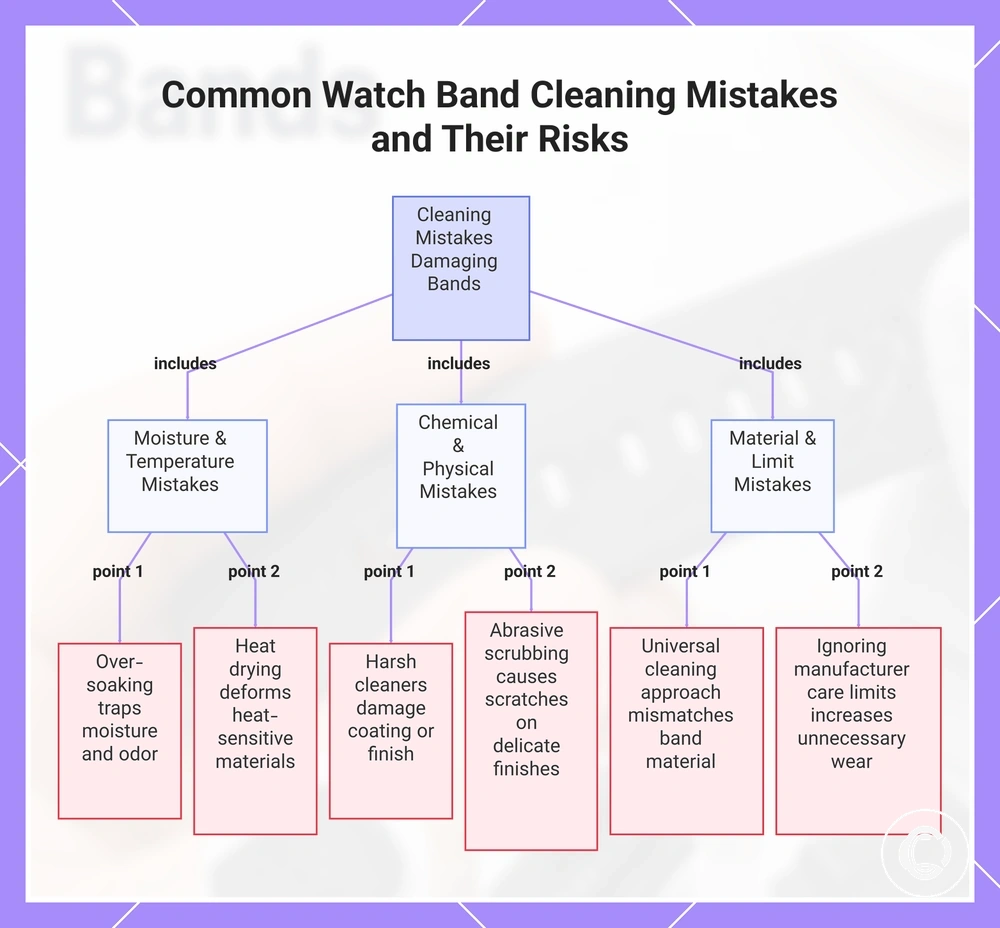
This chart groups common cleaning mistakes into three categories and shows the specific material or finish risks each mistake creates.