Smartwatch bands for sweat-ready workout use
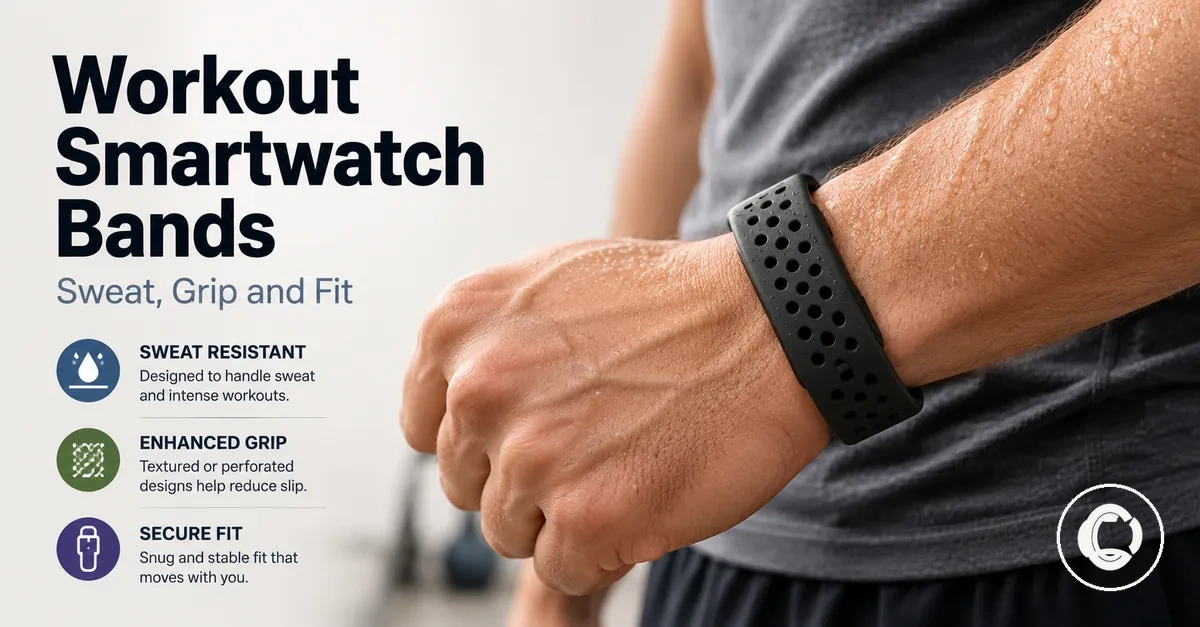
Smartwatch bands for workout use are straps chosen to handle sweat, movement, grip, comfort, and fit stability during exercise. A sweat-ready band is not one universal type; it is a band that matches the wearer’s activity, moisture exposure, wrist feel, and cleaning needs.
During gym sessions, running, humid outdoor training, or wet use, suitability can change by material, closure, wrist tension, and skin contact. Silicone and rubber may suit moisture-heavy use when quick drying and cleaning matter, while nylon may feel more breathable when airflow and softness are priorities. The right choice links material, moisture behaviour, secure fit, and activity intensity instead of treating any strap as automatically suitable for every workout.
Choose workout smartwatch bands by checking how the band handles sweat, water exposure, movement, and residue after exercise. Comfort, sensor contact, and durability may vary by watch model, strap design, skin sensitivity, and training environment, so the next step is to ground the choice in what a workout band needs to handle first.
What a workout smartwatch band needs to handle
A workout smartwatch band must manage sweat, movement, skin contact, and repeated cleaning while remaining suitable for the wearer’s watch and activity. A compatible band should stay secure during exercise while supporting comfort and sensor stability. The main conditions the band must handle are moisture, closure security, breathability, flexibility, and cleanability.
A workout smartwatch band is the wrist-contact component that experiences changing pressure, moisture, and movement during exercise. Comfort, sensor stability, and irritation risk may vary with wrist shape, watch model, band design, and activity conditions. Band size and connector compatibility still matter, but they remain secondary here unless they directly affect workout use. This page focuses on workout conditions rather than the full category of smartwatch bands.
During running, gym sessions, or other active use, sweat, wrist tension, and repeated movement can change how a band feels and performs. What a workout smartwatch band needs to handle is best evaluated through practical use conditions, and the image below highlights the main pressure points and contact areas that influence workout suitability.
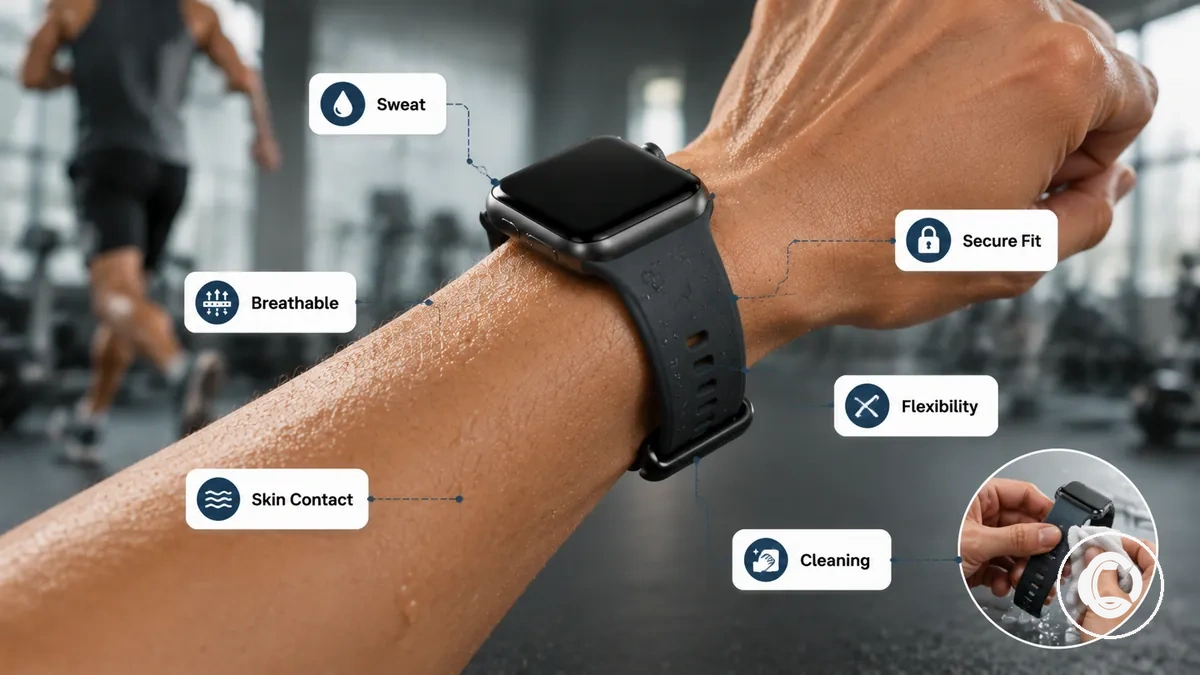
- Moisture handling: Sweat and water exposure can leave residue, so the decision signal is whether the band can be cleaned and dried without excessive effort.
- Closure security: Movement can increase slipping risk, so the decision signal is whether the closure remains stable under normal workout wrist tension.
- Breathability: Heat and prolonged skin contact may affect comfort, so the decision signal is whether airflow and contact surfaces suit the activity.
- Flexibility: Repeated wrist movement can reveal stiffness or rubbing, so the decision signal is whether the band moves naturally with the wrist.
- Cleanability: Repeated cleaning influences comfort, odour management, and replacement timing, so the decision signal is whether regular care remains practical over time.
Sweat resistance, water exposure, and quick drying
Sweat resistance, water exposure, and quick drying are different factors that influence workout comfort and long-term band condition. A sweat resistant band may handle residue and moisture differently from a band exposed to rain, rinsing, or swimming. The way a band responds to moisture depends on its material, exposure conditions, and cleaning routine, which is why sweat resistance should not be treated as the same thing as water exposure.
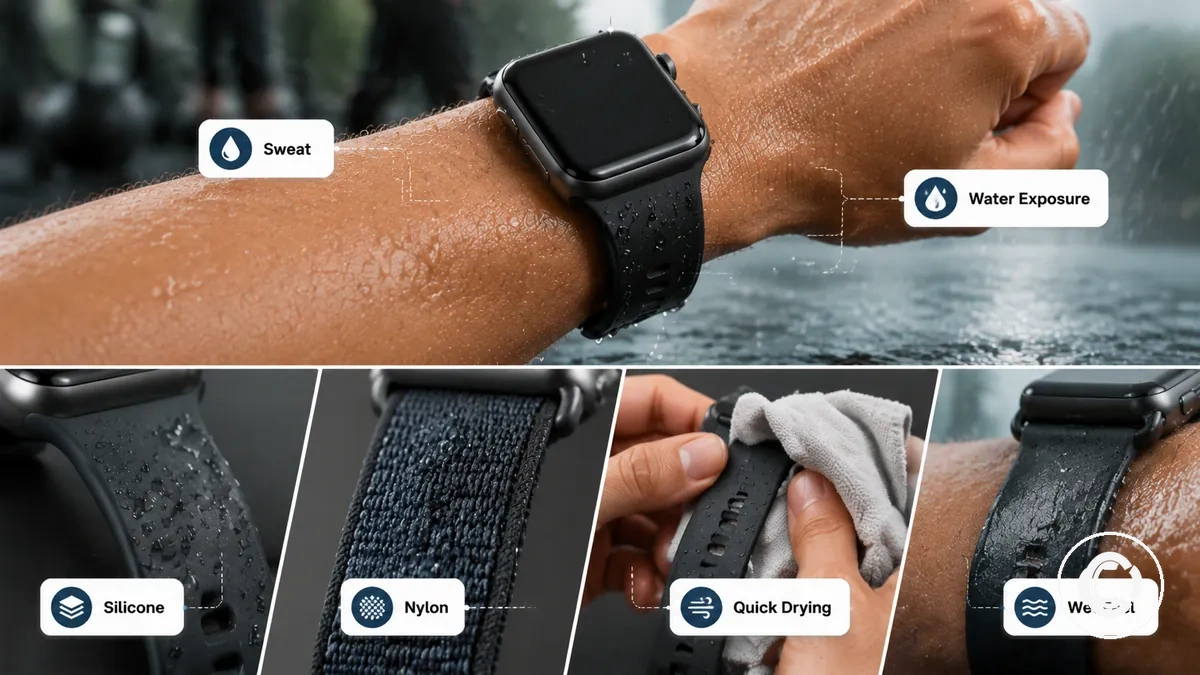
During gym workouts, sweat can leave residue that increases cleaning needs and may contribute to odour risk if moisture remains trapped. In rainy conditions, handwashing, or other wet use, materials such as silicone and rubber may shed moisture differently from nylon or other fabric-based bands that can absorb more water and create a longer wet feel under certain conditions. Quick drying can improve comfort after exposure, but drying behaviour varies by material, airflow, moisture level, and use pattern. Sweat resistance, water exposure, and quick drying are best evaluated by matching the exposure type to the band's moisture behaviour, as shown below.
What the image clarifies is that sweat resistance, water exposure, and quick drying describe different moisture conditions rather than a single performance claim. The examples highlight how moisture reaches the band, how material surfaces respond, and why drying behaviour can affect comfort and maintenance.
| Exposure type | Band attribute to check | Useful condition | Risk if ignored |
|---|---|---|---|
| Sweat | Sweat resistance and cleanability | Moisture can be removed through regular cleaning | Residue buildup and increased odour risk |
| Rain | Water resistant surface behaviour | Moisture sheds or dries without remaining trapped | Prolonged wet feel and added maintenance |
| Swimming or wet use | Material response to extended moisture exposure | Band remains suitable for cleaning and drying after use | Assuming water resistant means waterproof |
| Handwashing | Drying condition after brief water contact | Band returns to a comfortable wear state | Repeated moisture retention around the wrist |
| Humid training | Quick drying and breathability | Moisture disperses more easily during activity | Persistent dampness and comfort concerns |
Myth: sweat resistant, water resistant, and waterproof all mean the same thing. Truth: sweat resistance, water exposure, and quick drying describe different evaluation variables, and suitability depends on material and exposure conditions. Avoid relying on waterproof assumptions or fixed dry-time expectations when evaluating workout bands.
Breathability, heat, and skin contact during exercise
During repeated workouts, breathability, heat, and skin contact directly influence how comfortable a smartwatch band feels on the wrist. When airflow is limited and moisture remains trapped beneath the band, heat buildup and rubbing can become more noticeable during activity. Airflow, moisture, and fit tension are usually the main factors that affect comfort during exercise.
When a band feels uncomfortable during training, the cause is often related to airflow, contact area, moisture retention, or wrist tension rather than a single material property. A soft texture and balanced fit may improve skin feel, while excessive tightness can increase rubbing and reduce ventilation around the wrist contact area. Trapped sweat and residue can also affect comfort if moisture remains against the skin for extended periods. Breathability, heat, and skin contact during exercise are easier to evaluate when comfort signals are checked systematically, as outlined below.
Myth: any discomfort during exercise means the band material is unsuitable. Truth: normal workout dampness is common when heat, moisture, and movement increase together, while recurring redness, rubbing, or irritation risk may suggest reviewing fit tension, cleaning habits, or material choice. The distinction is not about diagnosing a skin condition but about separating normal dampness from recurring irritation signals.
Breathability, heat, and skin contact during exercise depend on contact area, airflow, moisture, and fit tension. The image below helps identify comfort-risk signals by showing where airflow, wrist contact, trapped sweat, and fit conditions may influence wearable comfort.
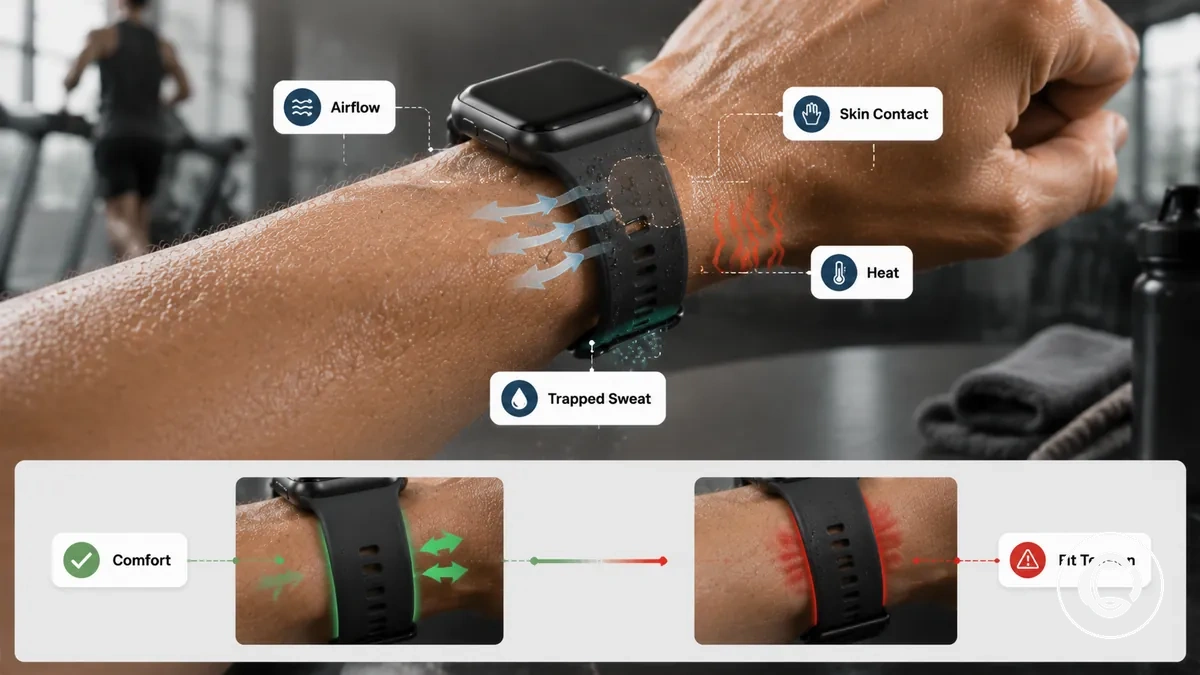
- Persistent heat buildup: Check whether airflow around the wrist feels restricted; a more breathable surface or increased ventilation may improve comfort.
- Trapped sweat beneath the band: Consider whether moisture and residue remain against the skin; this may indicate a need for more frequent cleaning or drying.
- Rubbing during movement: Review fit tension and wrist contact areas if friction becomes noticeable during exercise.
- Recurring redness after workouts: Evaluate material surface, cleanliness, and band tightness, as skin response can vary by wearer and conditions.
- Persistent damp skin feel: Check whether moisture disperses effectively or whether airflow remains limited around the contact area.
Workout band materials and training trade-offs
Workout band materials and training trade-offs depend on workout conditions, moisture exposure, comfort priorities, and maintenance preferences. No material is suitable for every training environment because sweat resistance, breathability, durability, skin feel, and cleaning requirements often involve trade-offs. Material choice is therefore conditional rather than universal.
During high-sweat workouts or wet outdoor sessions, silicone and rubber may be preferred when moisture handling, grip, flexibility, and cleaning convenience are important. During longer training periods where airflow and breathable comfort matter more, nylon and fabric options may feel more comfortable because they can allow greater ventilation around the wrist. Leather and metal can still be used during exercise, but sweat exposure, moisture retention, and care needs may influence long-session comfort depending on use conditions. For broader material-care context, see sweat-friendly band materials. The comparison below highlights how workout band materials behave under common training conditions.
| Material | Workout strengths | Workout limits | Best-fit condition |
|---|---|---|---|
| Silicone | Sweat resistance, flexibility, straightforward cleaning | May retain heat or moisture against the wrist | Frequent gym training and wet conditions |
| Rubber | Grip, water handling, durability | Comfort and flexibility may vary by design | Outdoor training and high-movement activities |
| Nylon or fabric | Breathability, lighter skin feel, washability | May hold more moisture during extended workouts | Long sessions where airflow is prioritised |
| Leather | Comfortable surface and flexible feel | Sweat exposure and cleaning needs may increase care burden | Lower-intensity exercise with limited moisture exposure |
| Metal | Durability and stable structure | Weight, heat, and moisture handling may affect comfort | Workouts where durability is prioritised over breathability |
When trapped sweat and moisture are the main concern, silicone and rubber may offer practical advantages because cleaning and sweat resistance often become key decision signals. When airflow, skin feel, and breathability matter more, nylon or fabric may deserve closer consideration. The most suitable workout band materials depend on balancing sweat resistance, breathability, durability, and cleaning needs against the demands of the workout.
Silicone and rubber for sweat, water, and durability
Silicone and rubber for sweat, water, and durability differ mainly in feel, grip, cleaning response, and long-term wear characteristics. Both materials are common choices for workout-focused bands because they handle sweat and water exposure well, but they create different comfort experiences on the wrist. The choice depends on feel, durability, and cleaning needs.
| Silicone tendency | Rubber tendency |
|---|---|
| Softer feel with high flexibility | Often firmer with a more structured feel |
| Handles sweat and water with straightforward cleaning | Handles sweat and water while often providing stronger grip |
| May attract more visible dust depending on surface finish | Dust attraction may vary by formulation and surface texture |
| Comfort may suit users who prefer a softer wrist feel | Durability and grip may appeal during demanding workouts |
When a smartwatch band feels uncomfortable after repeated sweat exposure, comparing silicone and rubber can help identify the more suitable material direction. Silicone typically emphasises softness, flexibility, comfort, and simple cleaning after wet use, while rubber often focuses on grip, water handling, and durability. Comfort, lifespan, and sweaty-wrist suitability can vary by material formulation, use pattern, and cleaning habits. Certain rubber subtypes may behave differently, but those distinctions usually matter only when they influence grip, durability, or comfort during training. A silicone band may suit users prioritising flexibility and softer contact, while a rubber strap may suit users who place greater importance on grip and durability.
Nylon and fabric for breathability and washability
During long workouts where heat buildup, softness, and wrist comfort matter most, nylon and fabric bands may offer advantages through airflow and flexible wear characteristics. A woven band or fabric strap can feel lighter against the skin than less breathable materials, especially when movement and heat increase. The main reasons users choose nylon and fabric are airflow and washability.
Myth: breathable materials automatically stay dry during every workout. Truth: nylon and fabric bands may improve airflow and comfort, but breathable construction does not eliminate absorbency. Moisture handling, drying speed, odour control, and wet-wrist comfort can vary by weave, material density, cleaning habits, and workout conditions. Moisture retention remains the main caution when choosing nylon and fabric for breathability and washability.
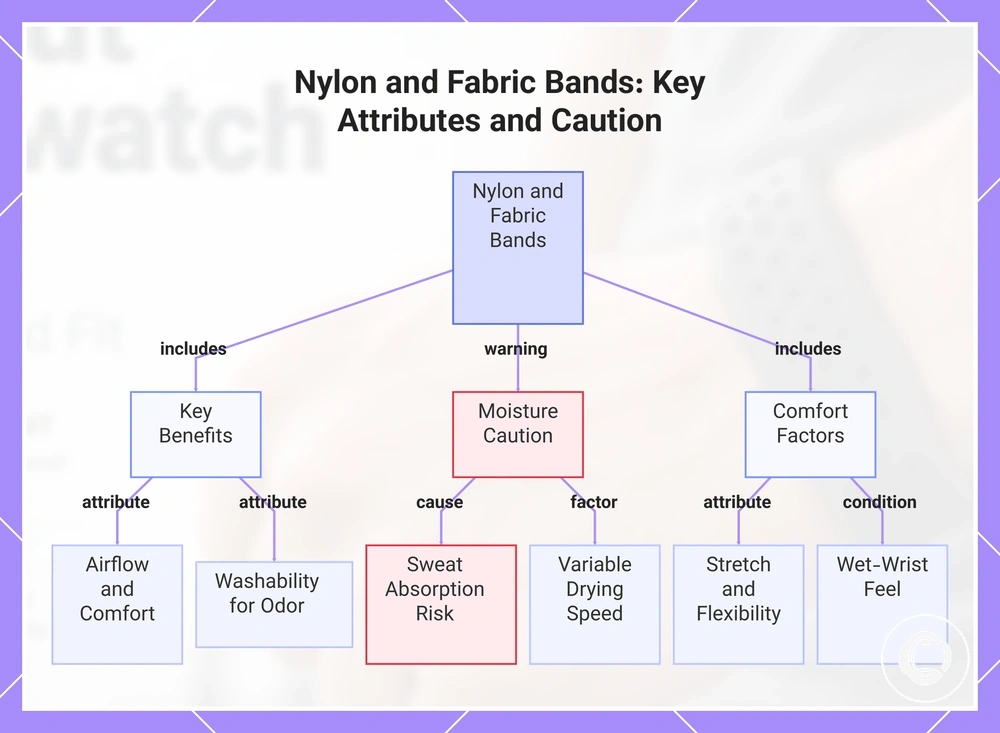
- Airflow: Nylon and fabric weaves can allow more airflow around the wrist, which may improve comfort during longer training sessions.
- Sweat absorption: Fabric materials often have greater absorbency than non-porous materials, which can increase moisture retention during heavy sweat exposure.
- Drying speed: Drying speed varies by weave, thickness, airflow, and moisture level, so a breathable fabric strap may not always feel dry immediately after use.
- Washability: Many nylon and fabric bands are washable, which can help remove sweat residue and support odour management when cleaned regularly.
- Stretch and comfort: Certain woven designs may provide more stretch and flexibility, which can improve comfort, although wet-wrist feel can still depend on absorbency and drying behaviour.
This chart shows the main benefits and moisture-related caution of nylon and fabric bands for breathability and washability.
Leather and metal limits in sweaty training
Leather and metal limits in sweaty training depend on how often sweat, water exposure, and impact occur during exercise. Leather and metal bands can remain suitable for certain activities, but absorption, weight, stiffness, and cleaning limits may become more noticeable during repeated workouts. Sweat, water, and ongoing care are usually the main limiting conditions.
| Occasional light activity | Repeated sweaty training |
|---|---|
| Leather may remain comfortable when sweat exposure is limited and care needs stay manageable. | Leather absorption may increase odour risk and care burden when sweat exposure becomes frequent. |
| Metal bands may feel stable during shorter or lower-intensity activity. | Weight, stiffness, and slipping may become more noticeable during longer or higher-movement workouts. |
| Cleaning demands may remain relatively modest with limited water and sweat exposure. | Frequent sweat and water exposure can increase cleaning limits and highlight material constraints. |
| Comfort concerns may be less noticeable during casual wear or light exercise. | Corrosion risk, comfort changes, and wrist feel can vary by finish, maintenance, and workout frequency. |
During walking, light exercise, or occasional activity, leather straps and metal bands may remain practical when moisture exposure is limited. During repeated training sessions, leather may require more care because absorption can retain sweat, while a metal band may feel heavier or less flexible depending on design. Corrosion risk, slipping, discomfort, and cleaning limits can vary by finish, maintenance habits, and exposure conditions. The key distinction is between occasional light activity and repeated sweaty training rather than avoiding leather or metal for all wear.
Perforated sport bands and airflow during movement
Perforated sport bands can support airflow, sweat release, and skin comfort during movement, but holes alone do not determine how breathable a band feels. Airflow depends on the hole pattern, material, strap thickness, and contact area working together. Perforations are only one airflow factor, and they help only under the right conditions.
During running, gym training, or other active movement, airflow holes may create additional ventilation paths that can help reduce trapped sweat against the wrist. The effect may vary depending on whether the perforated strap uses silicone, rubber, or another material, as well as how strap thickness influences wrist contact and flexibility. A larger contact area or excessive fit tension may reduce ventilation even when many holes are present. Perforated sport bands and airflow during movement are best evaluated through the conditions below, which help verify whether perforations are functional.
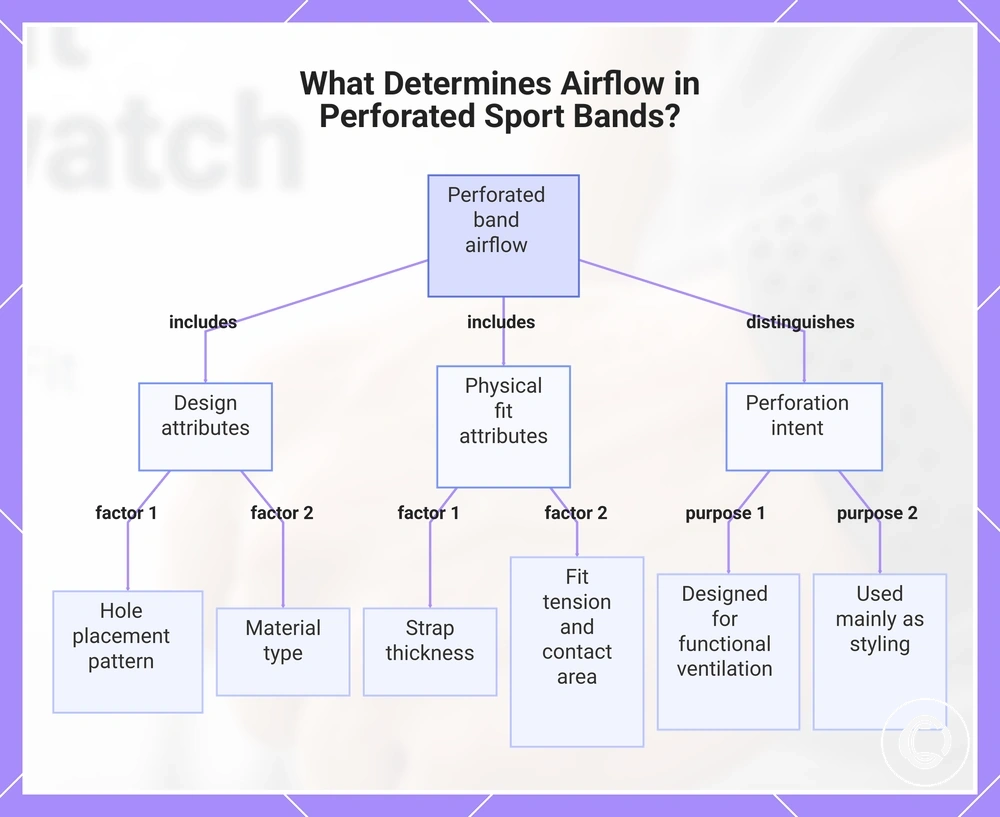
- Hole placement: A balanced hole pattern may support airflow and sweat release more effectively than holes concentrated in a small section.
- Material: Silicone and rubber can respond differently to heat, moisture, and skin contact, so airflow benefits depend partly on material characteristics.
- Strap thickness: Thinner straps may feel more flexible and ventilated, while thicker designs can reduce the effect of airflow holes.
- Fit tension and contact area: Excessive wrist pressure or a larger contact area may limit ventilation even when perforations are present.
- Cleaning ease: Perforations may support cleaning ease by exposing more surface area, but residue management still depends on regular cleaning.
Myth: perforated sport bands automatically prove better breathability, hygiene, or sensor accuracy. Truth: perforations can contribute to functional ventilation, but airflow, flexibility, comfort, and sweat handling still depend on material, fit, strap thickness, and contact area. The key distinction is between perforations designed for functional ventilation and perforations used mainly as styling.
This chart shows the main factors that influence airflow in perforated sport bands and the critical distinction between functional ventilation and styling.
Secure fit under movement, impact, and sensor contact
Secure fit under movement, impact, and sensor contact depends on balancing stability, comfort, and consistent wrist contact during exercise. A secure fit can help reduce slipping and unwanted band movement, but excessive tightness may increase discomfort or rubbing. Secure fit is determined primarily by strap tension, closure stability, and wrist movement.
During running, gym training, cycling, or wet movement, a smartwatch band experiences changing forces that can affect closure hold, contact pressure, and sensor contact. Strap width, elasticity, and closure design may influence how the band responds to impact and repeated wrist movement. A stable fit may support more consistent heart-rate reading conditions, but heart-rate reading stability can still vary by watch design, wrist shape, activity level, and band elasticity. Secure fit under movement, impact, and sensor contact is best evaluated through the practical criteria below.
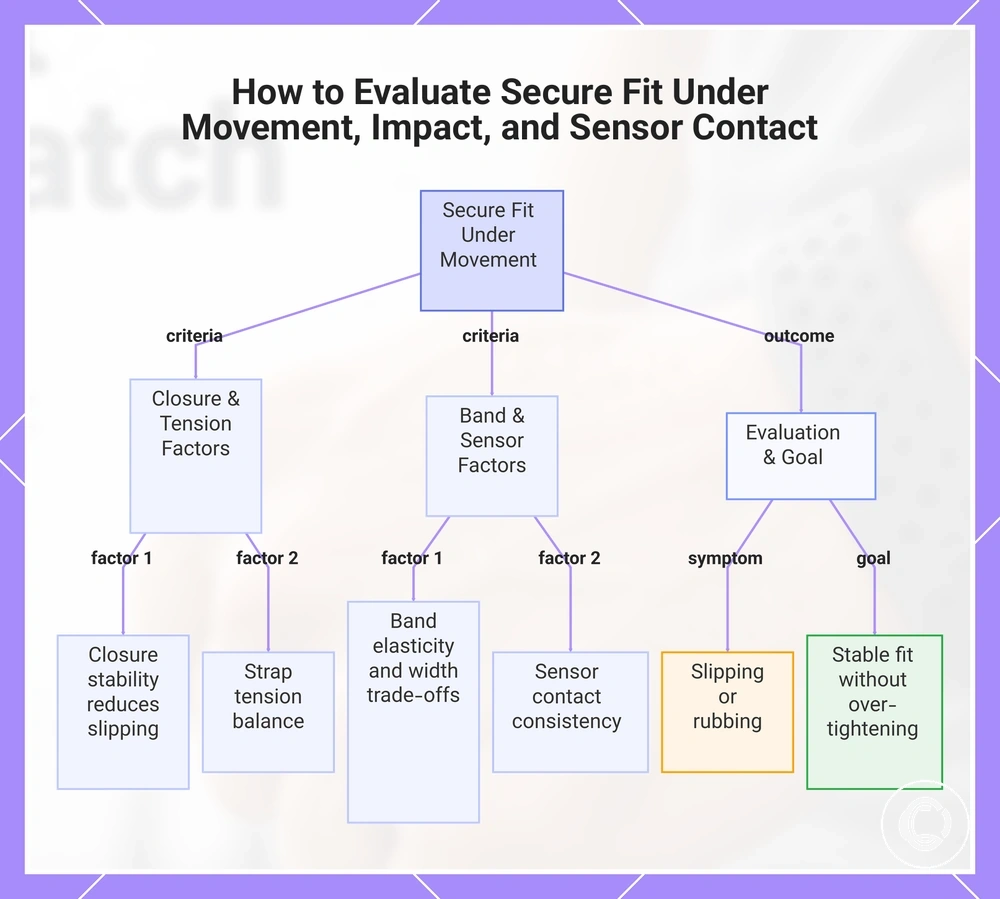
- Closure stability: A secure closure can help reduce slipping risk during repeated movement or impact.
- Strap tension: Too little tension may allow band movement, while excessive tension may increase rubbing or tightness discomfort.
- Band elasticity: Greater elasticity may improve comfort during wrist movement, but excessive stretch can reduce hold stability.
- Band width: Width can influence contact pressure distribution and how stable the band feels during activity.
- Sensor contact: Consistent wrist contact may support heart-rate reading stability, but it does not guarantee specific outcomes.
- Wet conditions: Sweat and moisture can change grip and comfort, making closure security and fit adjustment more important.
When slipping, rubbing, or persistent tightness becomes noticeable, the issue may involve more than a simple tension adjustment. A broader evaluation of secure band fit may help determine whether closure choice, elasticity, contact pressure, or wrist movement is affecting comfort and stability. The goal is to maintain a secure fit without over-tightening or expecting exact heart-rate reading outcomes.
This chart shows the key factors that determine secure fit, the symptoms of poor fit, and the goal of balancing stability and comfort.
Closure stability and strap tension
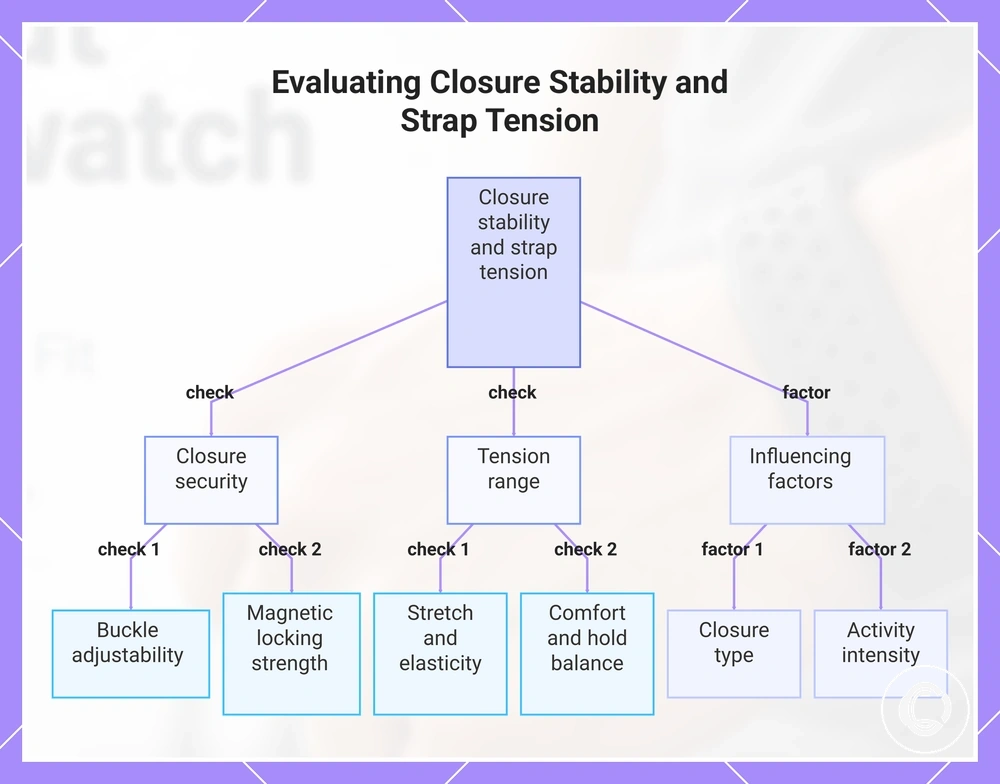
Closure stability and strap tension depend on how securely the closure design holds during repeated wrist movement without creating pressure points. A stable fastening can improve fit confidence, while strap tension should provide hold without unnecessary discomfort. The main criteria are closure security and tension range.
When slipping, shifting, or pressure becomes noticeable during activity, reviewing closure stability and strap tension can help identify whether the issue comes from adjustability, locking strength, strap stretch, or wear. Closure type, activity intensity, and elasticity may all influence how reliably a band holds position. The checklist below helps evaluate closure stability and strap tension during movement.
- Buckle: Check whether adjustability allows a secure hold without creating pressure points during repeated movement.
- Loop or hook-and-loop fastening: Review whether strap hold remains consistent as wrist movement and fastening wear increase.
- Magnetic closure: Assess whether locking strength remains suitable for the intended activity and movement intensity.
- Stretch and elasticity: Determine whether strap stretch improves comfort or allows enough movement to increase slipping risk.
- Tension range: A useful tension setting should balance comfort and hold rather than relying on excessive tightness to reduce movement.
This chart shows the main criteria and checklist for evaluating closure stability and strap tension during wrist movement.
Slipping, rubbing, and heart-rate reading stability
When slipping, rubbing, or unstable heart-rate reading conditions occur during exercise, the cause may relate to tension, friction, sweat, or strap stretch rather than a single fit issue. These symptoms can overlap during movement, so any adjustment should be based on the most likely contributing factor rather than an assumed fix. Slipping, rubbing, and heart-rate reading stability are often influenced by tension, friction, sweat, and strap stretch.
During running, gym training, or other high-movement activities, wrist contact conditions may change as moisture builds and the band shifts position. Sensor gaps, band movement, and comfort concerns can appear together, making it useful to identify which symptom occurs first and under which conditions. The diagnostic points below help interpret slipping, rubbing, and heart-rate reading stability during movement.
- Slipping: Likely cause may be low tension, reduced closure hold, sweat buildup, or strap stretch. Check whether the band slides during movement; this may indicate that fit stability needs adjustment.
- Rubbing: Likely cause may be friction, pressure points, or inconsistent skin contact. Check whether discomfort appears in the same area repeatedly; this may suggest that tension or wrist contact needs review.
- Sensor gaps: Likely cause may be loose contact or band movement during activity. Check whether the watch lifts away from the wrist; this may contribute to less stable reading conditions.
- Band movement during impact: Likely cause may be strap stretch, closure movement, or changing wrist position. Check whether impact-heavy activity increases shifting; this may indicate reduced fit consistency.
- Unstable heart-rate reading conditions: Likely cause may be sensor gaps, movement, sweat, or changing wrist contact. Check whether reading changes occur alongside visible band movement; this may help identify a fit-related factor without implying a sensor fault.
Choosing a workout smartwatch band by activity type
Choosing a workout smartwatch band by activity type depends on matching the band’s strengths to the conditions created by the activity. A workout smartwatch band that works well for a high-sweat workout may not prioritise the same attributes needed for wet use, outdoor heat, or long-duration training. Activity type changes the priority order of sweat control, water exposure, grip, breathability, and easy cleaning.
During exercise, the most useful selection criteria often shift according to movement intensity, moisture exposure, and wear duration. Running may place more emphasis on secure closure and movement control, while outdoor heat may increase the importance of breathability and quick drying. Long sessions can make comfort, residue management, and easy cleaning more relevant over time. The decision table below organises activity-specific priorities for choosing a workout smartwatch band by activity type.
| Activity type | Priority attribute | Suitable band condition | Trade-off to check |
|---|---|---|---|
| Gym training | Sweat control and easy cleaning | Band handles repeated sweat exposure and regular cleaning | Heat buildup or moisture retention |
| Running | Secure closure and grip | Band remains stable during repeated movement | Excessive tension or pressure points |
| Swimming or wet use | Water exposure and quick drying | Band can be cleaned and dried after frequent moisture contact | Assuming water handling means suitability for every wet condition |
| Outdoor heat | Breathability and moisture release | Band supports airflow around the wrist | Reduced durability or increased moisture absorption |
| Long-duration training | Breathability and skin comfort | Band remains comfortable during extended wear | Residue buildup and ongoing cleaning needs |
When one activity creates a recurring comfort or maintenance problem, prioritising the related attribute can simplify selection. A secure closure may become the main decision signal for movement-heavy exercise, while quick drying and easy cleaning may matter more when sweat or water exposure is frequent. The strongest decision signals are usually secure closure, quick drying, breathability, and easy cleaning.
When training conditions overlap, selection may require balancing more than one priority instead of focusing on a single attribute. A runner training in outdoor heat, for example, may need both closure stability and airflow, while a high-sweat workout may increase the importance of cleaning tolerance. Workout use is only one need-based selection path, and other priorities can be explored through bands by need.
Choosing a workout smartwatch band by activity type starts with identifying the conditions the band must handle most often. The suitable option depends on matching activity demands with the right balance of sweat control, water exposure management, secure closure, breathability, and easy cleaning.
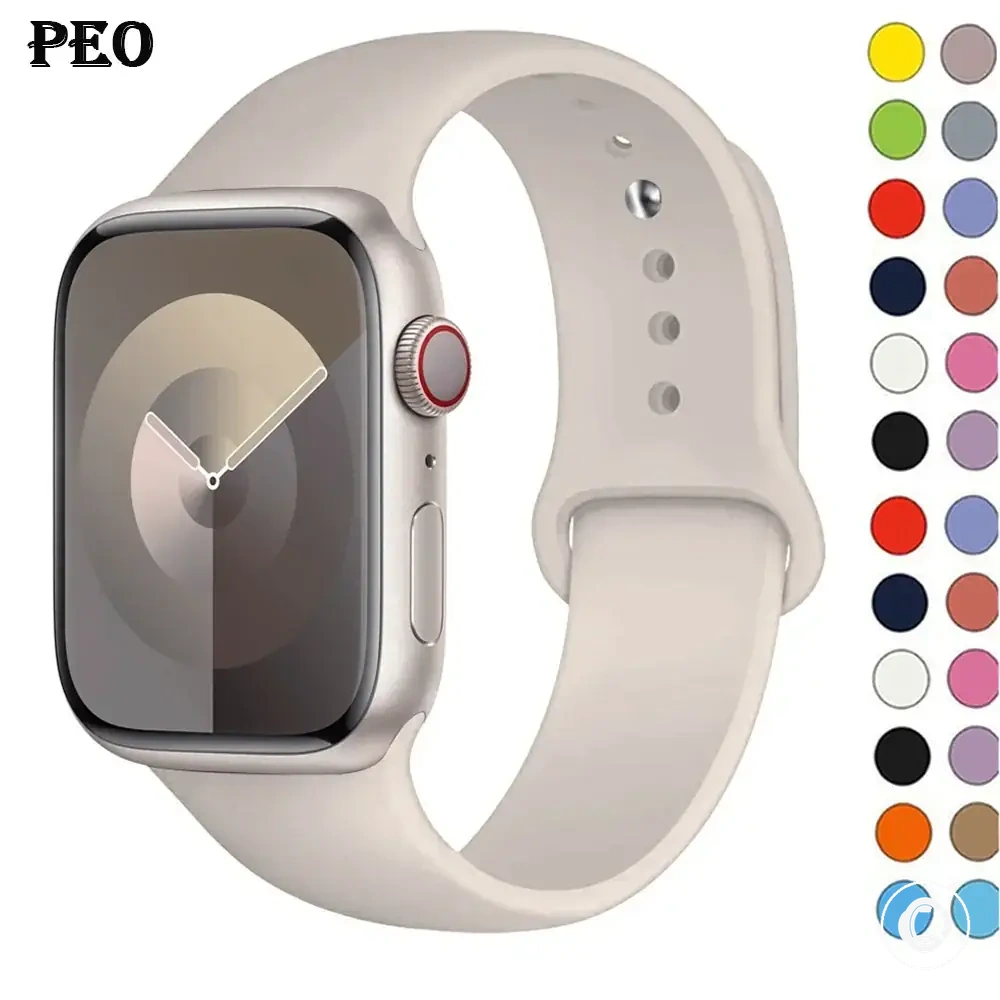
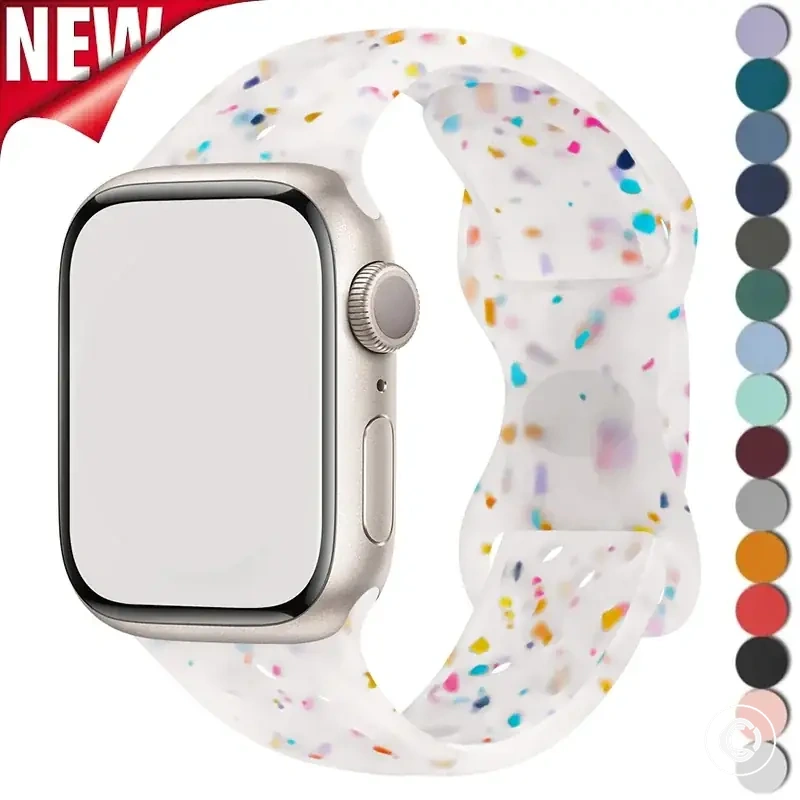
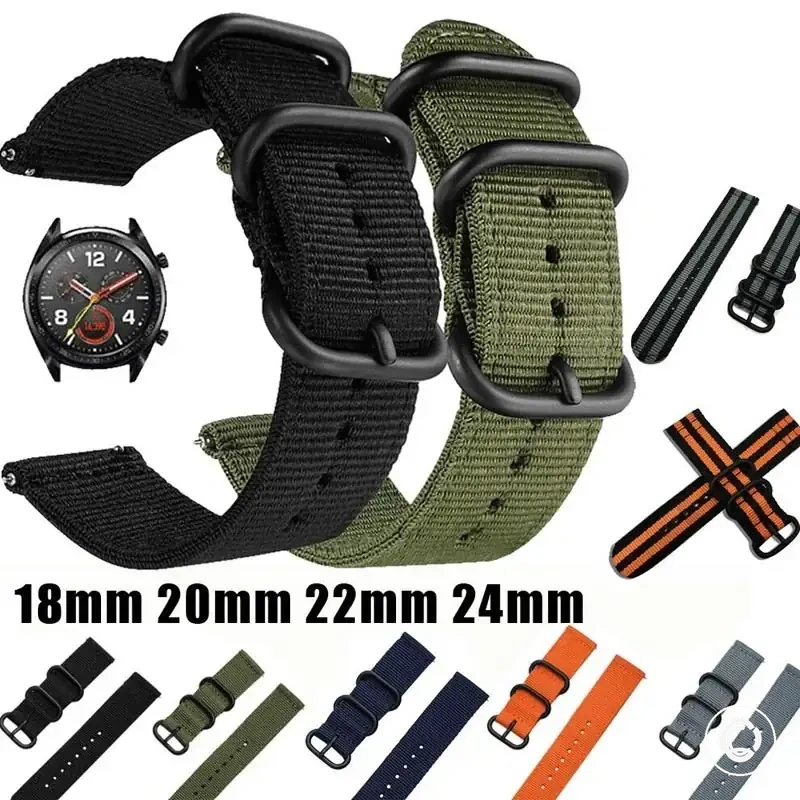
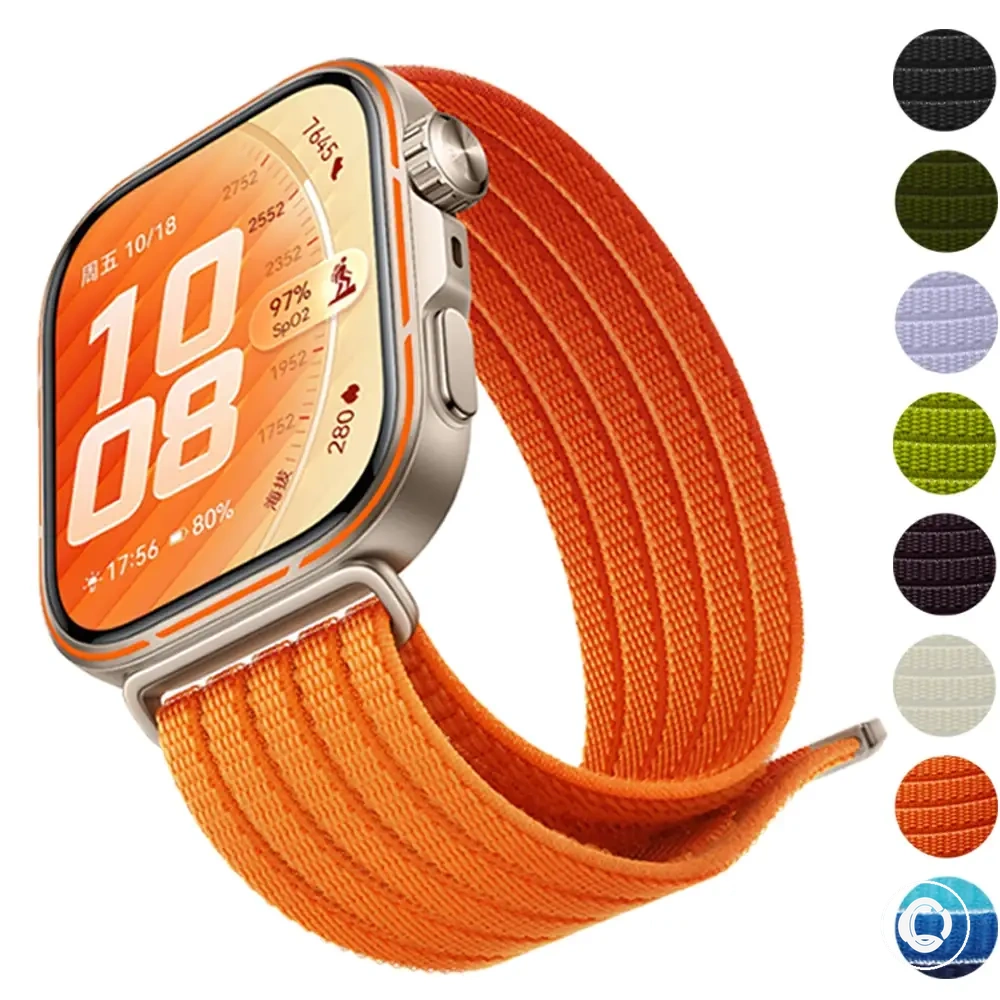
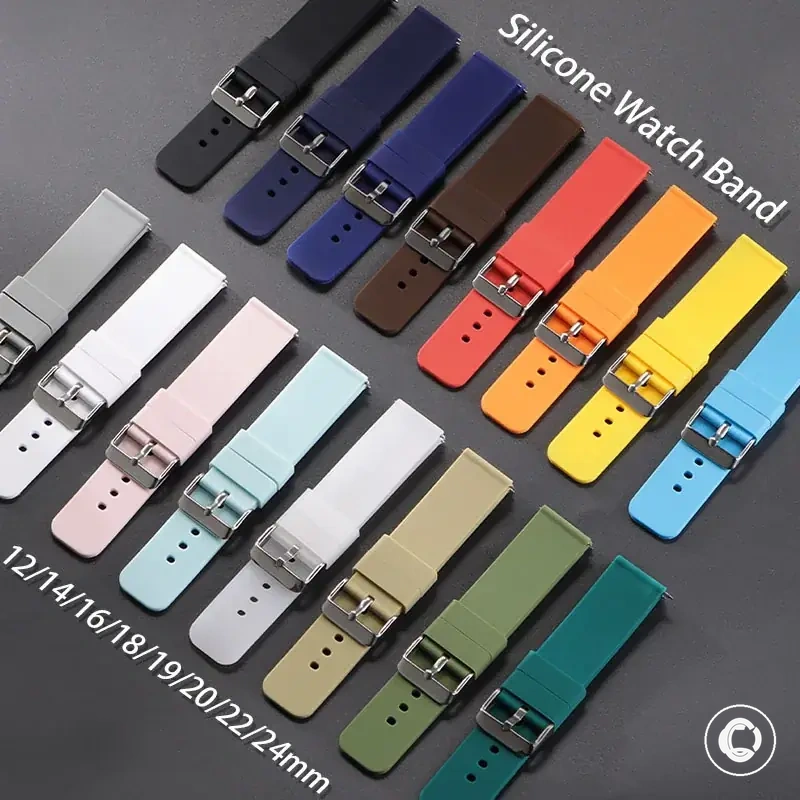
Here are product examples that may make comparison easier. Before buying, always review the compatibility criteria, essential features, and product details.
Water workouts, humid training, and wet-wrist use
Water workouts, humid training, and wet-wrist use require a band that can handle moisture while staying secure during movement. Water resistance, drying behaviour, grip, closure security, and cleaning needs all affect whether a band remains comfortable after exposure. A water-resistant band does not prove that the smartwatch itself is suitable for swimming or other wet use.
During swimming, rain, humid outdoor training, or repeated sweat exposure, wet use depends on both band material and closure security. A band may shed water, dry quickly, or keep grip differently depending on surface texture, fit tension, and cleaning routine. The checklist below separates band-level moisture handling from watch-level suitability.
- Swimming: Check band water resistance and closure security; do not assume the band makes the smartwatch suitable for swimming.
- Rain: Check drying behaviour and grip after water exposure; a damp wrist may change comfort and strap hold.
- Humid training: Check whether sweat and humidity increase cleaning needs; trapped moisture may affect comfort during longer sessions.
- Wet-wrist use: Check whether the band dries and cleans easily after repeated moisture contact; wet feel can vary by material and fit.
- Frequent water exposure: Check whether closure security remains stable when the band is wet; slipping risk may increase if grip changes.
High-sweat workouts and long training sessions
During high-sweat workouts and long training sessions, band priorities often shift from simple sweat handling to managing sustained sweat, moisture buildup, and comfort over time. As workout duration increases, cleaning demand, wrist contact, and fit consistency may become more important than they are during shorter sessions. The main difference is the effect of sustained moisture and friction.
When a band feels comfortable during a short workout but less comfortable during extended workouts, moisture buildup, rubbing, or changing strap tension may be contributing factors. Long training sessions can place greater emphasis on breathability, material softness, and cleaning habits because sweat remains in contact with the wrist for longer periods. The checklist below highlights how high-sweat workouts and long training sessions can change selection and care priorities.
- Longer duration and sweat load: Sustained sweat may increase moisture buildup, making cleaning and drying behaviour more important after use.
- Extended wear and breathability: Long training sessions may increase the value of breathability when heat and moisture accumulate around the wrist.
- Strap tension and friction: A strap tension setting that feels comfortable during a short session may require adjustment if rubbing becomes more noticeable during longer use.
- Material softness and comfort: Material softness may become a higher priority when a sweaty wrist remains in contact with the band for extended periods.
- Odour risk and replacement signals: Odour risk, persistent residue, or ongoing comfort changes may depend on cleaning habits, material type, fit, and wear condition, and can indicate that closer inspection or replacement consideration is warranted.
Cleaning and drying after workout wear
Cleaning and drying after workout wear starts with removing sweat residue and moisture soon after exercise. A soft cloth, fresh water, and, when appropriate for the band material, mild soap are usually sufficient for routine cleaning. Cleaning depends on band material and residue level.
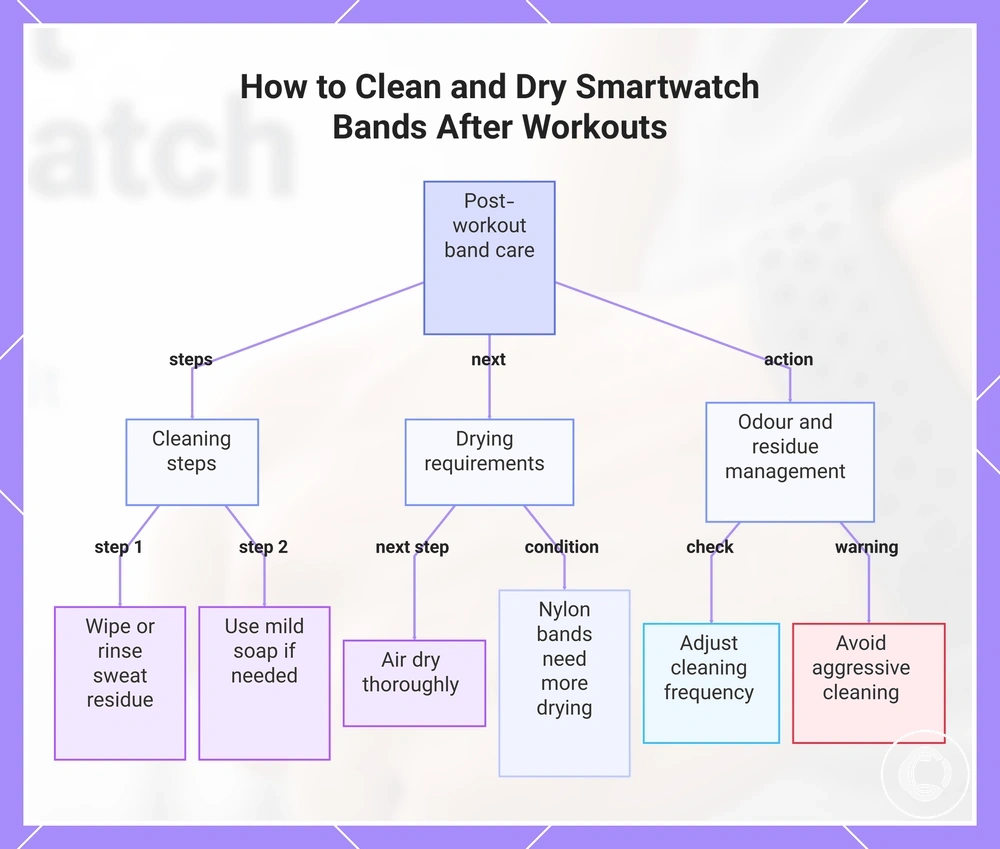
When sweat residue, moisture, or repeated skin contact accumulate, simple post-workout care can help support odour control, skin comfort, and band longevity. Wipe or rinse the band according to material-specific care needs, and use cleaning methods that suit the material and any available care guidance. For deeper material-specific care, see cleaning after workouts. The steps below organise cleaning and drying after workout wear by residue level and band material.
- Remove surface residue: Wipe sweat residue with a soft cloth; heavier residue may require a gentle rinse with fresh water.
- Use mild cleaning when needed: If residue remains, mild soap may be suitable for certain band materials; the cleaning method depends on material-specific care requirements.
- Check material-specific care: Silicone and rubber bands may respond well to simple wipe-and-rinse cleaning, while nylon or fabric bands may require additional drying time after cleaning.
- Air dry thoroughly: Allow the band to air dry after cleaning, and avoid heat drying methods that may not suit the material.
- Review residue and odour control: If sweat residue or odour risk becomes more noticeable after repeated workout wear, cleaning frequency and drying habits may need adjustment.
Myth: stronger cleaning methods automatically improve results. Truth: routine cleaning usually relies on fresh water, a soft cloth, and material-appropriate care rather than aggressive cleaning approaches. If moisture remains after cleaning, dry completely before wearing or charging the smartwatch.
This chart outlines the recommended steps for cleaning and drying a smartwatch band after workouts, including material-specific drying considerations and long-term maintenance tips.