
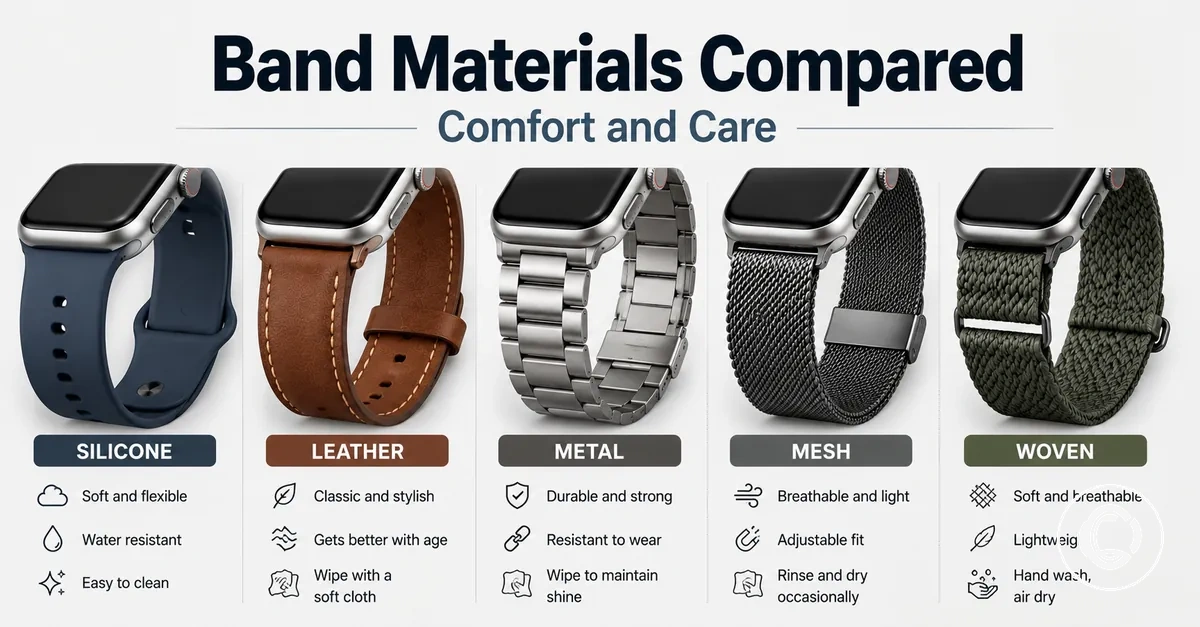
Smartwatch band materials compared for comfort, durability, and care
Smartwatch band material choice depends on comfort, durability, care needs, and the way the band will be worn, so there is no single material that suits every wrist or use case. Silicone, nylon, leather, metal, mesh, rubber, and woven bands can each fit different priorities when the material aligns with skin feel, moisture exposure, daily routine, and maintenance expectations.
Soft polymer bands often suit users who prioritize wipe-clean care and sweat tolerance, while textile bands can feel lighter or more breathable but may absorb moisture and require longer drying time. Leather can offer a more refined appearance and a softer feel over time, but it typically requires greater care around moisture exposure. Metal and mesh bands can provide a more structured feel, while weight, finish, links, and cleaning access may influence long-term comfort and appearance.
Material comparison works best when evaluated through real use conditions rather than fixed rankings. A band used during exercise, hot weather, or frequent exposure to moisture may benefit from different material characteristics than a band worn mainly for office settings or everyday wear. Comfort can depend on flexibility, edge feel, weight, moisture behavior, and individual skin response during extended use.
Material selection should also remain within practical fit requirements. Before comparing comfort, durability, or care needs, the band should match the smartwatch connector design, adapter requirements, strap width, and wrist size range, as these factors can affect how securely and comfortably the band sits on the wrist.
Main material families used for smartwatch bands
Smartwatch band material families are the broad substance groups used to make the strap, such as polymers, textiles, leather, and metal. Understanding these families helps identify how a band may feel, wear, and be maintained before comparing comfort, durability, or care requirements.
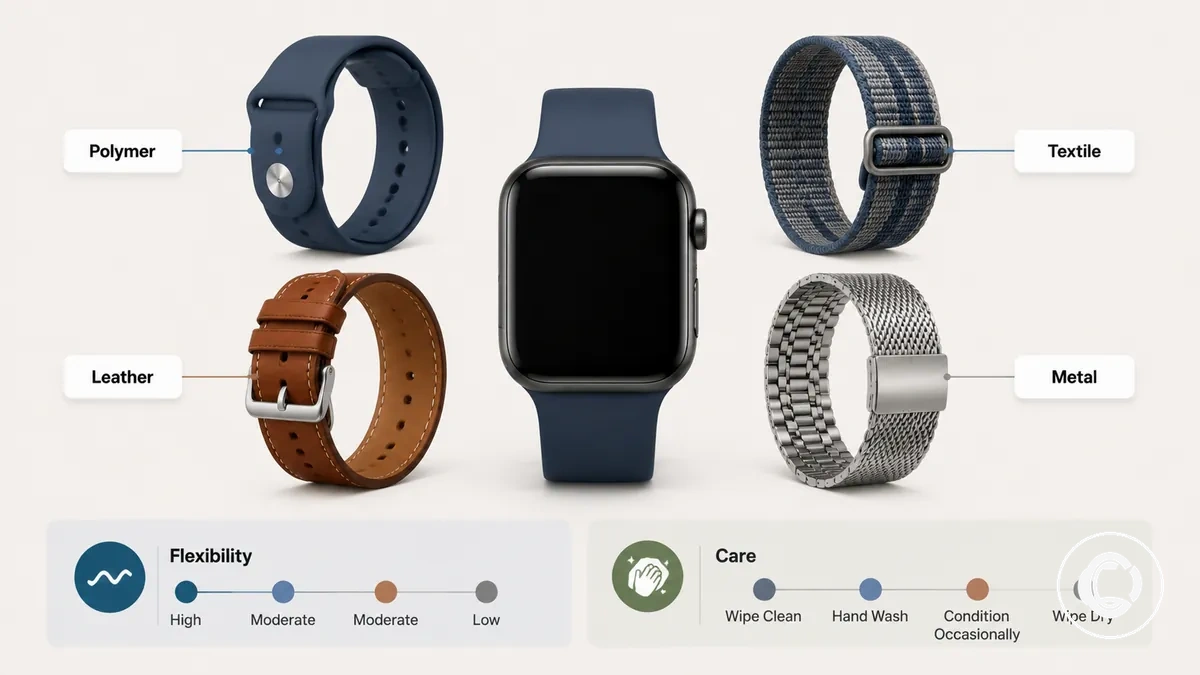
A material family describes what the band is made from, while a strap style describes how it is designed, fastened, or attached. Silicone, nylon, leather, and stainless steel refer to material composition, whereas sport bands, mesh bands, and other strap formats refer to construction or design choices. For a closer look at design and fastening formats, see smartwatch band types.
| Material family | Common construction | Typical use context |
|---|---|---|
| Silicone, rubber, and fluoroelastomer | Flexible polymer strap with a smooth or molded surface | Often chosen where flexibility, moisture exposure, and simple care matter |
| Nylon, fabric, and woven materials | Textile strap made from woven or layered fibres | Often used for a lighter feel and increased airflow during daily wear |
| Leather | Natural or alternative leather strap with a finished surface | Often selected where appearance and material character are priorities |
| Stainless steel, metal, and mesh | Linked, mesh, or solid metal construction | Often used when a structured feel and durable surface are desired |
Material families provide a starting framework rather than a ranking system. Softness, flexibility, moisture behaviour, cleaning needs, and visible wear can vary within the same family, so each material should be evaluated according to the intended use and maintenance expectations.
Silicone, rubber, and fluoroelastomer bands
Silicone, rubber, and fluoroelastomer bands are flexible polymer smartwatch band materials that are commonly associated with softness, sweat tolerance, and wipe-clean care. Their flexible structure allows the band to move with the wrist, which can contribute to comfort during everyday wear and physical activity.
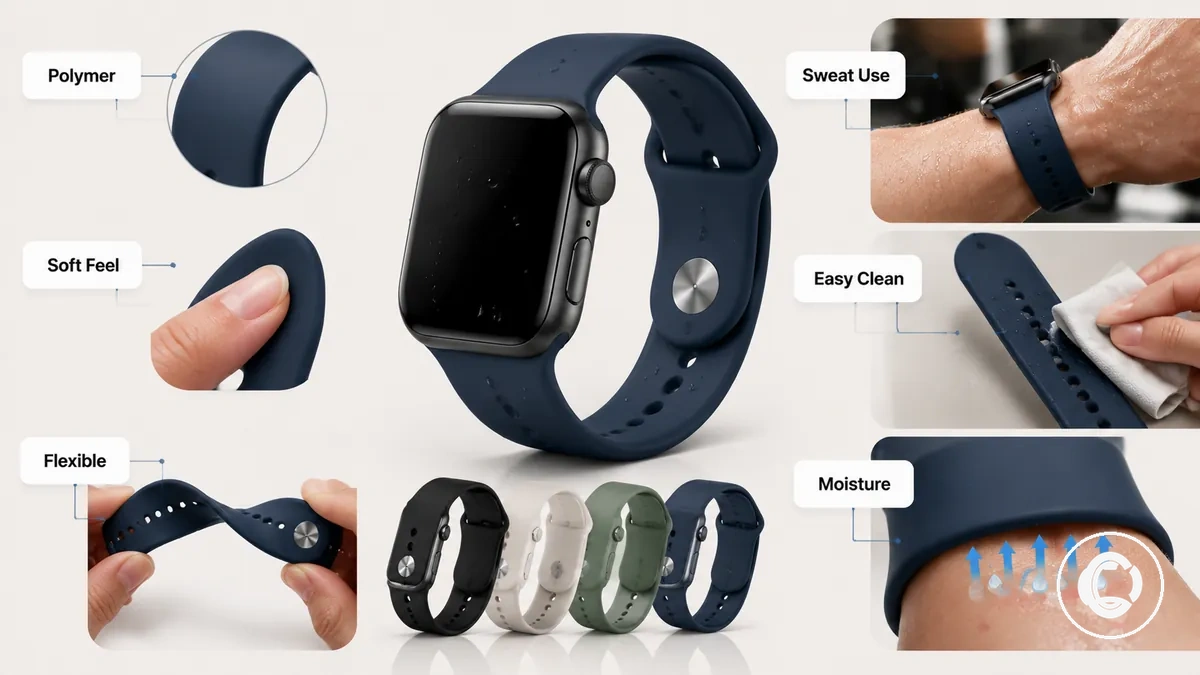
These materials are often selected when exposure to sweat, splashes, or routine surface dirt is expected. Because they are generally non-absorbent compared with many fabric-based materials, surface residue can often be removed with simple cleaning rather than deeper washing or conditioning.
Silicone, rubber, and fluoroelastomer belong to the same flexible polymer group, but their texture, firmness, surface finish, and overall feel can vary. As a result, two bands that appear similar may provide different wearing experiences depending on material formulation and construction.
Moisture management remains an important consideration. Although these materials typically resist absorbing moisture, sweat and humidity can still become trapped between the band and the skin during prolonged wear. Comfort may therefore depend on fit, airflow, activity level, and individual skin response rather than the material category alone.
Nylon, fabric, and woven bands
Nylon, fabric, and woven bands are textile-based smartwatch band materials that are often associated with a lightweight feel, flexible wear, and increased airflow around the wrist. Their woven construction can promote breathability during long wear, although comfort may vary depending on weave design, thickness, and overall fit.
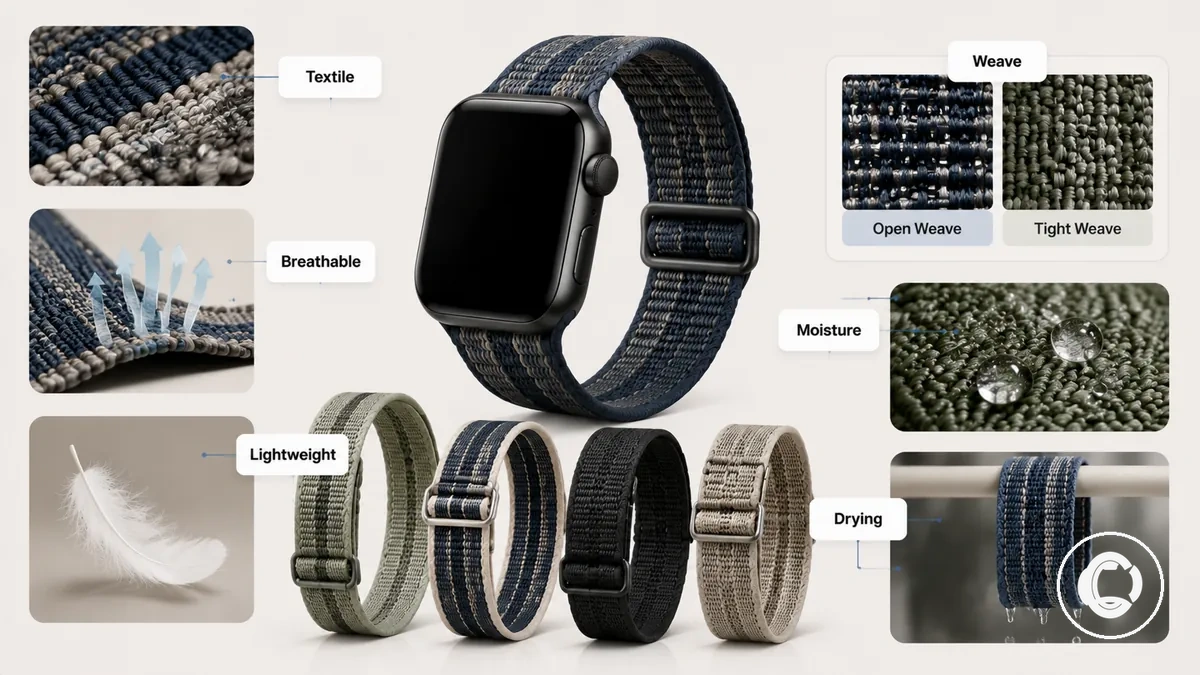
Breathability and absorbency are related but different material characteristics. More open weaves can allow greater airflow and heat release, while textile fibres may still absorb and retain moisture. This distinction helps explain why a band can feel airy while also requiring additional drying time after exposure to sweat or water.
Weave density plays a significant role in material behaviour. Looser constructions may emphasize airflow and flexibility, while tighter weaves can create a different balance of structure, durability, and surface feel. For this reason, nylon, fabric, and woven bands should not be treated as a single uniform material category.
Drying behaviour depends on fibre type, weave construction, thickness, and environmental conditions. After exposure to heat, humidity, or perspiration, textile bands may retain moisture longer than less absorbent material families, which can influence comfort during extended wear.
Stretch and care requirements also vary between designs. Some woven bands may provide a degree of natural give, while others remain more stable under tension. Dirt, sweat residue, and moisture can collect within textile fibres, so regular cleaning and thorough drying may help maintain comfort and appearance over time.
Leather bands
Leather bands are smartwatch band materials known for their natural grain, surface finish, and distinctive appearance. Grain pattern, texture, and finishing treatments influence how the material looks and feels, giving leather a different visual character from textile, polymer, and metal band materials.
Leather bands often have a break-in period. A new leather band may feel firmer or slightly stiff at first, while regular wear can gradually make the material feel more flexible. The extent of this change depends on leather type, thickness, finish, and construction.
Appearance can evolve as the material ages. Leather may develop visible creases, texture changes, surface marks, or colour variation over time. These changes are often associated with normal material ageing and can alter the band's visual character.
Moisture sensitivity remains an important consideration. Sweat, humidity, and water exposure can affect the appearance and feel of leather, and repeated moisture exposure may contribute to faster wear compared with less absorbent material families. This creates a practical contrast between leather's appearance-focused qualities and its moisture-related limitations.
Leather bands generally require more ongoing care than many other smartwatch band materials. Conditioning and routine maintenance may help support flexibility and surface condition, while excessive dryness or repeated moisture exposure can influence how the material ages and performs over time.
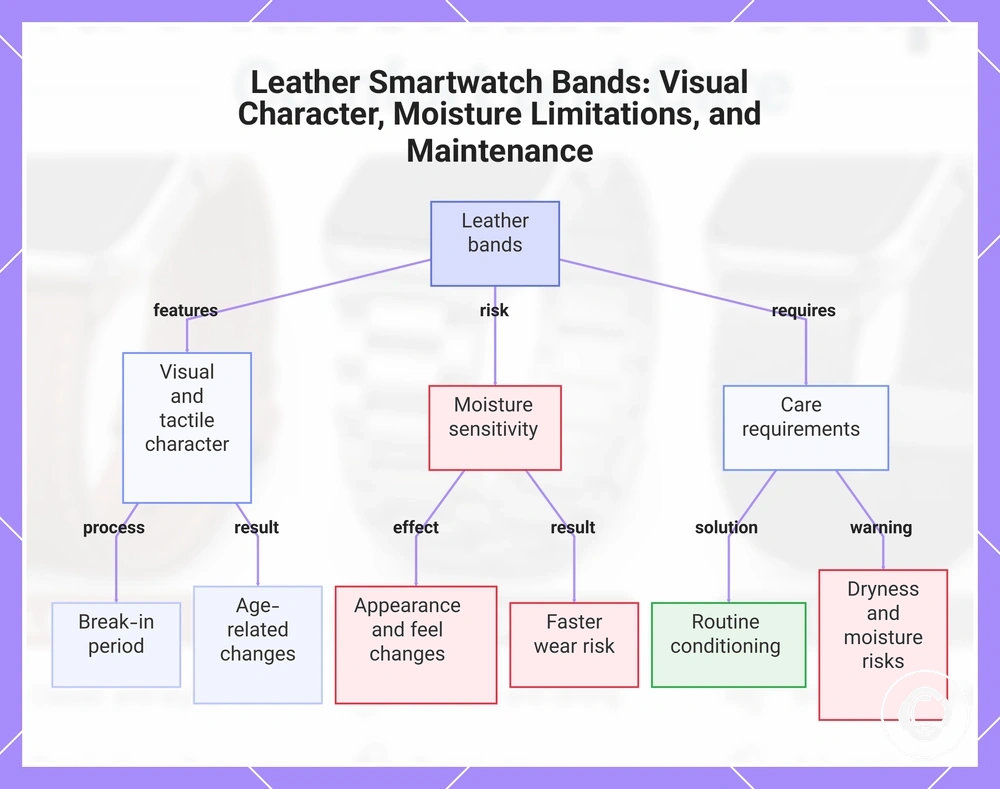
This chart explains the visual and tactile features, moisture sensitivity, and care requirements of leather smartwatch bands.
Stainless steel, metal, and mesh bands
Stainless steel, metal, and mesh bands are smartwatch band materials that are often associated with durable construction, structured wrist feel, and distinctive surface finishes. Material type, band design, and finishing treatment can influence comfort, appearance, and long-term wear characteristics.
Weight is a defining characteristic of many metal bands. Compared with many textile and polymer materials, metal constructions may feel heavier on the wrist, although the overall wearing experience depends on band adjustment, wrist size, and individual preference.
Ventilation varies by construction style. Mesh bands can allow airflow through their woven metal structure, while linked bands create airflow through spaces between individual links. This mesh-versus-links difference can influence wrist feel and moisture management during extended wear.
Cleaning access also depends on construction. Linked bands contain multiple joints and connection points, while mesh bands have tightly woven surfaces. Dust, moisture, and residue can accumulate in different areas depending on the design, which may affect cleaning effort and maintenance routines.
Surface finish, coating, and visible wear are additional considerations. Brushed, polished, coated, or textured finishes may show marks differently over time, and scratch visibility can vary with finish type, daily use, and contact with surrounding surfaces. These differences help explain why metal bands made from similar materials may develop different appearance patterns as they age.
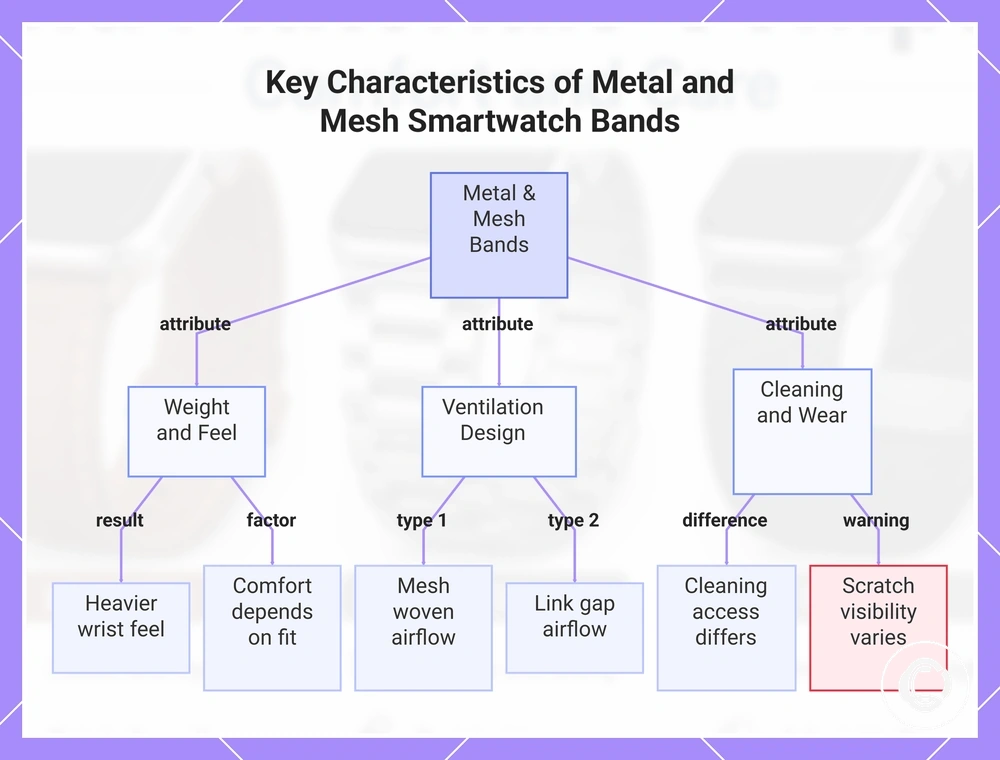
This chart shows the main attributes of metal and mesh smartwatch bands, including weight, ventilation, and maintenance differences.
Comfort, breathability, and skin feel by material
Comfort, breathability, and skin feel depend on material type, band fit, moisture exposure, band weight, and individual skin response rather than a universal comfort ranking. A material that feels comfortable for one wearer may feel different for another depending on climate, activity level, wear duration, and personal sensitivity.
| Material family | Softness | Airflow | Moisture behavior | Weight | Sensitive-skin caution |
|---|---|---|---|---|---|
| Silicone, rubber, and fluoroelastomer | Often soft and flexible | Depends on band design and ventilation openings | Usually absorbs little moisture but can trap sweat against the skin | Often lightweight | Skin response may vary with wear duration, fit, and moisture buildup |
| Nylon, fabric, and woven materials | Often soft with a textile feel | Can provide increased airflow, especially in more open weaves | May absorb and retain moisture | Often lightweight | Moisture retention and residue buildup may affect comfort for some wearers |
| Leather | May become softer with wear | Usually lower airflow than more open textile constructions | Can absorb moisture and may be affected by repeated exposure | Typically moderate weight | Comfort may depend on moisture exposure, conditioning, and individual skin response |
| Stainless steel, metal, and mesh | Usually structured rather than soft | Varies between mesh and linked constructions | Typically absorbs little moisture | Often heavier than textile or polymer alternatives | Weight, finish, and surface contact may influence long-wear comfort |
The table compares material attributes rather than ranking winners. Softness, airflow, moisture handling, and weight interact with wrist shape, fit adjustment, wear conditions, and skin sensitivity, so comfort outcomes can vary even among bands made from the same material family.
Softness, weight, and wrist flexibility
Softness, weight, and wrist flexibility affect wear feel by influencing pressure, movement against the skin, and how naturally a smartwatch band follows wrist motion. Comfort often depends on the interaction between material softness, band weight, flexibility, fit, and individual wear conditions rather than a single material characteristic.
Softer materials may feel less noticeable at contact points and can adapt more easily to wrist shape during extended wear. Firmer materials may create a more structured feel, but comfort can vary depending on fit, band construction, and how pressure is distributed across the wrist.
Band weight can influence long-wear perception. Lighter bands may feel less prominent during daily use, while heavier bands can create a more substantial wrist feel. The effect of weight depends on watch size, band design, activity level, and personal preference.
Wrist flexibility is shaped by both material properties and band construction. Flexible bands can move more naturally with wrist motion, while stiffer bands may resist bending to a greater degree. This difference can affect pressure concentration during activities that involve frequent wrist movement.
Edge feel and rubbing are often linked to fit and contact patterns. Rigid edges, uneven pressure points, or excessive band movement may increase friction against the skin, while a band that follows wrist contours more closely may reduce movement-related rubbing. Outcomes can vary with fit, activity, and skin sensitivity.
Break-in behaviour differs between materials. Some bands maintain a similar feel throughout use, while others may become more flexible over time. Changes in flexibility, edge feel, and material response can influence how a band feels after extended wear.
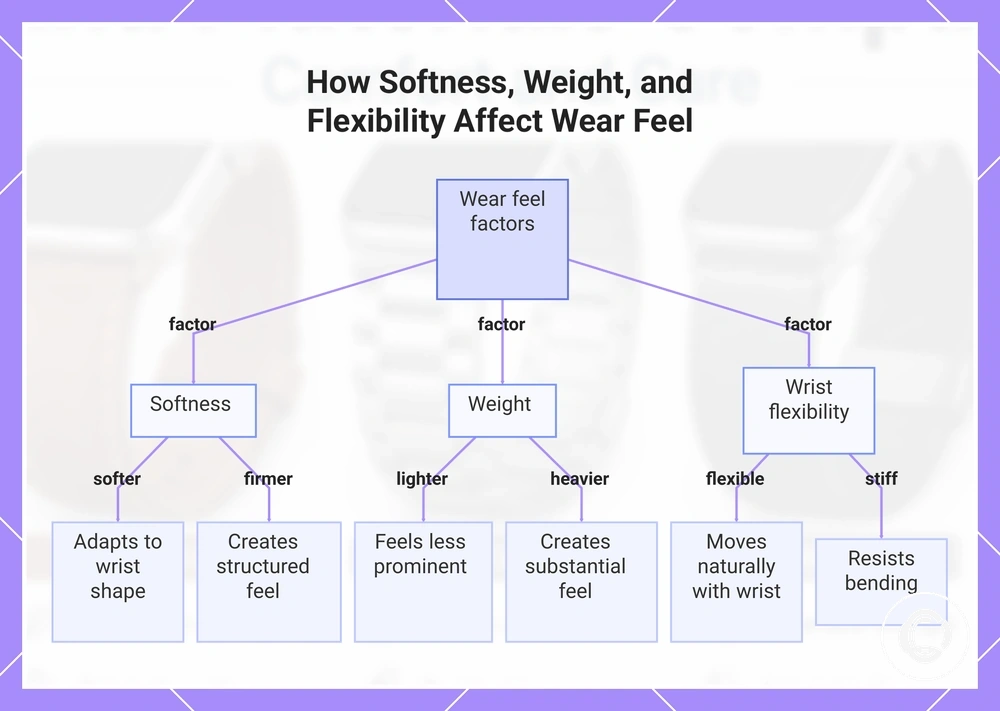
This chart shows the three main factors that influence the wear feel of a smartwatch band and their typical effects.
Airflow, sweat trapping, and drying time
Airflow, sweat trapping, and drying time can influence smartwatch band comfort during heat, exercise, and extended wear because moisture management affects how the band feels against the skin. Materials and constructions that promote airflow may help reduce heat buildup, while moisture retention and slower drying can prolong a damp feeling after sweat or water exposure.
Breathable behavior and water-shedding behavior are not the same attribute. A breathable band may allow more airflow around the wrist while still retaining moisture within its material structure. A water-shedding band may resist moisture absorption, yet sweat can still remain between the band and the skin when airflow is limited.
Sweat trapping depends on both material characteristics and band design. Close surface contact, dense constructions, and limited ventilation may increase moisture accumulation during prolonged activity. More open constructions can improve airflow, although comfort still depends on fit, temperature, activity level, and individual perspiration patterns.
Drying time becomes more noticeable after workouts, humid-weather use, or repeated moisture exposure. Materials that absorb and retain moisture may remain damp for longer periods, while materials that retain less moisture may return to a dry feel more quickly. Users comparing moisture-management priorities may also consider bands for workouts when selecting a band for active use.
Odor and surface feel can change when moisture remains present for extended periods. Residue buildup, retained moisture, and repeated sweat exposure may affect long-term wear comfort. During hot conditions, certain materials may feel more slippery against the skin, while others may maintain a more stable contact feel depending on texture, moisture behavior, and fit.
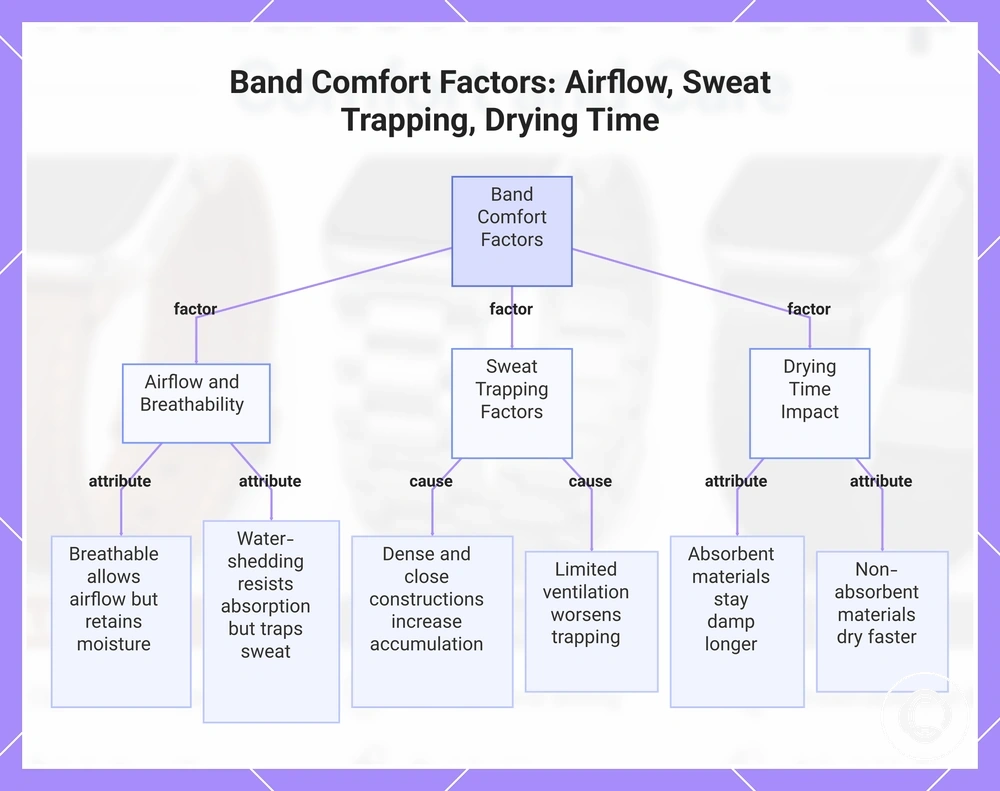
This chart shows the main factors influencing smartwatch band comfort during heat, exercise, and extended wear, focusing on airflow, sweat trapping, and drying time.
Hypoallergenic claims and irritation risk
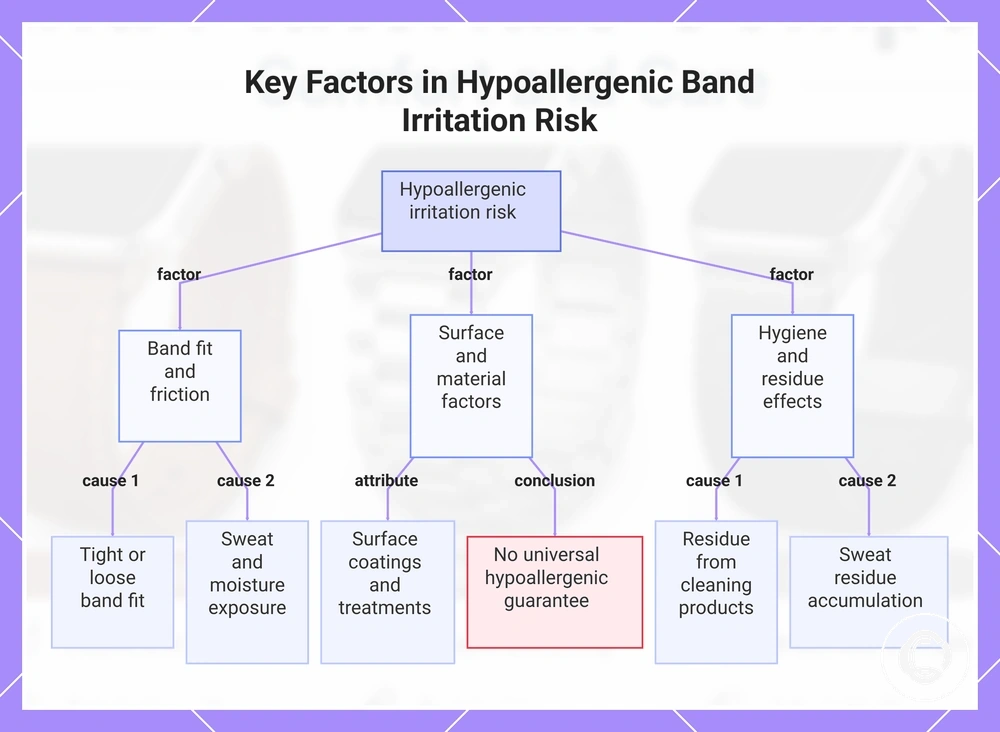
Hypoallergenic claims and irritation risk depend on material type, band fit, sweat exposure, surface coatings, cleaning residue, hygiene, and individual skin sensitivity rather than a guaranteed reaction-free outcome. A smartwatch band described as hypoallergenic may still feel irritating for certain wearers when other contributing factors are present.
Skin irritation is not always caused by the band material alone. Friction from a band that fits too tightly or moves excessively on the wrist can increase rubbing, while trapped sweat, heat, and prolonged moisture exposure may contribute to discomfort during extended wear.
Surface coatings, finishes, dyes, and material treatments can influence individual skin response. Two bands with a similar appearance may not create the same wearing experience because irritation potential can depend on the materials and surface treatments that contact the skin.
Cleaning residue and hygiene can also affect comfort. Residual soap, detergent, skincare products, or accumulated sweat residue may remain on a smartwatch band after use or cleaning. In some situations, discomfort may be related to residue buildup rather than the base material itself.
Because irritation risk varies by individual response, no material can be assumed to suit every wearer. Users concerned about ongoing sensitivity may compare options designed for bands for sensitive skin, while recognizing that comfort and skin response can still differ from person to person.
This chart shows the main factors that contribute to skin irritation from smartwatch bands, even when labeled hypoallergenic.
Water resistance and durability by material
Water resistance and durability by material depend on exposure conditions, sweat contact, abrasion, stretching, ageing, and maintenance rather than a universal durability ranking. A smartwatch band's water behavior should be evaluated separately from smartwatch case water resistance because the band material and the watch housing may respond differently to moisture exposure.
Water behavior focuses on how a band material responds to sweat, humidity, splashes, and moisture retention. Polymer-based materials often resist absorbing water, while textile and leather materials may absorb or retain moisture to different degrees. These differences can affect drying time, surface feel, and comfort during prolonged wear.
Durability behavior focuses on resistance to everyday wear. Repeated bending, stretching, friction, abrasion, and handling can affect materials differently over time. Ageing may appear as texture changes, stretching, fraying, surface wear, reduced flexibility, or finish changes depending on material type and usage conditions.
Practical longevity depends on the type and frequency of exposure. A material that handles moisture well may respond differently to abrasion or stretching, while a material that maintains appearance during daily wear may require more care around repeated water exposure. Material performance therefore depends on how the smartwatch band is used rather than on a single durability characteristic.
| Material family | Water behavior | Durability considerations |
|---|---|---|
| Silicone, rubber, and fluoroelastomer | Typically resists absorbing moisture and is often easy to clean | May tolerate repeated flexing, although wear patterns vary with use conditions |
| Nylon, fabric, and woven materials | May absorb and retain moisture depending on fibre type and weave construction | Can be affected by friction, stretching, cleaning practices, and material construction |
| Leather | Can absorb moisture and may change with repeated water exposure | Ageing may affect texture, flexibility, and surface appearance over time |
| Stainless steel, metal, and mesh | Typically absorbs little moisture, although moisture can remain within construction gaps | Surface finish and abrasion may influence visible wear patterns over time |
Water behavior and durability behavior should be compared as separate criteria. A material that dries more quickly is not automatically the most durable, and a material that appears durable may still require consideration of moisture exposure, maintenance, and long-term wear conditions.
Waterproof and water-resistant material claims
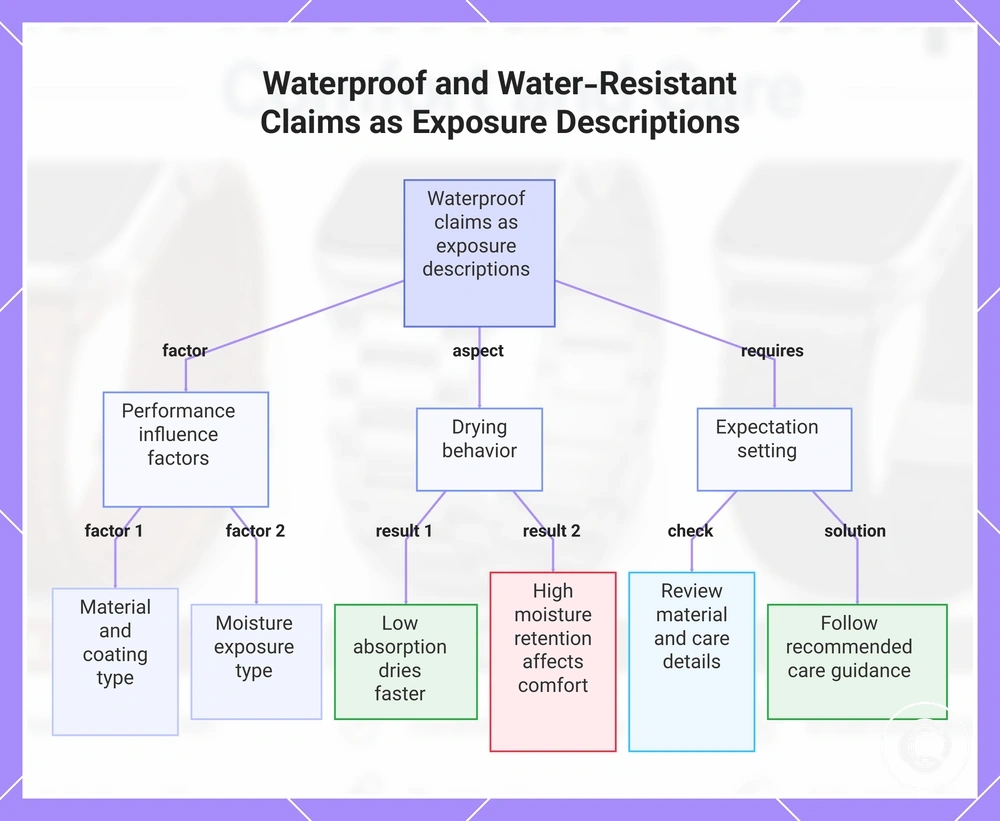
Waterproof and water-resistant material claims should be treated as exposure-related descriptions rather than guarantees of unlimited moisture protection. The practical meaning of these claims depends on the band material, surface treatment, coating condition, care guidance, and the type of moisture exposure the band experiences.
Water-related claims can create confusion because smartwatch band materials and smartwatch cases are evaluated differently. A band material may respond to sweat, humidity, splashes, or repeated moisture exposure in ways that differ from the watch itself, so material descriptions should be assessed independently from device water-resistance information.
Drying behavior is an important part of real-world water performance. Materials that absorb less moisture may return to a dry feel more quickly, while materials that retain moisture can require additional drying time after exercise, cleaning, or humid-weather use. Moisture retention may also influence comfort and long-term appearance.
Coatings, finishes, and surface treatments can affect how a band handles moisture exposure, but their performance may change with wear, friction, cleaning methods, and ageing. For that reason, water-related claims are often most useful when reviewed together with material descriptions, care instructions, and maintenance guidance.
Product-description verification can help set realistic expectations before use. Material information, exposure guidance, drying recommendations, and care warnings often provide a clearer understanding of likely band behavior than a standalone waterproof or water-resistant label. When uncertainty exists, following the recommended care guidance may help reduce unnecessary material wear.
This chart shows that waterproof and water-resistant claims for smartwatch bands are exposure-related descriptions, not guarantees, and depend on material, moisture, drying, and care factors.
Scratch, stretch, tear, and ageing resistance
Scratch, stretch, tear, and ageing resistance depend on smartwatch band material, wear conditions, and daily exposure patterns, so visible ageing should be viewed as a material-specific wear pattern rather than a measure of overall lifespan. Different materials may show cosmetic wear, structural wear, or a combination of both as they age.
Surface wear primarily affects appearance. Scratches, scuffs, discoloration, finish fading, and tarnish can develop over time depending on material type, surface treatment, and contact with surrounding objects. These changes may alter the look of a smartwatch band without necessarily affecting its fit or basic function.
Structural wear affects the material itself. Stretching, cracking, tearing, fraying, or reduced flexibility can occur through repeated bending, tension, friction, moisture exposure, or long-term use. The visibility and progression of these changes vary by material and usage conditions.
Visible ageing differs across material families. Textile bands may show fraying or fibre wear, leather bands may develop creases, texture changes, or cracking, metal bands may show scratches or tarnish on certain surfaces, and flexible polymer materials may display finish changes, stretching, or surface wear. These differences reflect material behaviour rather than a direct comparison of durability.
Separating cosmetic wear from structural wear can help inform maintenance and replacement decisions. Surface marks may mainly affect appearance, while cracking, significant stretching, tearing, or material breakdown can have a greater effect on comfort, fit, flexibility, or long-term usability.
Ageing patterns can also be influenced by sweat exposure, cleaning routines, sunlight, humidity, and daily handling. Monitoring how a smartwatch band changes over time may provide a more practical indication of condition than focusing on a single scratch, mark, or cosmetic imperfection.
Material-to-material trade-offs for smartwatch bands
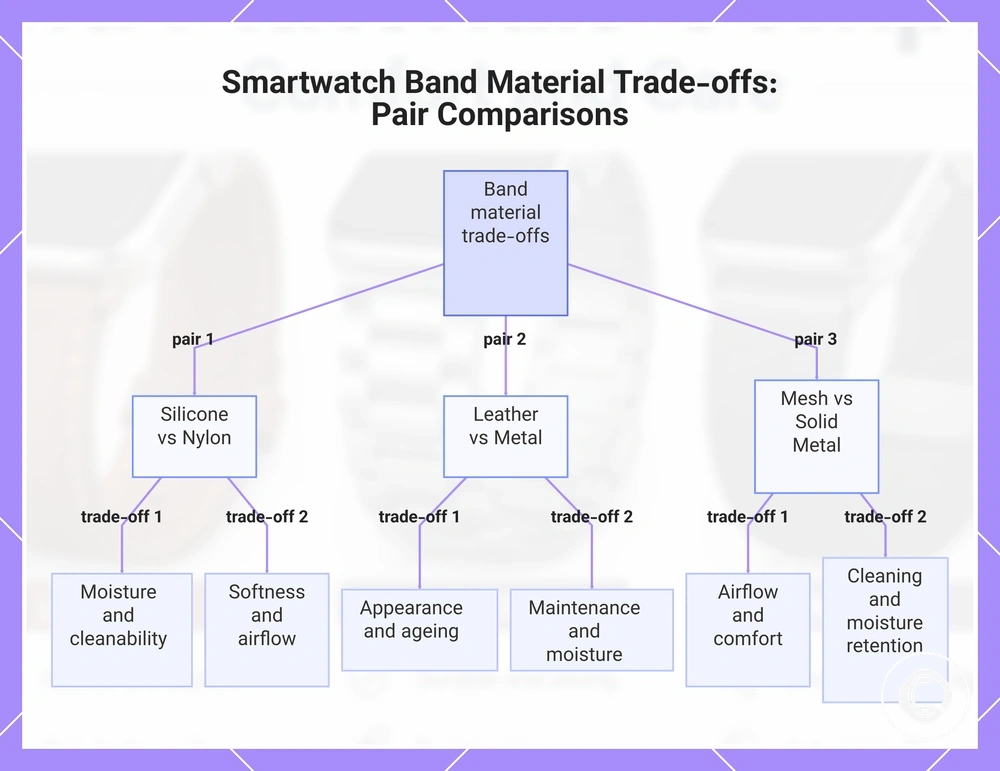
Material-to-material trade-offs for smartwatch bands depend on comfort preferences, moisture exposure, appearance priorities, care requirements, and intended use rather than a single superior material. Comparing materials through specific criteria provides a more practical basis for selection than focusing on one attribute alone.
Silicone and nylon are often compared through comfort and moisture behavior. Silicone may absorb less moisture and can be easier to clean, while nylon may provide a softer textile feel and increased airflow depending on weave construction. The trade-off typically involves texture, drying behavior, airflow, and the conditions in which the band is worn.
Leather and metal are commonly evaluated through appearance, ageing characteristics, and maintenance expectations. Leather may offer a natural surface texture and develop visible wear patterns over time, while metal can provide a more structured feel and a different visual style. Leather may require greater attention to moisture exposure, whereas metal bands may place more emphasis on weight, finish wear, and cleaning access.
Mesh and solid metal bands differ through construction rather than material category alone. Mesh designs can promote airflow through the band structure, while solid linked metal bands may create a denser and more substantial wrist feel. Moisture retention within construction gaps, cleaning effort, and long-wear comfort can vary between these two approaches.
Use context often determines which trade-offs matter most. Exercise, office wear, formal settings, warm climates, humid conditions, and extended daily wear can shift the importance of comfort, moisture handling, appearance, or maintenance. Material selection therefore depends on which attributes align most closely with expected wearing conditions.
No material pairing produces a fixed winner across all situations. Evaluating comfort, moisture behavior, appearance, care requirements, and use context together usually provides a more balanced comparison than judging a smartwatch band material by a single characteristic.
This chart compares the key trade-offs between silicone vs nylon, leather vs metal, and mesh vs solid metal smartwatch bands, focusing on comfort, moisture, appearance, and maintenance attributes.
Silicone vs nylon bands
Silicone vs nylon band selection depends on whether moisture resistance and easy cleaning or breathability and lightweight comfort are the higher priorities. Silicone usually leans toward water-shedding behavior and wipe-clean care, while nylon usually leans toward airflow and a softer textile feel, although individual band designs can influence both outcomes.
Moisture handling is one of the clearest differences between these materials. Silicone typically absorbs little moisture and can be cleaned quickly after exposure to sweat or water. Nylon may allow more airflow around the wrist, but the textile structure can absorb and retain moisture to varying degrees depending on fibre type and weave construction.
Drying behavior often follows the same pattern. Silicone may return to a dry surface feel more quickly because moisture tends to remain on the surface rather than within the material. Nylon can require additional drying time when moisture is absorbed into the fibres, particularly after exercise or humid-weather use.
Comfort depends on more than moisture behavior alone. Nylon may feel lighter and softer against the skin because of its textile construction, while silicone often provides a smooth and flexible surface. Personal preference, skin sensitivity, fit, and wear duration can influence which material feels more comfortable during daily use.
Stretch and movement characteristics can also differ. Certain nylon constructions may provide a degree of flexibility through the weave, while silicone relies more on material elasticity. The resulting wrist feel depends on band design, thickness, fastening method, and overall construction rather than material category alone.
Use context often determines which trade-off is more practical. Frequent exposure to sweat, water, or situations that require quick cleaning may favor silicone characteristics, while long periods of wear in warm conditions may increase the appeal of nylon's breathable textile structure. Neither material is a fixed winner because comfort and performance depend on the conditions in which the smartwatch band is used.
Leather vs metal bands
Leather vs metal band selection depends on the balance between appearance, weight, care requirements, durability characteristics, moisture tolerance, and daily wear conditions. Leather usually emphasizes a natural surface feel and visible ageing patterns, while metal usually emphasizes structural durability and lower moisture absorption, although comfort and maintenance needs depend on the specific band design.
Appearance changes differently over time. Leather may develop creases, texture variation, and surface wear as the material ages, while metal bands may show scratches, finish wear, or abrasion marks. These ageing patterns reflect different material characteristics rather than a direct durability ranking.
Weight is often a noticeable distinction. Leather bands are frequently lighter and more flexible, while metal bands may feel heavier and more substantial on the wrist. The effect of weight depends on wrist size, watch size, band construction, and personal preference.
Moisture tolerance and maintenance effort also differ. Leather can absorb moisture and may require greater attention to drying and routine care after exposure to sweat or humidity. Metal bands typically absorb little moisture, although residue and moisture can collect between links or within mesh structures depending on the design.
Wrist temperature perception can vary by material and environment. Leather may feel less conductive against the skin, while metal can feel cooler or warmer depending on ambient conditions and surface temperature. These sensations often change after the band has been worn for a period of time.
For routine workwear and daily use, the trade-off often centers on maintenance effort and wear conditions. Leather may suit users who prefer a lighter and more adaptive wrist feel, while metal may suit users who prioritize lower moisture absorption and a more structured construction. Neither material is a fixed winner because the practical choice depends on individual priorities and use conditions.
Mesh vs solid metal bands
Mesh vs solid metal band selection depends on priorities such as airflow, flexibility, weight distribution, adjustability, cleaning access, and long-wear comfort. Mesh bands usually emphasize ventilation and conforming flexibility, while solid metal bands usually emphasize a more structured feel and link-based construction.
Airflow is often a key distinction. Mesh construction contains many small openings that can allow more air movement around the wrist, while solid metal link designs typically create airflow through spaces between links rather than across the entire band surface. The resulting wrist feel can vary with fit, temperature, and activity level.
Flexibility and weight distribution also differ. Mesh bands can follow wrist contours more continuously because of their woven structure, while solid metal bands rely on individual links for movement. Weight perception depends on band width, thickness, and construction rather than construction type alone.
Adjustability is influenced by closure design. Many mesh bands allow fine adjustment across a broader range of positions, while solid metal bands may depend on removable or adjustable links. The preferred option often depends on how precisely the wearer wants to refine fit.
Hair-pull risk and grip characteristics can vary between constructions. Gaps, moving components, and surface texture may interact differently with wrist hair depending on the design and condition of the band. Wear experience can therefore differ even among bands made from similar metal materials.
Cleaning access and finish wear follow different patterns. Mesh structures may require attention to debris trapped within the weave, while solid metal bands may collect residue around links and connection points. Surface scratches and finish changes can occur on either construction, although visibility often depends on finish type, usage conditions, and maintenance habits.
Care requirements that differ by material
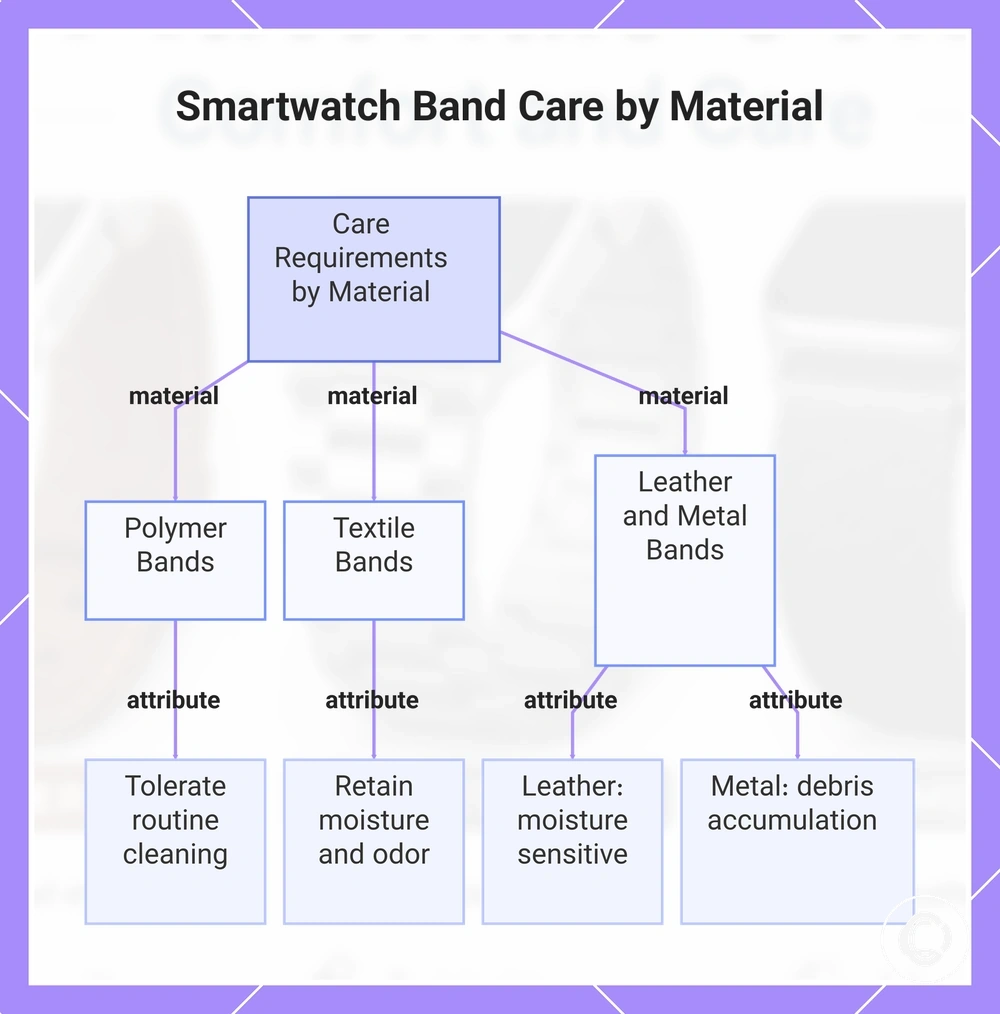
Care requirements that differ by material depend on how each smartwatch band material responds to moisture, cleaning products, friction, heat, and everyday wear. Silicone, nylon, leather, and metal bands can require different levels of attention because their materials absorb, retain, shed, or react to moisture and contaminants in different ways.
Cleaning tolerance varies across material categories. Silicone, rubber, and similar polymer materials often tolerate routine cleaning and moisture exposure well, while nylon and other textile materials may retain moisture, residue, or odor within the fabric structure. Material construction can influence drying behavior and how frequently maintenance may be needed to support comfort and appearance.
Leather bands generally require greater attention to moisture exposure and surface condition. Repeated contact with sweat, humidity, or water may influence appearance, flexibility, and ageing patterns. Conditioning products may help maintain the material, while prolonged moisture exposure or excessive drying can contribute to cracking, stiffness, or visible surface changes over time.
Metal bands typically absorb little moisture, but residue, skin oils, and debris can accumulate around links, hinges, or mesh structures. Users seeking detailed guidance on cleaning different band materials may benefit from material-specific maintenance recommendations. Care requirements often depend on band construction as well as the metal material itself.
Odor, staining, corrosion, and finish changes can develop differently across materials. Textile materials may retain odors when moisture remains within the fibres, leather may show staining or surface changes after repeated exposure, and metal finishes may develop visible wear patterns depending on friction, moisture exposure, and surface treatment. The appearance and extent of these changes depend on use conditions and maintenance habits.
Manufacturer guidance remains important because coatings, finishes, adhesives, and construction methods can vary between smartwatch bands made from similar materials. Following the recommended care approach for a specific band may help reduce unnecessary wear while supporting comfort, appearance, and long-term usability.
This chart shows how care requirements differ across common smartwatch band materials, highlighting key care traits for polymer, textile, leather, and metal bands.
Wipe-clean polymer and metal bands
Wipe-clean polymer and metal bands usually require attention to residue removal, drying, and surface care rather than moisture absorption management. Because these materials absorb little moisture, sweat residue, skin oils, salt deposits, and environmental contaminants can remain on the surface or within construction gaps if they are not removed periodically.
Polymer bands can accumulate sweat residue and skin oils on smooth contact surfaces during daily wear. Although moisture often remains on the surface rather than within the material, residue buildup may affect surface feel, contribute to odor, or influence long-term appearance when maintenance is delayed.
Metal bands often require additional attention around links, hinges, and mesh openings where moisture, salt, and debris can collect. These areas may be less visible than the outer surface, so drying and residue removal can be important after exposure to sweat, humidity, or water.
Crevice access can influence maintenance effort. Smooth polymer surfaces are often easier to inspect visually, while linked and mesh metal constructions may contain narrow spaces that require more careful cleaning attention. The amount of buildup depends on wear conditions, skin contact, and band construction.
Drying remains relevant even for non-absorbent materials. Moisture trapped around closures, hinges, links, or mesh structures may remain present after surface wiping. Allowing these areas to dry thoroughly may help reduce residue accumulation and support long-term appearance.
Finish protection is another material-specific consideration. Polymer surfaces may show wear, discoloration, or texture changes over time, while metal finishes may develop scratches, coating wear, corrosion-related changes, or visible marks depending on exposure conditions and maintenance habits. Following manufacturer guidance may help align care practices with the specific materials and finishes used in the smartwatch band.
Leather, nylon, and fabric care limits
Leather, nylon, and fabric care limits are primarily shaped by moisture absorption, drying behavior, and material sensitivity to repeated exposure. Unlike non-absorbent band materials, these materials can retain moisture within their structure, which may influence odor, appearance, flexibility, and long-term wear characteristics.
Leather is often more sensitive to moisture exposure than polymer or metal materials. Repeated contact with sweat, humidity, or water may affect texture, flexibility, and surface appearance over time. Excessive drying after moisture exposure may also contribute to stiffness, surface changes, or cracking under certain conditions.
Nylon and fabric bands may tolerate regular wear well, but absorbed moisture can remain within fibres longer than on non-absorbent materials. Extended moisture retention may increase drying time and can contribute to odor development when perspiration and residue accumulate within the material.
Soap tolerance and washing response can vary by material construction, dyes, coatings, and finishes. Repeated exposure to cleaning products or aggressive washing practices may affect colour, texture, stitching, bonding materials, or overall appearance. Care limits therefore depend on the specific band construction as well as the material category.
Conditioning may be relevant for certain leather bands because the material can change as it ages and loses flexibility. Nylon and fabric materials typically present different concerns, with fraying, fibre wear, and surface abrasion often becoming more relevant than conditioning requirements.
Avoiding prolonged moisture exposure, excessive heat, aggressive cleaning methods, and unnecessary abrasion may help reduce material stress across leather, nylon, and fabric bands. Manufacturer guidance remains useful because moisture sensitivity, washing limits, surface treatments, and ageing behaviour can vary between smartwatch band designs.
Matching smartwatch band material to use context
Matching smartwatch band material to use context depends on balancing comfort, moisture handling, durability, and care requirements against how the smartwatch is used each day. The most suitable material is usually the one whose characteristics align with the wear environment rather than the one that performs strongest in a single category.
For daily wear, balanced comfort and manageable maintenance are often the primary criteria. Materials that combine flexibility, durability, and practical moisture handling may suit users who move between different environments throughout the day. The preferred choice depends on activity level, climate, and personal comfort preferences.
For office wear, appearance, long-wear comfort, and maintenance expectations often become more important. Leather, metal, and certain fabric styles may appeal to users seeking a particular visual presentation, while weight, wrist flexibility, and moisture sensitivity can influence comfort during extended wear periods.
For exercise, swimming, and other moisture-intensive activities, water resistance, drying behaviour, and cleaning convenience often become key selection filters. Materials that absorb little moisture may require less drying time after exposure to sweat or water, while absorbent materials may require additional care after repeated exposure.
Users comparing broader selection criteria may also benefit from a smartwatch bands buying guide when evaluating how material characteristics align with different wearing conditions.
Hot weather can increase the importance of airflow, sweat management, and moisture retention characteristics. Materials and constructions that allow greater ventilation may feel more comfortable during prolonged exposure to heat, although comfort still depends on fit, activity level, and individual perspiration patterns.
Sensitive skin considerations often require balancing material characteristics with moisture control, cleanliness, fit, and individual skin response. No material guarantees universal comfort, so users who experience irritation may benefit from focusing on moisture management, residue control, and material characteristics that align with their personal sensitivity profile.
Use-context filtering works best when comfort, water exposure, durability expectations, and care burden are evaluated together. A material that suits exercise-focused use may not match office-wear priorities, while a material chosen for appearance may require greater attention to maintenance and moisture exposure.
This chart shows the main use contexts and key selection criteria for choosing a smartwatch band material based on how the watch is worn.
Daily wear and office settings
Daily wear and office settings depend on balancing comfort, appearance, maintenance effort, weight, sweat exposure, and wrist sensitivity rather than prioritising a single material characteristic. A smartwatch band that remains comfortable throughout the day while requiring manageable care is often more suitable for routine wear than a material selected for only one advantage.
Comfort during extended wear is often influenced by flexibility, surface feel, weight, and how the material responds to changing daily conditions. Lightweight materials may reduce wrist awareness during long periods of wear, while heavier materials may appeal to users who prefer a more substantial feel. Personal preference remains an important part of the selection process.
Appearance requirements can vary between casual daily wear and professional environments. Leather, metal, fabric, and polymer materials each create a different visual impression, but appearance should be considered alongside maintenance expectations because certain materials may require more attention to preserve their condition over time.
Sweat exposure and cleaning frequency can influence material suitability even in office settings. Users who move between indoor environments, commuting, walking, or light activity throughout the day may benefit from considering how easily a material handles moisture, dries after exposure, and responds to routine cleaning.
Wrist sensitivity can make moisture retention, residue buildup, fit, and surface texture more important than appearance alone. Materials that align with an individual's comfort preferences and skin response may provide a more consistent wearing experience during extended daily use.
For routine wear, the most practical selection often comes from balancing comfort, appearance, low maintenance, weight, sweat management, and sensitivity considerations together. The preferred smartwatch band material depends on which of these factors has the greatest influence on the user's daily environment and wearing habits.
Workouts, swimming, and hot weather
Workouts, swimming, and hot weather depend on choosing a smartwatch band material that balances moisture handling, drying behaviour, breathability, grip, cleaning needs, and skin response. Materials that absorb little moisture and dry relatively quickly may suit these conditions more effectively, although comfort, fit, and maintenance requirements still influence the final choice.
Sweat exposure is often a primary selection factor during exercise. Materials that resist retaining moisture may feel more comfortable during repeated workouts because perspiration remains closer to the surface, while absorbent materials can require additional drying time after activity.
Swimming introduces repeated water exposure, making water resistance and post-use maintenance more relevant. A material that handles moisture well may reduce drying concerns after swimming, but residue and environmental exposure can still affect long-term appearance and cleaning requirements.
Hot weather can increase the importance of airflow and moisture management. Breathable constructions may help reduce moisture accumulation against the skin, while fit, wrist movement, and individual perspiration levels can influence overall comfort during extended wear.
Grip and stability may also affect material suitability during active use. A band that remains secure when exposed to sweat or water can feel more reliable during movement, although the experience depends on material characteristics, closure design, and overall fit.
Skin response remains an important qualifying factor across moisture-heavy situations. Materials that work well for one user may feel different for another because sensitivity, sweat levels, cleaning frequency, and environmental exposure vary. For workouts, swimming, and hot weather, the most practical smartwatch band material often balances moisture tolerance, drying behaviour, breathability, cleaning effort, and personal comfort requirements.