Smartwatch band types, strap styles, and fastening designs
Smartwatch band types are the construction and fastening patterns that define how smartwatch straps sit on the wrist, attach to the watch body, and support daily use. A type is not only a material name; it is a decision frame shaped by construction, fastening, wear profile, and compatibility.
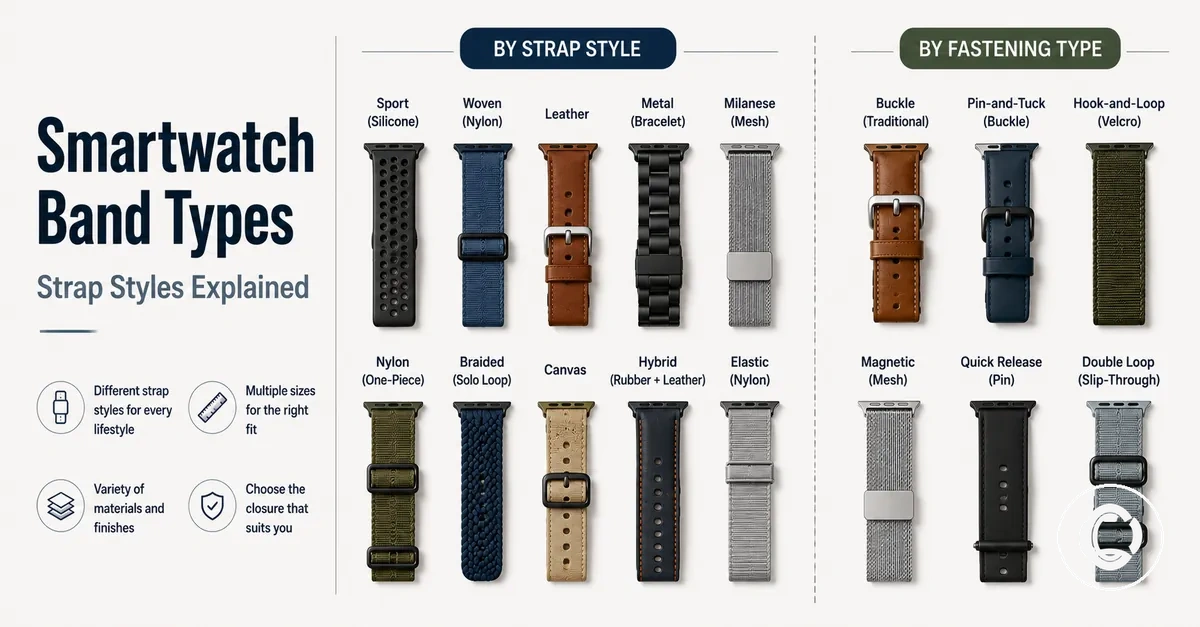
When users compare silicone, leather, metal, mesh, nylon, or elastic watch bands, the same strap style may be described by its material, clasp, connector, quick-release hardware, or spring bar. Search results often mix type names, closure names, and connector terms, so type language should stay separate from material, clasp, and connector language.
The main answer is that smartwatch band types help users compare strap styles before checking fit or choosing a replacement. Silicone and rubber often signal flexible sport use, leather often signals a dress-oriented finish, metal and mesh usually signal structured wrist feel, while nylon and elastic can signal softer adjustment; each outcome still depends on wrist fit, fastening designs, connector shape, and compatibility conditions. The next section grounds the classification by defining what makes a smartwatch band type.
For the broader category context before comparing individual strap designs, see the smartwatch bands guide.
What defines a smartwatch band type
A smartwatch band type is the construction, fastening, and wear design pattern used by a smartwatch strap. The classification focuses on how a smartwatch band is built, attached, and secured rather than on a single feature alone. A smartwatch band type is defined by the relationship between construction, material expression, closure, and connector, with construction serving as the primary classification rule.
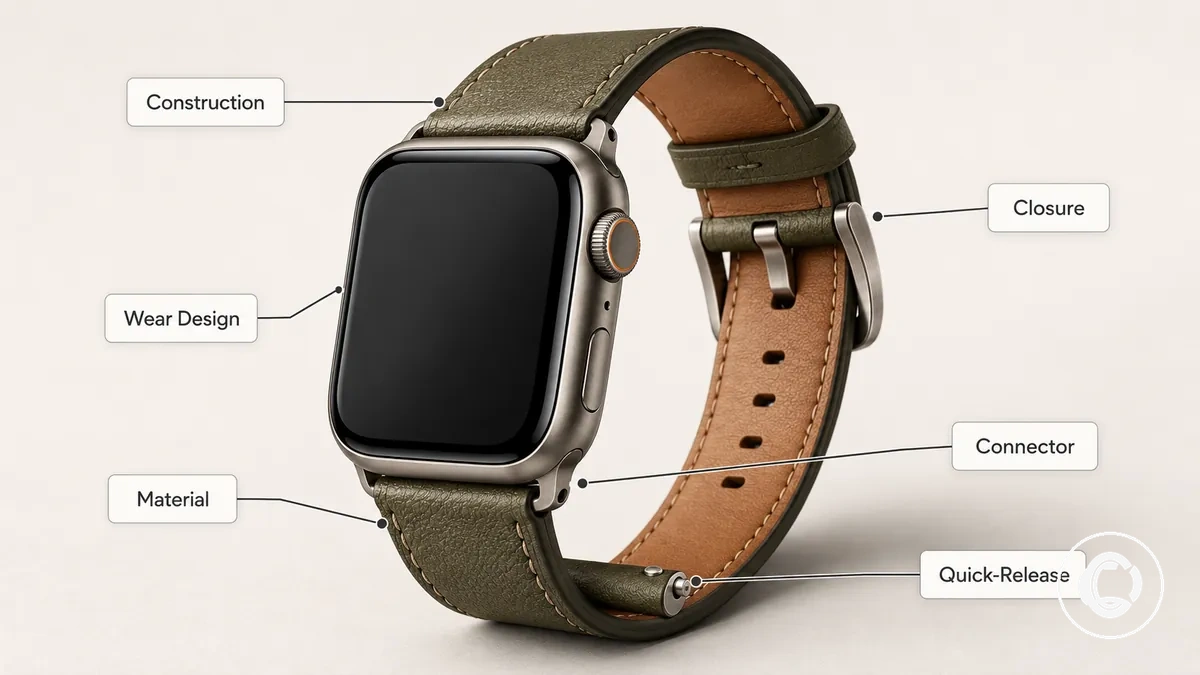
What defines a smartwatch band type becomes clearer when overlapping labels are separated into attribute layers. A smartwatch band may be described by its strap style, material expression, clasp, closure, connector, or quick-release attachment style, and each label highlights a different characteristic. The same physical band can be be described by material, closure, and attachment system at the same time without creating a contradiction because each label refers to a different decision factor that may affect comfort, security, use case, appearance, or compatibility.
Myth: a smartwatch band type is the same as a material, closure, or connector. Truth: a smartwatch band type is the broader band category, while material expression, fastening method, and attachment style are separate attribute layers used in classification. For example, a silicone band, a magnetic band, and a quick-release strap may describe the same physical band because silicone refers to material expression, magnetic refers to closure, and quick-release refers to the connector or attachment style.
Band style, material, clasp, and connector as separate attributes
Band style, material, clasp, and connector are separate attributes that describe different parts of a smartwatch band. Accurate classification depends on separating the strap body from the hardware that closes or attaches it, creating four distinct attribute layers: band style, material, clasp, and connector.
When a user sees multiple labels for the same band, those labels often refer to different characteristics rather than different products. A band style describes the strap body, appearance, and wear profile, while material describes the surface feel and construction material. The clasp controls closure and adjustment, and the connector or release mechanism determines how the strap end attaches to the watch case. Band style, material, clasp, and connector as separate attributes become easier to understand when each label is organized by function.
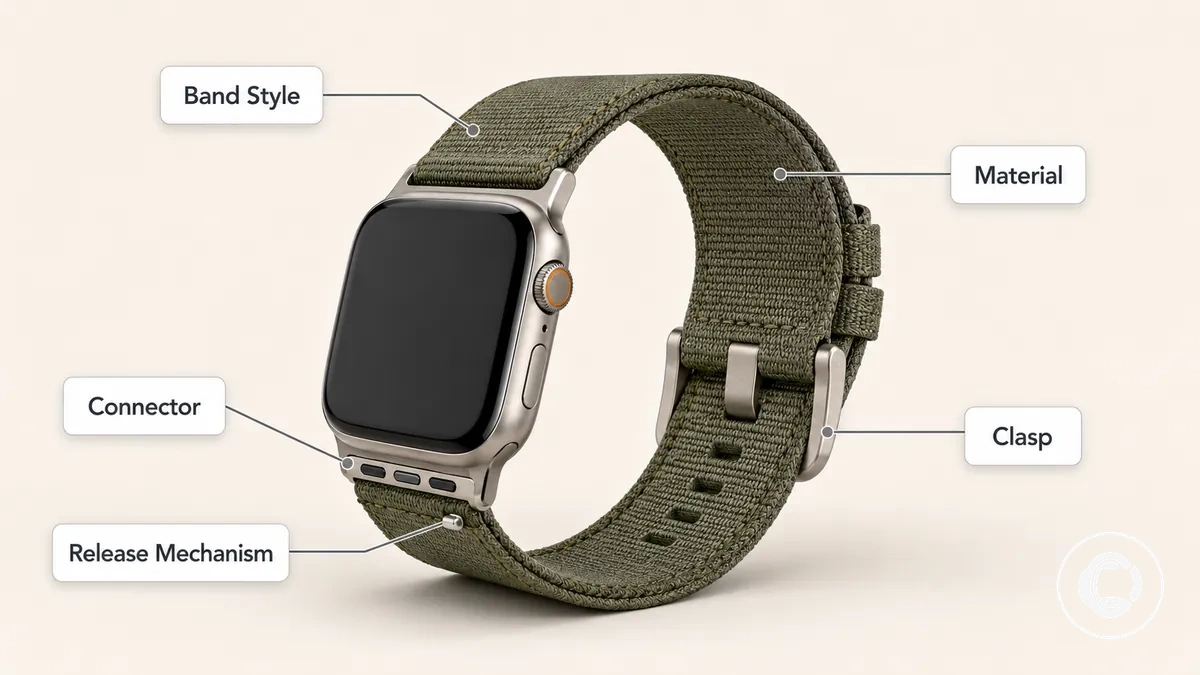
Band style, material, clasp, and connector as separate attributes are organized below by function to reduce mixed terminology and clarify decision effects.
| Attribute layer | What it describes | Example values | Decision effect |
|---|---|---|---|
| Style | Strap body shape and wear appearance | Sport loop, bracelet, cuff | Affects appearance and wear profile |
| Material | Surface and construction material | Silicone, leather, nylon | May affect feel, care needs, and use conditions |
| Clasp | Closure and adjustment hardware | Buckle, magnetic closure, deployant clasp | May affect adjustment and fastening security |
| Connector | Attachment point between the strap end and watch case | Quick-release, integrated connector, spring bar | Compatibility may depend on the watch case and attachment design |
Myth: a material or connector automatically defines the entire band category. Truth: the same band can carry a material label, a closure label, and an attachment label at the same time without changing its band style classification. For deeper comparison of material-specific characteristics, see smartwatch band materials.
Main smartwatch band styles by construction
Main smartwatch band styles by construction are grouped by how the band is built, flexes, adjusts, and sits on the wrist. Construction changes flexibility, adjustment, breathability, and appearance because each strap family combines different materials, closures, and wear characteristics. These recurring construction families provide the primary framework users compare when identifying smartwatch band types.
Main smartwatch band styles by construction can be organized by feel and day-to-day wear characteristics. The comparison block below groups the major construction families by their typical attributes and use signals.
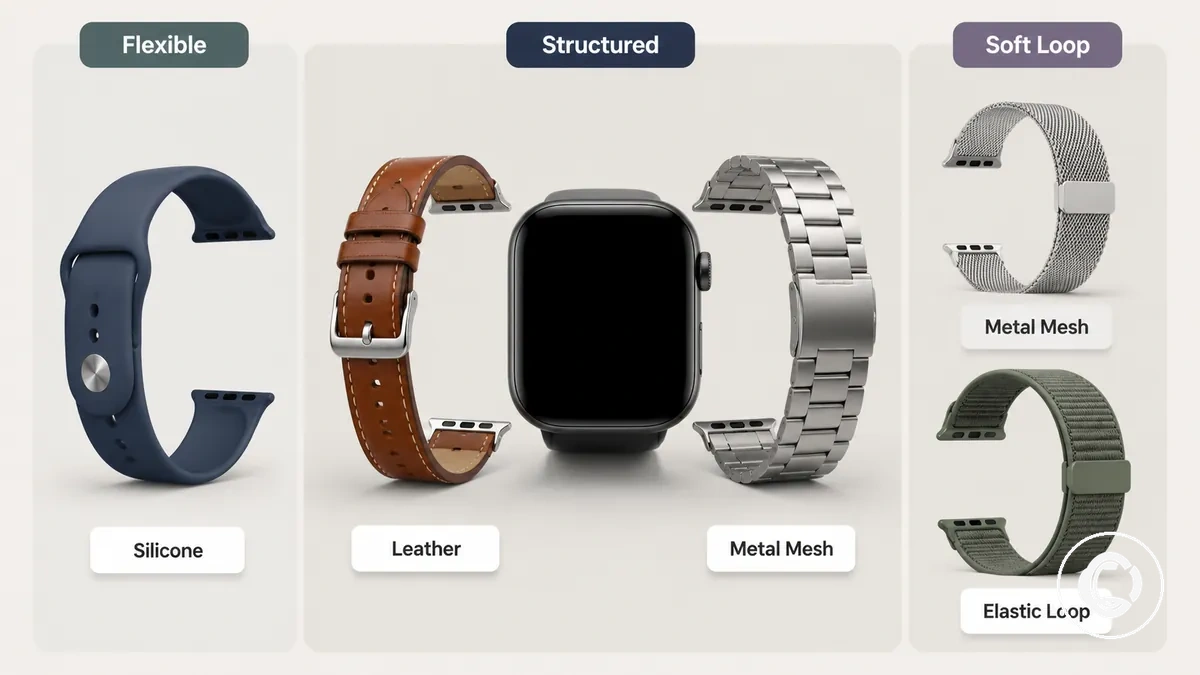
| Construction family | Typical values | Wear signal | Boundary note |
|---|---|---|---|
| Flexible bands | Silicone, rubber | Often emphasize flexibility and simple adjustment | Construction family, not a specific closure type |
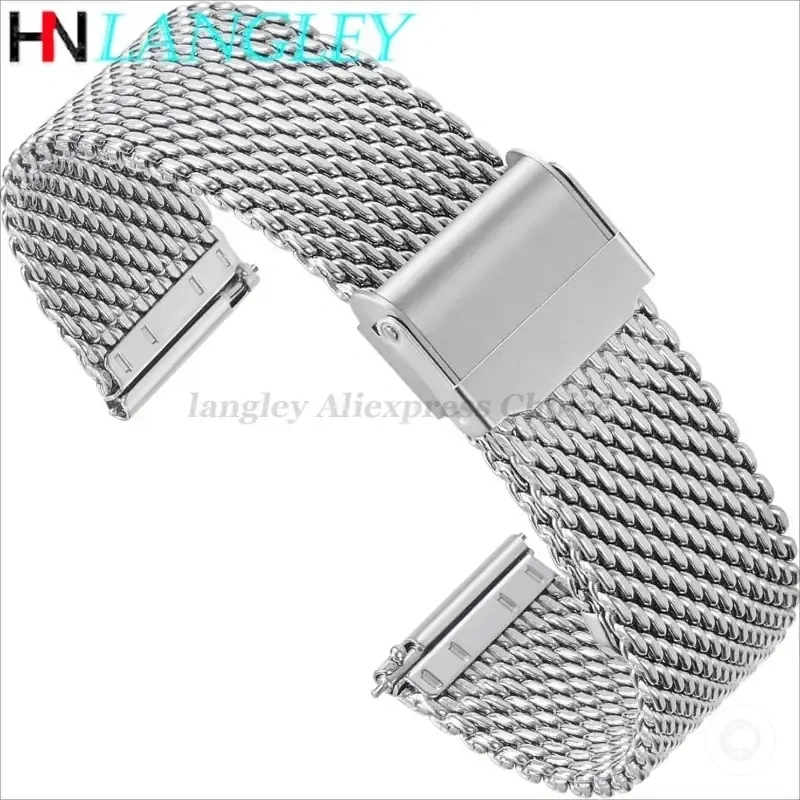
| Structured bands | Leather strap, metal bracelet, Milanese mesh | Often emphasize shape retention and a more defined finish | Material and clasp may vary within the same family |
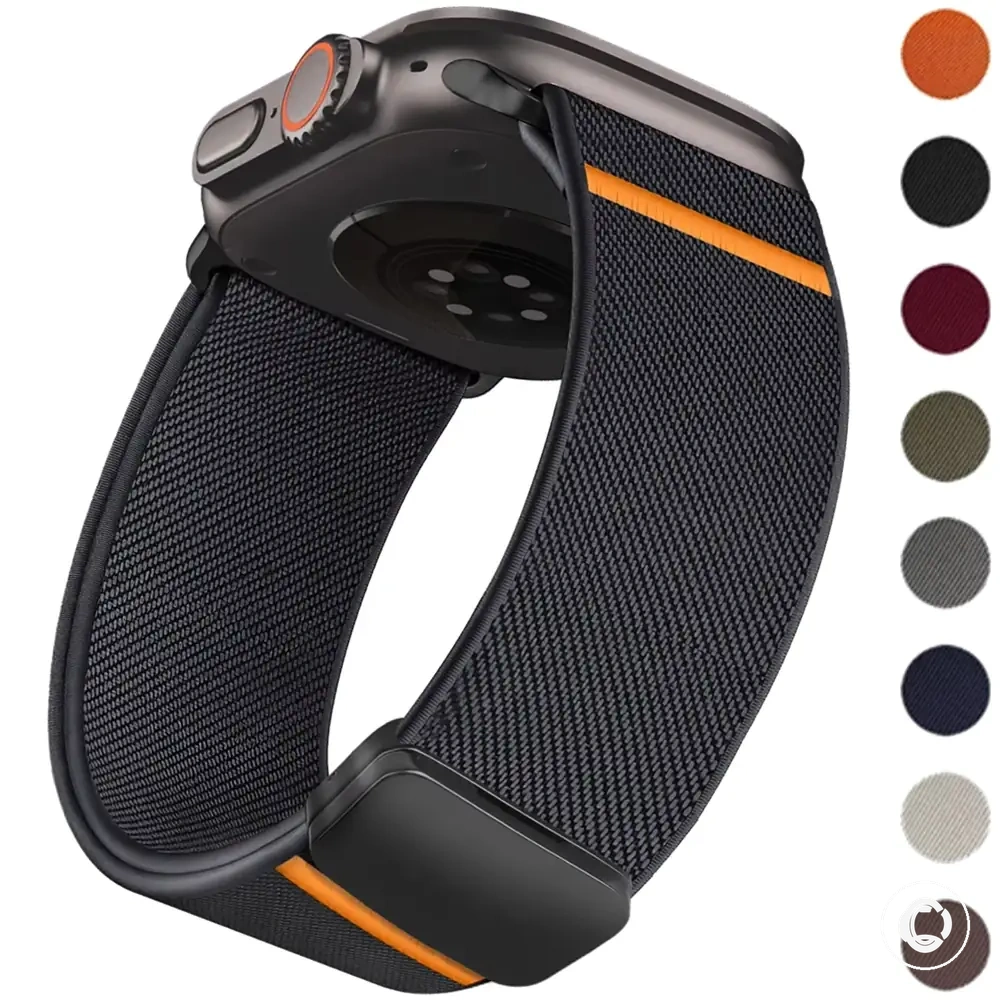
| Soft-loop bands | Nylon, woven, elastic loop | May support lightweight wear and breathability | Adjustment depends on loop and fastening design |
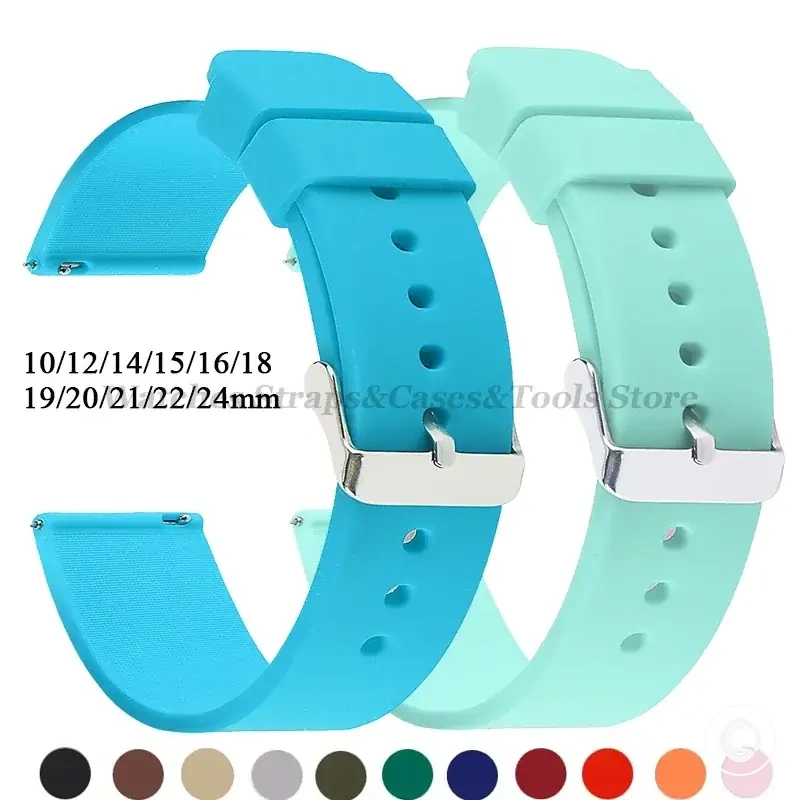
When sport use, frequent movement, or water exposure are common considerations, silicone and rubber constructions are often compared because the band construction remains flexible and adjustment is usually straightforward. Nylon and woven constructions can create a softer wear feel and may improve breathability through their fabric structure. An elastic loop uses stretch as part of its adjustment method, so fit can vary with band tension and wrist size.
When a more structured appearance is preferred, leather straps, metal bracelets, and Milanese mesh constructions are common alternatives. A leather construction often combines a finished surface with a clasp-based closure, while a metal bracelet uses linked segments that may create a different wear feel and weight profile. Milanese mesh pairs a mesh structure with a bracelet style appearance while maintaining a different flexibility pattern from many solid-link bracelet constructions.
Main smartwatch band styles by construction are best understood as flexible, structured, and soft-loop families rather than as isolated material names. Each construction family combines material, adjustment method, and wear design differently, which can influence flexibility, breathability, and appearance during daily wear. A practical decision signal is to compare how the construction changes movement, adjustment, and wear feel before comparing individual materials or closures.
Flexible silicone and rubber sport bands
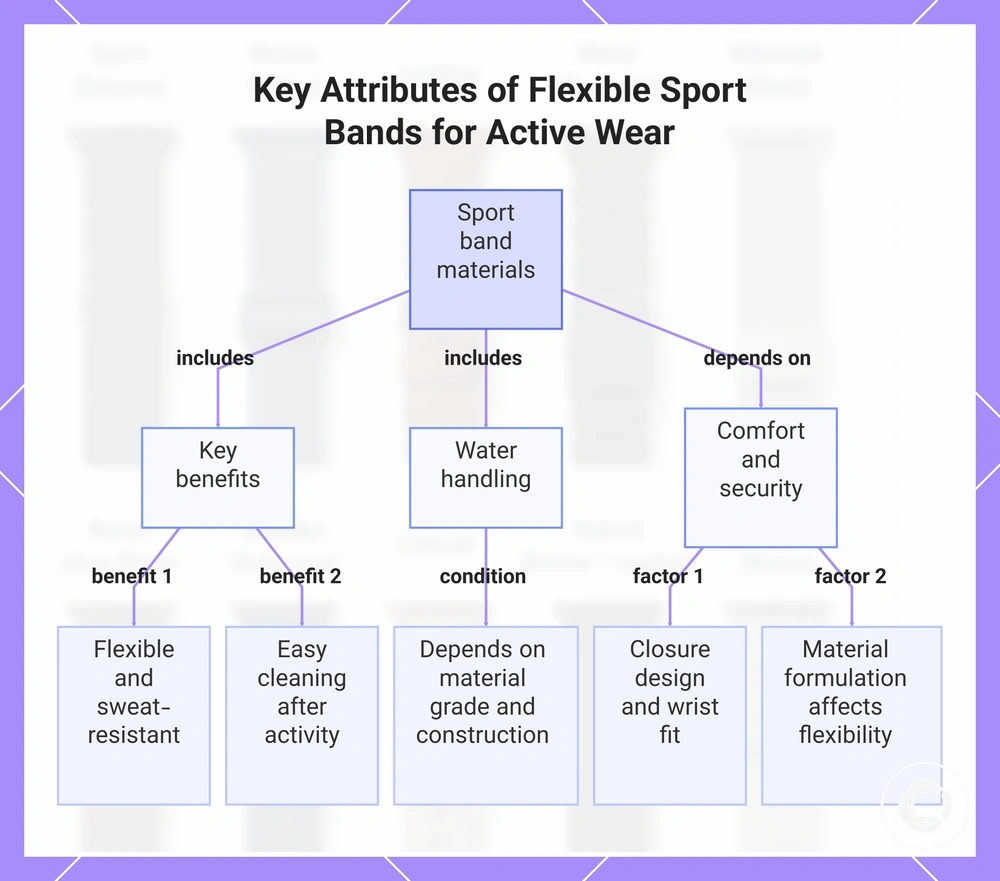
During workouts, repeated movement, sweat, and water exposure often make a flexible sport band a common choice for active wear. A silicone band or rubber sport band typically moves with the wrist and is often associated with easy cleaning after activity. This combination of flexibility, sweat handling, and simple maintenance shapes the active-use wear profile.
Silicone and rubber sport bands are flexible construction styles commonly used for movement-focused wear. Practical attributes that often influence daily use include:
- Grip: A rubber strap may provide a different grip feel during activity, although the effect can vary with surface texture and wrist conditions.
- Easy cleaning: Silicone and rubber surfaces are often easier to clean after sweat or routine use.
- Water exposure: These materials are commonly used around water exposure, but long-term results can depend on material grade and band construction.
- Closure dependency: Security during movement depends on the closure design and wrist fit as well as the band material.
- Comfort limits: Perforation, thickness, weight, and skin feel can change comfort during both workouts and casual daily wear.
A silicone band may feel different from a rubber sport band during casual wear because thickness, perforation, and material formulation can influence flexibility and skin contact. Comfort and security depend on closure design, wrist fit, material grade, and activity level rather than on the material name alone.
This chart shows the main practical attributes and comfort factors of silicone and rubber sport bands for active use.
Leather straps and dress-oriented bands
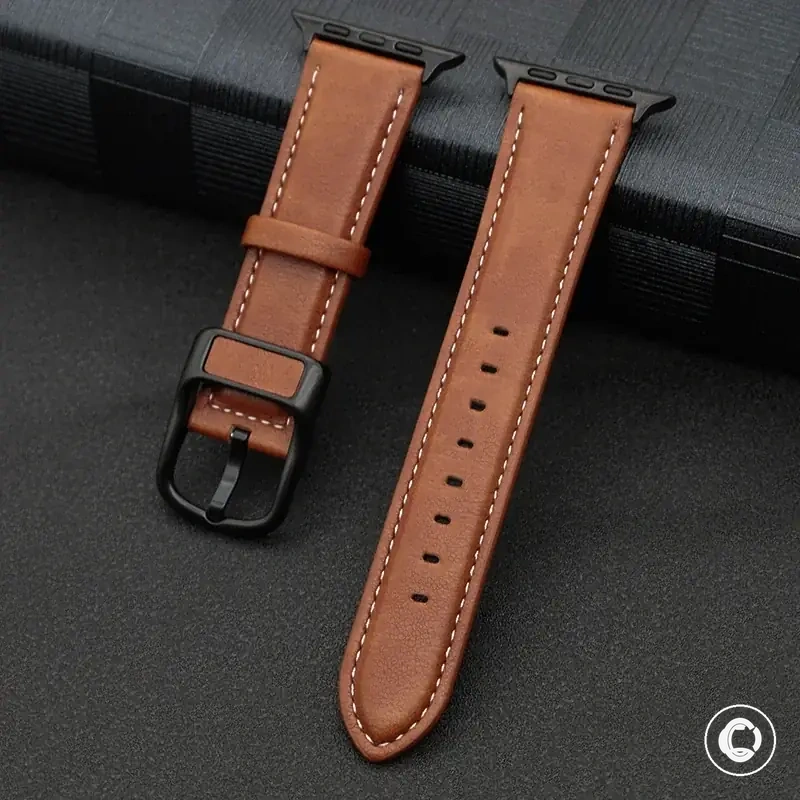
When office wear, formal occasions, or a refined everyday appearance are the priority, a leather strap is often selected for its finish and structured presentation rather than sport-focused use. Finish, padding, and stitching can influence both visual formality and how the leather band sits on the wrist within different outfit contexts. This combination of appearance and structure positions the leather strap as a dress-oriented or hybrid style.
The distinction between dress use and more active use becomes clearer through key attributes:
| Attribute | Pros and limits |
|---|---|
| Appearance | A leather strap often supports greater formality and can reinforce a classic strap or hybrid style appearance. |
| Water exposure | Water sensitivity may affect use decisions, depending on finish, lining, climate, and exposure conditions. |
| Comfort and structure | Padding and stitching can influence comfort and structure, although results vary by design, wrist fit, and wearing conditions. |
| Clasp pairing | Clasp type can affect adjustment and presentation, while the overall visual effect depends on the complete band design. |
A leather strap is both a style signal and a material choice. A dress-oriented band often emphasizes finish and formality, while a hybrid style balances a traditional appearance with broader everyday use. Care needs, comfort, and use limits can vary with water sensitivity, padding, finish, climate, and wearing context.
Metal bracelets and Milanese mesh bands
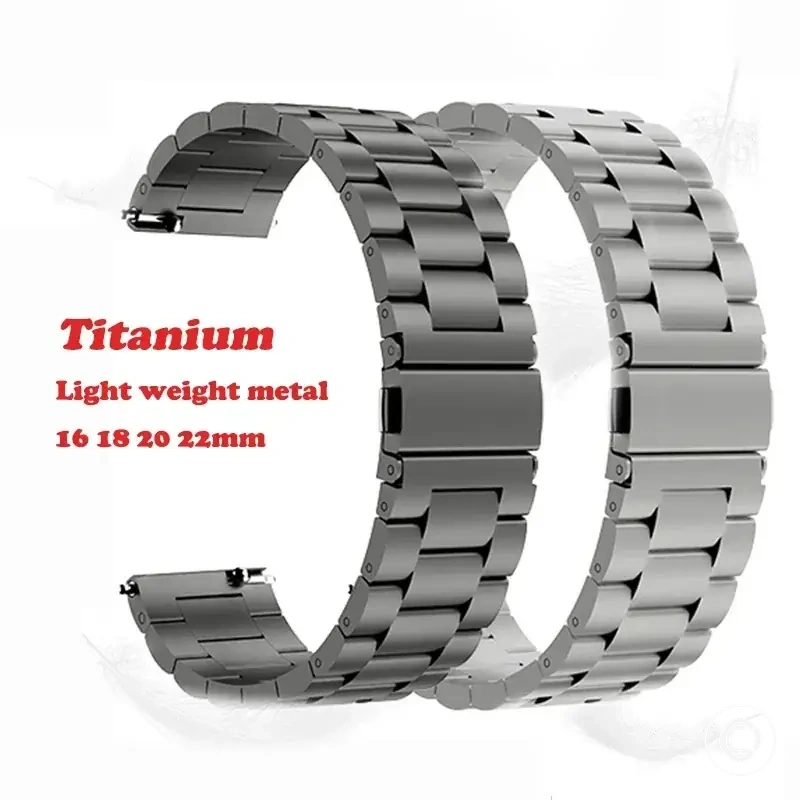
Metal bracelets and Milanese mesh bands are structured smartwatch band styles that differ through construction, adjustment behavior, and wrist feel. A metal bracelet uses solid links connected into a rigid structure, while Milanese mesh uses a woven mesh weave that creates a distinct metal band style with different adjustment characteristics.
When wrist movement, daily wear, or fit refinement are priorities, metal structure changes both adjustment and wear experience. The comparison below highlights how solid links and mesh weave create different adjustment signals and wear effects, while weight, wrist conformity, and comfort still depend on clasp design, band tension, and wrist shape.
| Metal style | Structure | Adjustment signal | Wear effect |
|---|---|---|---|
| Metal bracelet | Solid links arranged as a link bracelet | Commonly paired with a clasp closure and a fixed link structure | Weight, formality, and wrist conformity depend on fit, adjustment, and wrist shape |
| Milanese mesh | Woven mesh weave forming a mesh strap | Often paired with a magnetic closure or clasp closure for finer adjustment | Ventilation and wrist conformity may feel different because the mesh weave adapts more closely to wrist contours |
Milanese mesh is typically more flexible than a solid metal bracelet because the mesh weave bends across the wrist rather than relying on connected solid links. The two styles remain structurally different, and comfort, security, ventilation, weight tolerance, and adjustment depend on closure design, band tension, and wrist shape.
Nylon, woven, and elastic loop bands
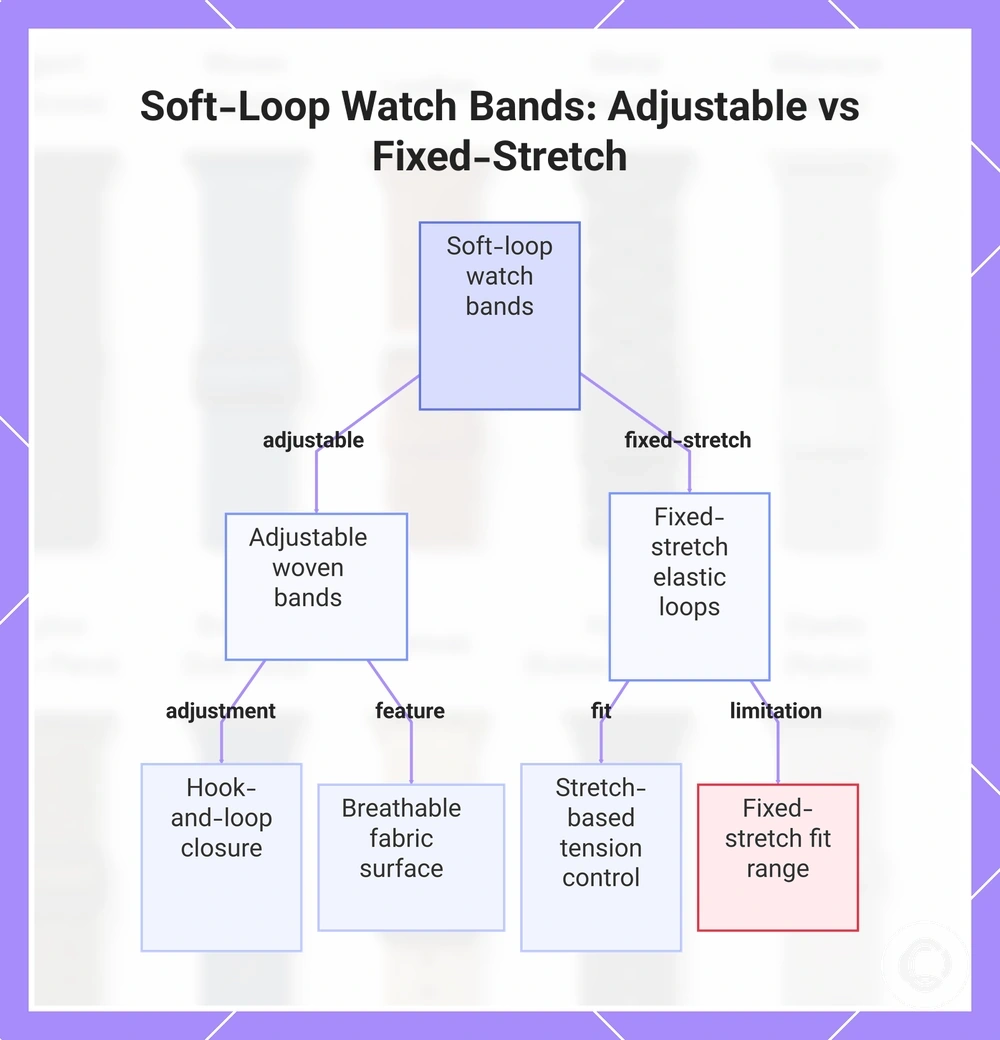
During long workdays, casual wear, or situations where a lighter wrist feel is preferred, nylon, woven, and elastic loop bands are often selected because soft construction can support comfort, lightness, and adjustability. A nylon band or woven band may combine a lightweight feel with a breathable fabric surface, while an elastic loop uses stretch to create wrist contact and tension control. These characteristics define the soft-loop wear profile.
Nylon, woven, and elastic loop bands differ mainly through weave, closure method, and stretch behavior. Key classification signals include:
- Adjustment method: A woven band often uses a hook-and-loop closure or similar adjustable system, while an elastic loop relies more on stretch and band sizing.
- Stretch behavior: An elastic loop uses built-in stretch for tension control, whereas many woven loop designs adjust through closure position rather than elasticity alone.
- Drying behavior: Nylon and woven fabric bands may differ in drying behavior depending on weave density, material composition, and use conditions.
- Connector and size limits: Fit depends on band length, wrist size, connector design, and watch compatibility rather than on fabric construction alone.
A woven band is usually more adjustable because the closure position can be changed to refine fit, while an elastic loop often provides a fixed-stretch fit range determined by band size and elasticity. Breathability, comfort, and all-day wear may vary with weave structure, stretch level, tension control, wrist size, and connector limits. This distinction separates adjustable woven loops from fixed-stretch elastic loops without placing them in the same adjustment category.
This chart shows the two main types of soft-loop watch bands, their adjustment methods, and key fit characteristics.
Clasp and release mechanisms used by smartwatch bands
Clasp and release mechanisms used by smartwatch bands are closure and hardware attributes that determine how a band is secured, adjusted, and removed. A clasp controls wrist fastening, while a release mechanism controls attachment or removal at the watch case. These components influence security, convenience, and adjustment separately from the strap body itself.
Clasp and release mechanisms used by smartwatch bands affect security, convenience, and fit adjustment through different closure designs. The table below organizes common mechanisms by how they secure the band, support adjustment, and influence removal.
| Mechanism | How it secures | Adjustment signal | Boundary note |
|---|---|---|---|
| Buckle | Uses a pin-and-hole closure | Adjustment depends on available sizing holes | Security may vary with fit and strap condition |
| Folding clasp | Locks through a folding fastening structure | Often paired with a predefined size setting | Removal behavior depends on clasp design |
| Deployant clasp | Uses a hinged closure system | May combine structured fastening with adjustable sizing | Security depends on fit and closure construction |
| Push-button clasp | Uses a button-assisted lock mechanism | Usually emphasizes convenient release | Performance may vary with lock design and wear conditions |
| Magnetic closure | Secures through magnetic contact | Often allows fine adjustment | Holding strength may vary with movement and band design |
| Hook-and-loop | Fastens through overlapping fabric surfaces | Provides a broad adjustment range | Fit depends on closure engagement and band length |
| Sliding closure | Uses a movable lock position | Supports incremental adjustment | Adjustment range depends on closure design |
| Stretch loop | Relies on elastic tension rather than a separate clasp | Adjustment is influenced by stretch and sizing | Fit depends on elasticity and wrist size |
| Quick-release hardware | Uses release hardware and a spring bar attachment | Does not control wrist adjustment directly | Acts as attachment hardware rather than a complete band style |
A buckle, folding clasp, deployant clasp, or push-button clasp secures the band through dedicated fastening hardware and represents the most common traditional clasp families. Each closure system balances removal convenience, adjustment method, and wrist security differently. Outcomes can vary with clasp design, band material, wrist movement, and overall fit.
When faster adjustment or easier removal is preferred, magnetic closure, hook-and-loop, sliding closure, stretch loop, and quick-release mechanisms become relevant comparison points. Magnetic, sliding, and hook-and-loop systems often emphasize adjustment flexibility, while a stretch loop relies on elastic tension and quick-release hardware focuses on watch-case attachment rather than wrist fastening. The most suitable closure depends on the preferred balance between security, ease of removal, and adjustment range rather than on a universally superior mechanism.
Buckle, folding, deployant, and push-button clasps
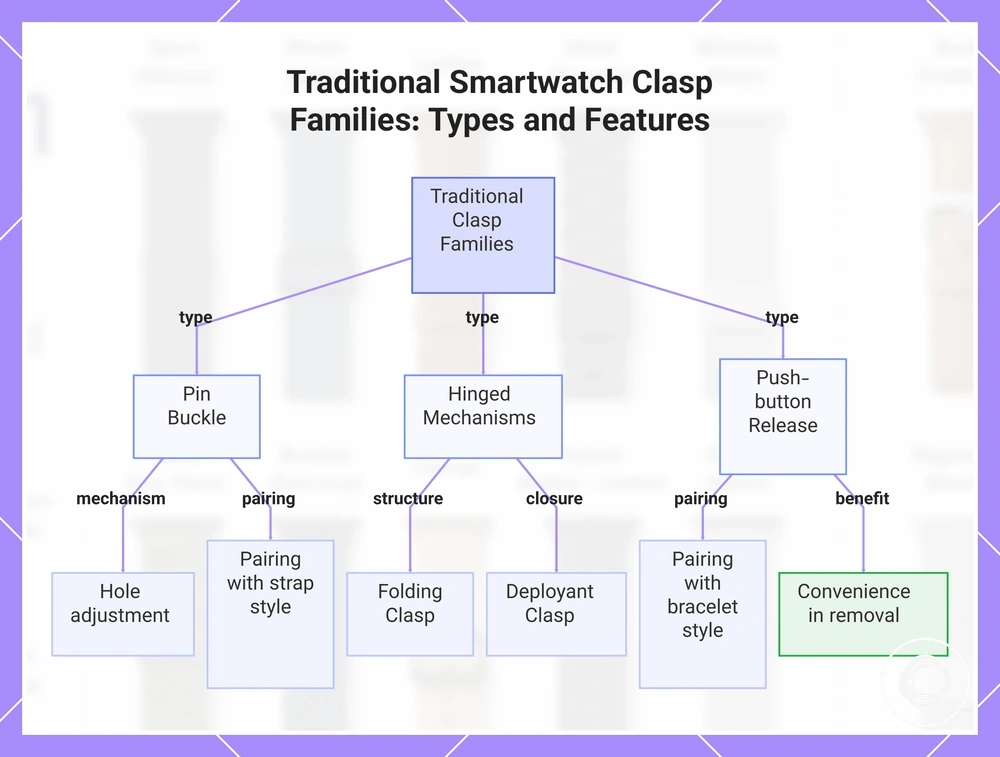
Buckle, folding, deployant, and push-button clasps are traditional fastening mechanisms used to secure smartwatch strap style and bracelet style bands. Each clasp family uses a different closure method that affects adjustment, removal, and security feel. Together, these mechanisms form the core traditional clasp family used across many band constructions.
Each clasp family differs by fastening behavior and typical pairing:
- Pin buckle: Uses hole adjustment through a buckle clasp mechanism. It is commonly paired with a strap style band and provides simple adjustment through fixed sizing positions.
- Folding clasp: Uses a foldover clasp structure that closes through a hinged mechanism. It is often paired with a bracelet style band and may provide a more structured security feel during wear.
- Deployant clasp: Uses a deployment clasp mechanism that folds through a hinged closure system. It is commonly paired with strap style or bracelet style bands where controlled opening and closing are preferred.
- Push-button clasp: Uses a push-button release integrated into the closure. It is often paired with bracelet style constructions and may emphasize convenience during removal and fastening.
Folding clasp, deployant clasp, and push-button clasp names can overlap because a single closure may combine a folding structure with a deployment mechanism or push-button release. The primary distinction is whether the name describes the foldover structure, the deployment-style closure, or the release method. Adjustment, convenience, and security feel can vary with clasp design, band material, and whether the mechanism is paired with a strap style or bracelet style band.
This chart shows the four main clasp types used in smartwatch bands, grouped by mechanism and typical pairing.
Magnetic, sliding, hook-and-loop, and stretch closures
When frequent fit adjustments, changing wrist size, or different activity levels are part of daily wear, closure design can change adjustment speed, wrist conformity, and security feel. Magnetic closure, sliding closure, hook-and-loop, and stretch closure use different methods to manage tension and fit throughout the day. The main distinction between these closure types is how quickly adjustment can be made while maintaining the desired tension.
Alternative closures can be compared by adjustment method, convenience, and watch-out conditions:
| Closure type | Adjustment method | Main advantage | Watch-out condition |
|---|---|---|---|
| Magnetic closure | Uses magnetic hold along an adjustable band surface | Often supports fast adjustment and fine tension control | Hold may vary with magnet strength, wrist movement, and band design |
| Sliding closure | Uses sliding friction through a movable locking position | Can allow incremental fit changes | Performance depends on closure design and maintained tension |
| Hook-and-loop | Uses fabric grip through overlapping loop closure surfaces | Usually supports quick adjustment and flexible sizing | Grip may vary with weave condition, closure engagement, and activity level |
| Stretch closure | Uses elastic stretch instead of a separate fastening mechanism | Can improve wrist conformity through continuous elasticity | Fit depends on stretch, band sizing, and tension over time |
Magnetic closure, sliding closure, hook-and-loop, and stretch closure each balance convenience and security feel differently. Magnetic and hook-and-loop systems often emphasize adjustment speed, while sliding and stretch designs may place greater emphasis on controlled tension and wrist conformity. During workouts, loose-fit situations, or extended wear, activity suitability and security feel can depend on magnet strength, fabric grip, elasticity, wrist movement, and overall band tension.
Quick-release straps and spring-bar release mechanisms
Quick-release compatibility depends on watch-case fit conditions rather than on the release mechanism alone. A quick-release strap uses a release lever connected to a spring bar to simplify attachment and removal, but quick-release is attachment hardware rather than a complete band style.
Quick-release and spring-bar mechanisms are hardware features that affect how a strap end connects to a watch case. The release lever moves the spring bar to support easier removal and attachment, while compatibility still depends on watch-case fit conditions. Before evaluating whether a quick-release strap or spring-bar strap may be suitable, consider the following checks:
- Lug width: Compatibility depends on whether the strap end matches the lug width of the watch case.
- Connector shape: The connector shape may need to align with the watch case design for proper attachment.
- Spring-bar access: The release lever requires sufficient access around the spring bar to function as intended.
- Proprietary adapter need: A proprietary connector may require an adapter before a quick-release band can be considered for use.
- Band length: Wear suitability may also depend on band length in addition to attachment fit.
Myth: a quick-release strap automatically provides smartwatch compatibility. Truth: quick-release convenience simplifies removal and attachment, but compatibility still depends on lug width, strap end shape, watch case design, proprietary connector conditions, adapter requirements, and overall fit, so convenience is not compatibility.
This chart explains what quick-release straps are, the key fit checks for compatibility, and the common myth about automatic smartwatch fit.

Similar band types with different wear profiles
Similar band types with different wear profiles differ most by activity fit, structure, adjustment, and formality rather than by appearance alone. Two bands can look similar while creating different outcomes for comfort, security, and use context. Similar band types with different wear profiles are best compared by wear outcomes before choosing a strap style.
Similar band types with different wear profiles can be compared through the outcomes that most often influence daily wear decisions:
| Pair | Main difference | Decision signal | Boundary condition |
|---|---|---|---|
| Silicone vs leather | Activity-focused flexibility versus structured finish | Choose based on activity fit, finish preference, and use profile | Comfort may vary with wrist sensitivity, climate, and wear duration |
| Mesh vs solid metal | Flexible mesh structure versus linked bracelet structure | Choose based on adjustment preference and desired structure | Wearing feel may depend on fit, movement, and wrist shape |
| Sport band vs dress band | Movement-oriented use profile versus formality-oriented style category | Choose based on activity level and clothing context | Comfort, security, and formality depend on fit, closure, and use conditions |
When exercise, outdoor activity, or frequent movement are part of the intended use context, silicone and leather often produce different wear profiles. Silicone commonly supports activity fit through flexibility and straightforward adjustment, while leather often emphasizes finish and visual structure. The more suitable choice depends on movement level, wrist sensitivity, climate conditions, and the preferred balance between activity use and appearance.
When deciding between mesh and solid metal, structure and adjustment become the primary comparison criteria. Mesh may provide a different wearing feel because the structure can conform differently around the wrist, while a solid metal bracelet usually maintains a more defined structure. The preferred wear profile depends on adjustment preference, wrist shape, movement patterns, and the desired balance between flexibility and structure.
Sport band and dress band comparisons are determined by use context rather than universal superiority. A sport band often aligns with activity fit and movement-focused wear, while a dress band often aligns with formality and clothing context. The most appropriate option depends on the intended wear profile, adjustment preference, activity level, and the importance of formality within the planned use environment.
Silicone and leather bands differ by activity and finish
Silicone and leather bands differ most by activity and finish rather than by a universally better outcome. The comparison depends on sweat exposure, cleaning ease, softness, formality, water sensitivity, and clasp pairing. Silicone is commonly associated with activity-focused wear, while leather is commonly associated with finish-focused wear, creating the activity-versus-finish split.
| Silicone signal | Leather signal |
|---|---|
| Often associated with activity and sweat exposure | Often associated with finish and formality |
| Commonly chosen when cleaning ease is a priority | Water sensitivity may influence use conditions |
| Softness and skin feel depend on climate, wrist fit, and use case | Softness and skin feel depend on finish, climate, and use case |
| Often paired with sport-oriented clasp pairing styles | Often paired with dress-oriented clasp pairing styles |
When workouts, frequent movement, or higher sweat exposure are expected, a silicone band may align more closely with the intended activity profile because cleaning ease is often a consideration. When office wear or dress-oriented settings are the priority, a leather band may align more closely with finish and formality, although water sensitivity, climate, and care context can influence suitability. A workout-focused use case may favor a silicone sport strap, while an office or dress-oriented use case may favor a leather band when finish and formality are the primary considerations.
Mesh and solid metal bands differ by structure and adjustment
Mesh and solid metal bands differ most by structure and adjustment rather than by appearance alone. Structure changes wrist feel, ventilation, weight perception, and fit refinement because a mesh band uses a weave while a solid metal bracelet uses connected links. This distinction separates weave-based construction from a link bracelet structure.
| Mesh band | Solid metal bracelet |
|---|---|
| Uses a woven weave structure, often associated with Milanese mesh | Uses solid links arranged as a link bracelet |
| Often paired with magnetic clasp adjustment or a sliding adjustment system | Often paired with a clasp designed around linked segments |
| Weight perception depends on weave design, band width, and tension | Weight perception depends on link size, structure, and bracelet design |
| Ventilation and wrist feel depend on weave density, finish, and fit conditions | Comfort, wrist feel, and formality depend on link shape, finish, and fit conditions |
When finer adjustment or increased ventilation is preferred, a mesh band may align more closely with those priorities because the weave structure and magnetic clasp can support incremental fit changes. When a more defined structure, formality signal, or traditional metal bracelet feel is preferred, a solid metal bracelet may align more closely with that use case through its linked construction and clasp-based adjustment. Hair interaction, comfort, and overall wrist feel depend on wrist shape, band tension, clasp design, and finish rather than on mesh or solid metal construction alone.
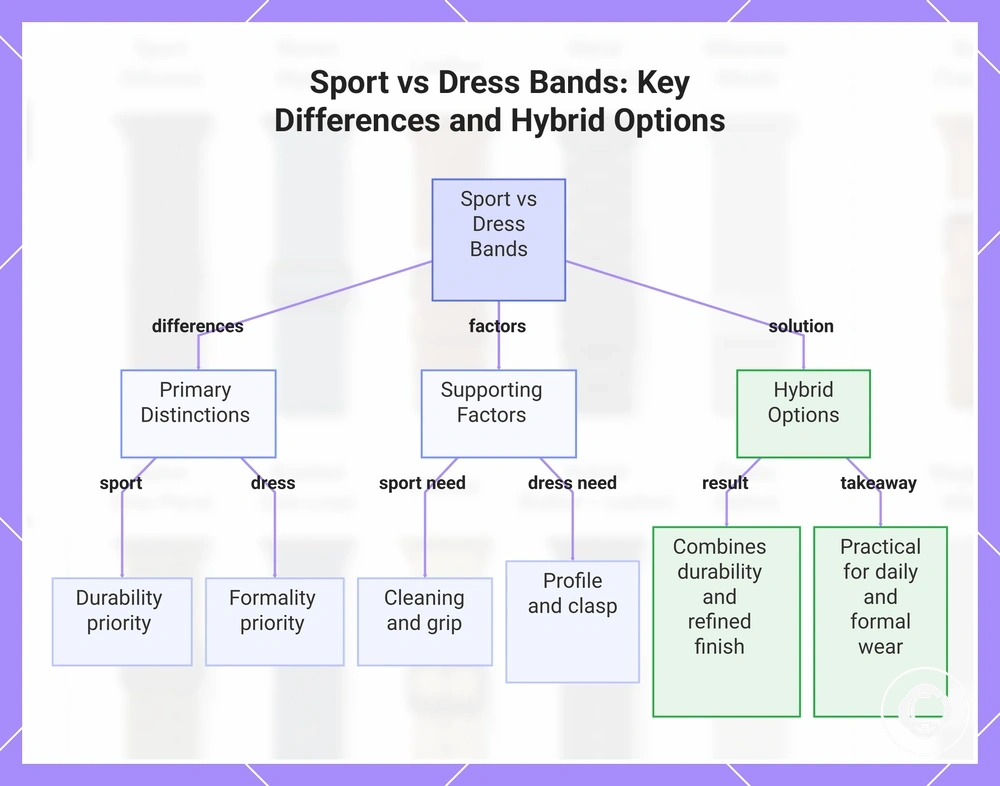
Sport and dress bands differ by durability and formality
Sport and dress bands differ primarily by durability and formality, but the comparison depends on grip, cleaning, profile, finish, outfit context, and clasp choice rather than a fixed product category. A sport band is commonly associated with activity-oriented wear, while a dress band is commonly associated with a more refined visual finish. The distinction is best understood as a difference in use-style categories rather than permanently separate band types.
- Durability: A sport band often emphasizes activity-oriented use conditions, while a dress band may place greater emphasis on finish and presentation.
- Formality: A dress band commonly aligns more closely with formal outfit context, while a sport band typically aligns with casual or activity-focused settings.
- Cleaning and grip: Cleaning ease and secure grip may be stronger considerations for a sport band exposed to sweat and frequent activity.
- Profile and finish: A dress band often emphasizes a thinner profile and a more refined finish, although designs vary.
- Clasp choice: Clasp choice can influence secure feel, appearance, and daily-wear suitability across both categories.
When daily wear includes exercise, commuting, and occasional formal events, the distinction between a sport band and a dress band may become less absolute. Hybrid styles can combine activity-oriented durability, grip, and cleaning convenience with a finish suitable for a broader outfit context. For users who need one band for daily wear and occasional formal use, a hybrid style may provide a practical trade-off when durability, formality, profile, and clasp choice all matter.
This chart shows how sport and dress bands compare in durability and formality, how additional factors like cleaning and clasp influence the choice, and how hybrid styles provide a practical trade-off.
Band type signals for comfort, security, activity, and appearance
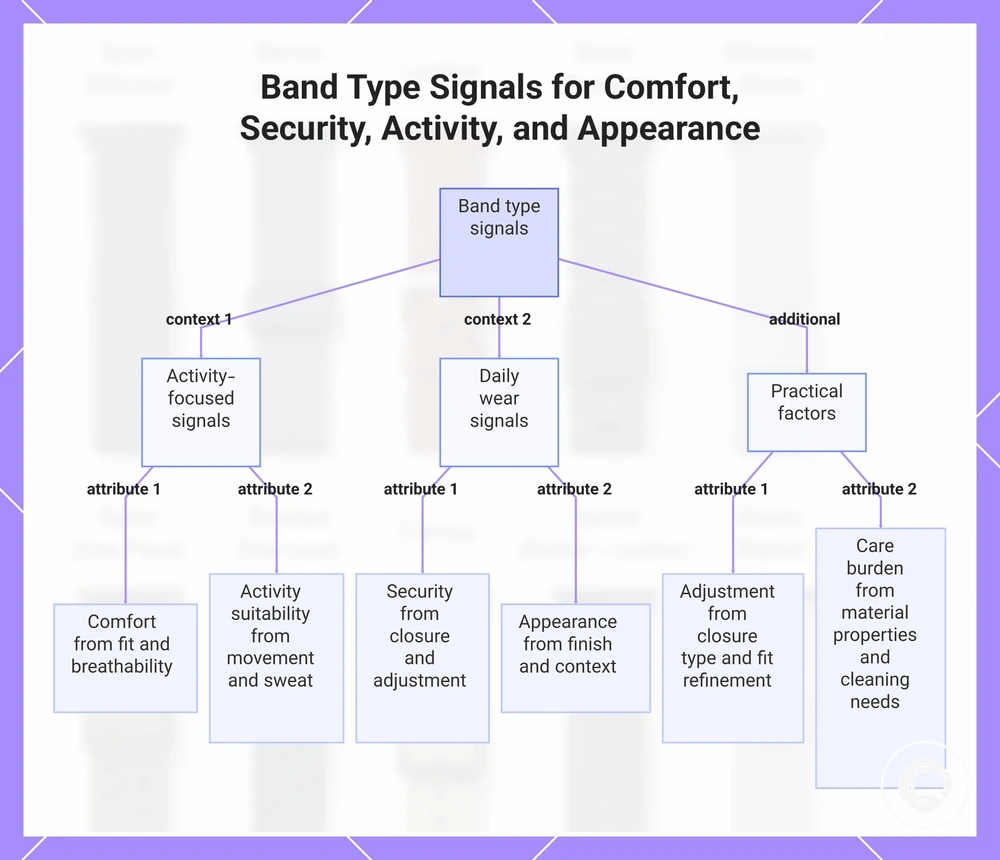
Band type signals help evaluate comfort, security, activity suitability, appearance, adjustment, and care burden before focusing on specific products. A band type can feel breathable, flexible, secure, formal, or washable depending on wrist fit, material, closure design, and use context. These attributes act as the primary selection signals for comparing different band styles.
When workouts, outdoor activity, or extended movement are part of the use case, comfort and activity suitability often become the first decision signals. A breathable or flexible band may feel different depending on wrist fit, environmental conditions, and material construction. Care burden may also vary because washable materials can be more practical in activity-focused situations.
When daily wear includes commuting, office settings, or social occasions, security and appearance often become more important decision signals. A secure feel may depend on closure design, adjustment range, and activity level rather than on band type alone. Appearance can shift from casual to formal depending on finish, outfit context, and overall styling.
Band type signals for comfort, security, activity, and appearance provide a practical framework for comparing wear factors without relying on product rankings or fixed outcomes. The checklist below verifies comfort, security, activity suitability, appearance, adjustment, and care burden as decision signals. For a broader decision framework, continue with choosing the right band type.
Here are product examples that may make comparison easier. Before buying, always review the compatibility criteria, essential features, and product details.
- Comfort: Depends on wrist fit, flexibility, breathability, and material condition.
- Security: Depends on closure design, adjustment range, and activity-related movement.
- Activity suitability: Depends on movement level, sweat exposure, and use context.
- Appearance: Depends on finish, formality, and outfit context.
- Adjustment: Depends on closure type and available fit refinement.
- Care burden: Depends on material properties, cleaning needs, and wear environment.
This chart groups band type evaluation signals by use case and practical factors, providing a framework for comparing wear factors without relying on product rankings.
Where strap style ends and compatibility checks begin
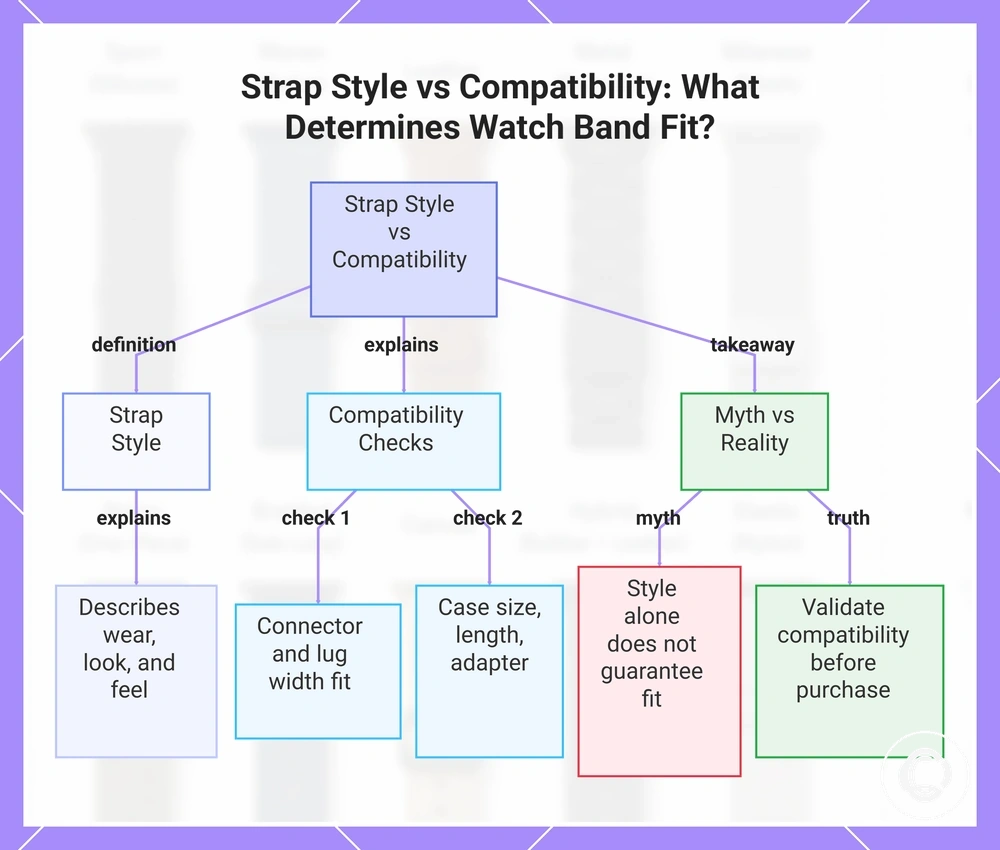
Strap style describes how a band wears, looks, and feels, while compatibility confirms whether the band fits the watch case and connector system. A preferred strap style can guide appearance and wear preference, but compatibility determines whether that preference can be used on a specific smartwatch.
Compatibility is the fit check that validates connector and measurement conditions beyond style. Lug width, quick-release hardware, proprietary connector shape, adapter need, case size, and band length can all affect whether a strap end can attach to the watch case. Where strap style ends and compatibility checks begin, the checklist below verifies the conditions that can override style preference:
- Lug width: Strap fit depends on whether the strap end matches the watch case width condition.
- Connector type: Quick-release hardware may work only when the connector system and strap end design support it.
- Case size: Case size can affect whether the band visually and physically suits the watch case.
- Band length: Band length may affect wrist fit even when the connector condition is correct.
- Adapter requirement: A proprietary connector may require an adapter before a non-proprietary strap can be considered.
When a band style looks suitable but the attachment system is unclear, the next step is to separate visual preference from connector validation. For a deeper connector-focused check, see band connectors and compatibility. The main boundary is that strap style can narrow preference, but compatibility must confirm watch case, connector system, lug width, adapter, case size, and band length conditions.
Myth: a strap style that looks right is automatically compatible with the watch. Truth: style selection can guide preference, but compatibility validation must happen before checkout or external price checking because fit can depend on connector system, watch case, adapter need, and strap dimensions.
This chart shows the boundary between band style and compatibility, explaining that style guides preference while compatibility validates fit conditions.