Smartwatch Band Skin Irritation and Rash Troubleshooting
Smartwatch band skin irritation usually happens when the band contact area on the wrist is affected by moisture, friction, residue, pressure, or material sensitivity. A watch band rash can come from wear conditions, fit, cleaning habits, band material, or wear time, and these causes can overlap.
The first job is to separate what the skin is showing from what may be causing it. Redness, itching, chafing, or a rash under the smartwatch band can point toward trapped sweat and residue, rubbing from fit, pressure marks, or a response to direct material contact.
If the irritation is mild and temporary, troubleshooting can start with reducing contact, improving cleaning, checking fit, and shortening wear time. If symptoms are persistent, spreading, painful, or repeatedly returning, the rash may need professional care rather than only band-level changes.
What smartwatch band skin irritation usually looks like
Smartwatch band irritation usually appears as redness, itching, dry patches, chafing, bumps, or discomfort on the wrist where the band touches the skin. A watch rash often follows the contact area and may be most noticeable around the band edge or sensor area.
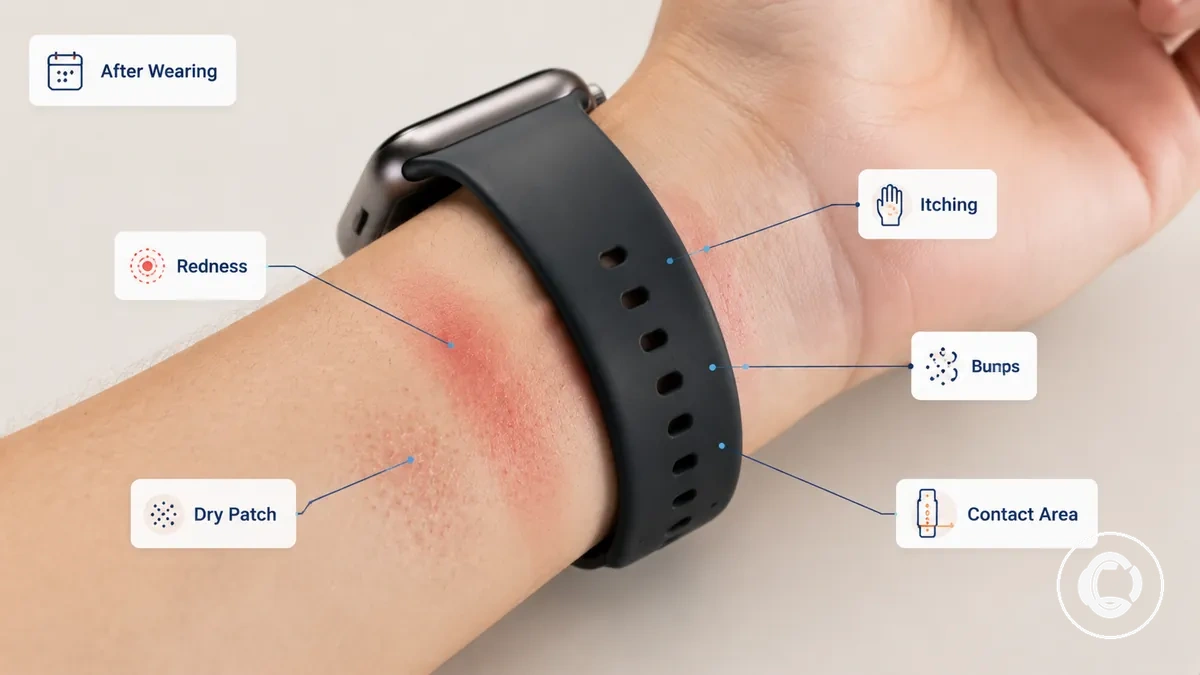
After wearing a smartwatch, the affected wrist may develop a visible strap mark, itchy patch, dry texture, or small bumps in the band area. Appearance can vary by skin type, material contact, moisture, and friction, and symptoms may become noticeable during wear or after wearing the band.
Not every watch rash points to a specific cause. Mild temporary marks can remain limited to the contact area, while symptoms that are spreading, persistent, painful, or repeatedly returning may need professional care; for broader smartwatch context, see the smartwatch bands guide.
Smartwatch band irritation usually appears where band contact, moisture, or friction is strongest. This checklist can help identify common rash patterns without assuming a cause.
- Location: Redness or a rash pattern stays mainly within the wrist contact area or along the band edge.
- Sensation: Itching, discomfort, or chafing develops where the band rests against the skin.
- Timing: Symptoms appear during wear or become more noticeable after wearing the smartwatch.
- Appearance: Dry patches, bumps, redness, or a visible strap mark form in the band area.
- Spread or persistence: A mild mark often remains localized, while changes that continue, worsen, or spread may deserve closer attention.
Why smartwatch bands irritate the skin
Smartwatch bands irritate the skin when band conditions, skin conditions, and wear habits interact in ways that increase irritation. A smartwatch band may irritate the wrist because of moisture, residue, friction, fit, material sensitivity, or wear time, and these causes can overlap.
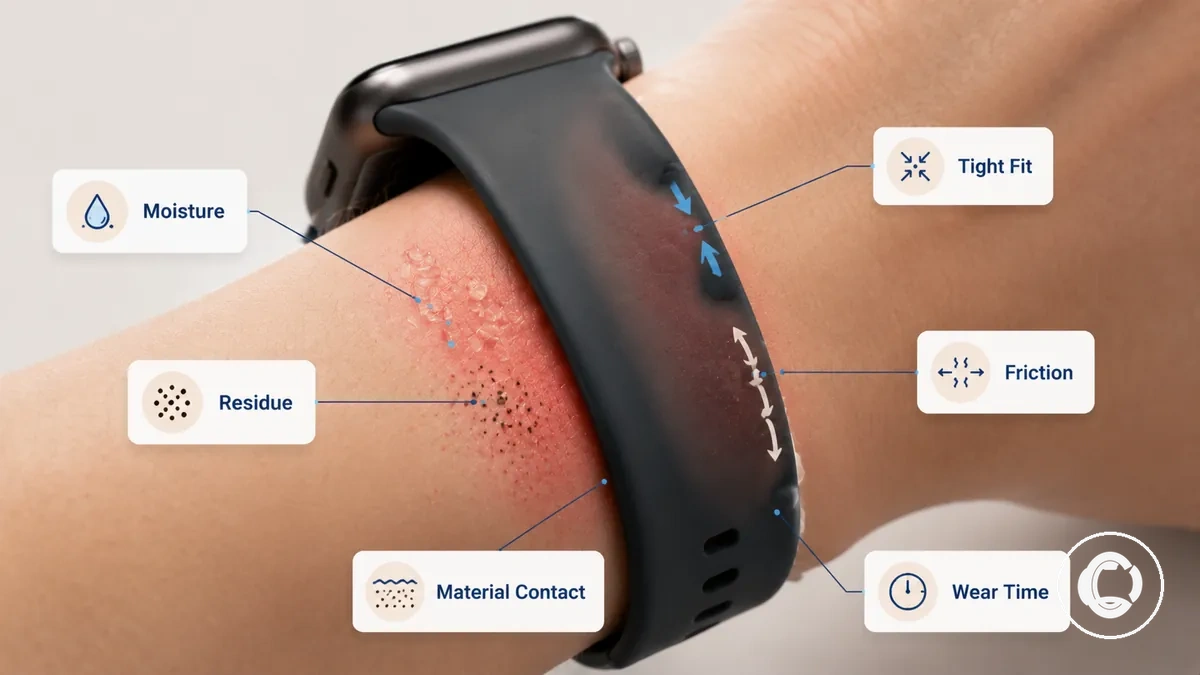
When irritation develops under a smartwatch band, trapped sweat, moisture, and residue are common factors to consider. Sweat, soap residue, skincare products, or other substances can remain between the smartwatch band and the skin, which may increase irritation risk when trapped moisture stays against the wrist.
When a smartwatch band has a tight fit, friction and band pressure may increase in the contact area. A loose fit can also create rubbing as the watch strap shifts during movement, which may contribute to chafing, irritation, and pressure marks.
Not every watch rash comes from material sensitivity. Material contact may act as a skin trigger for some users, and possible contact dermatitis or an allergy-like reaction can occur when certain materials remain against the skin, although appearance alone does not confirm the cause. The table below connects common cause groups with practical checks.
| Cause group | Common trigger | What to check | Why it may irritate |
|---|---|---|---|
| Moisture and residue | Sweat, trapped moisture, residue buildup | Moisture levels, cleaning habit, residue on the band or skin | Trapped substances can remain against the wrist contact area |
| Friction and pressure | Tight fit, loose fit, repeated rubbing | Band movement, fit, pressure points | Rubbing and pressure may increase skin irritation |
| Material contact | Material sensitivity or prolonged contact | Band material and skin response patterns | Material contact may trigger an allergy-like reaction in some users |
| Long wear time | Extended contact between band and skin | Daily wear time and recovery periods | Longer contact may increase exposure to moisture, pressure, or friction |
Sweat, dirt, soap residue, and trapped moisture
When irritation develops under a smartwatch band, trapped substances are often part of the cause pattern. Sweat, dirt, and moisture can remain between the band and the wrist, especially when a damp band slows drying and keeps trapped moisture against the skin.
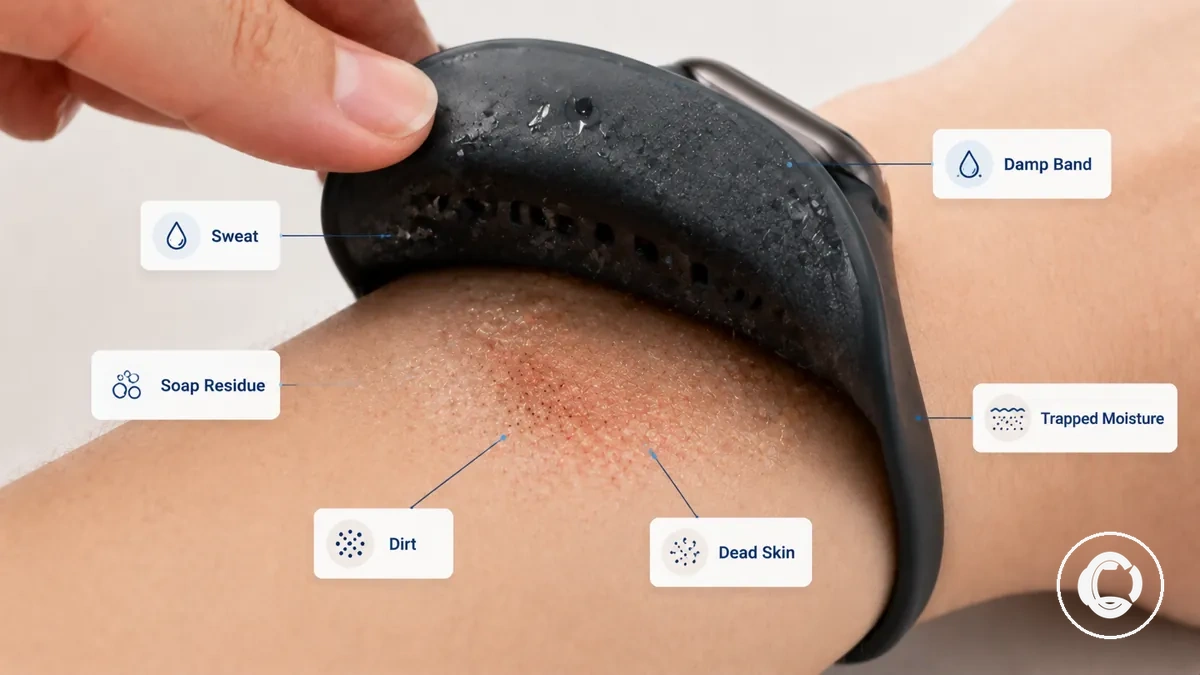
After a workout, handwashing session, or exposure to water, sweat salts, soap residue, lotion, sunscreen, and dead skin can collect in the contact area. This residue layer may remain under the band and increase irritation risk when buildup and trapped moisture stay against the wrist for longer periods.
The following examples show what can remain between the band and wrist:
- Sweat and salt: Can accumulate under the band and increase irritation when moisture remains trapped.
- Soap residue: May stay in the contact area after washing and contribute to irritation in some cases.
- Lotion and sunscreen: Can combine with sweat and create a residue layer beneath the band.
- Dirt and dead skin: Can build up over time and increase contact-area irritation risk.
- Damp band or wet strap: Delayed drying can keep trapped moisture against the wrist for longer.
Friction from tight or shifting band fit
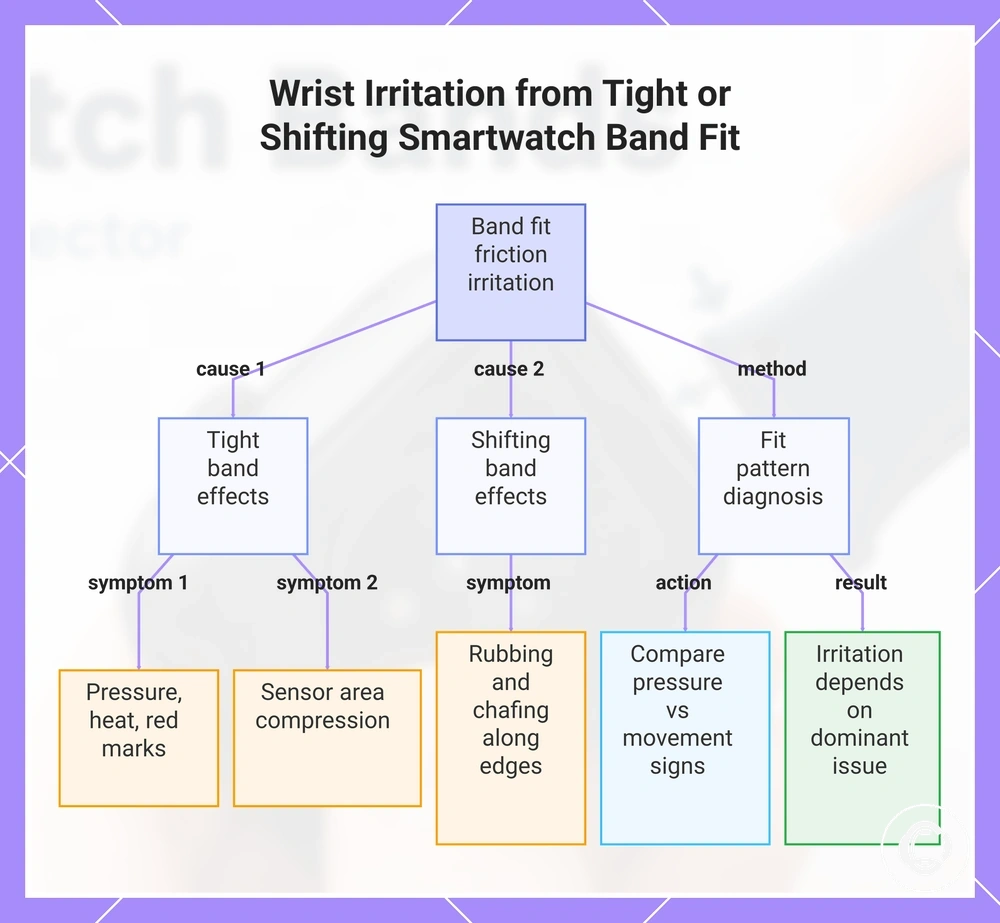
When wrist irritation appears under a smartwatch band, pressure and friction are often part of the cause. A tight band can increase pressure, trap heat, and compress the sensor area, while a shifting band can create repeated rubbing against the skin, leading to pressure and rubbing.
A common myth is that only a tight band causes irritation. In practice, a tight band and a shifting band can irritate the wrist in different ways. Tight band tension may leave red marks, soreness, or compression around the sensor area, while loose movement can create friction along the band edges and contribute to chafing.
If irritation appears where the smartwatch band contacts the wrist, comparing pressure signs with movement signs can help identify the fit pattern. Tracking accuracy may depend on fit and activity, but it should not require painful or persistent pressure. For more detail on tight band irritation, compare pressure, rubbing, and movement symptoms with broader fit-related issues.
- Tight band: Pressure, trapped heat, red marks, or soreness may appear in the contact area.
- Shifting band: Loose movement can increase rubbing and create chafing along band edges.
- Sensor area: Compression around the sensor area may feel uncomfortable when band tension is high.
- Fit balance: Irritation patterns often differ depending on whether pressure or movement is the dominant issue.
This chart shows how tight and shifting band fits cause different irritation patterns and how to identify the dominant fit issue.
Material allergy and contact dermatitis triggers
A common myth is that every smartwatch band rash comes from an allergy. In reality, material sensitivity and contact dermatitis are only one possible explanation, and reactions can depend on direct contact, metal parts, coatings, dyes, adhesives, and skin history, making material a possible trigger rather than the default cause.
When irritation appears after contact with a smartwatch band, multiple trigger categories may be worth considering. Metal parts such as clasps may be associated with nickel-like sensitivity concerns in some users, while silicone, polymer surfaces, coatings, dyes, and adhesives can also act as potential skin triggers. Whether a reaction develops may depend on the band material, strap surface, and amount of direct contact.
| Irritant reaction | Allergy-like reaction |
|---|---|
| Often linked to sweat, friction, pressure, or trapped moisture in the contact area | May be linked to direct contact with a band material, metal parts, coating, dye, or adhesive |
Not every irritation pattern points to material sensitivity, and appearance alone cannot confirm contact dermatitis. For broader comparison between band materials and comfort-related characteristics, see material and skin feel.
How to calm a watch band rash safely
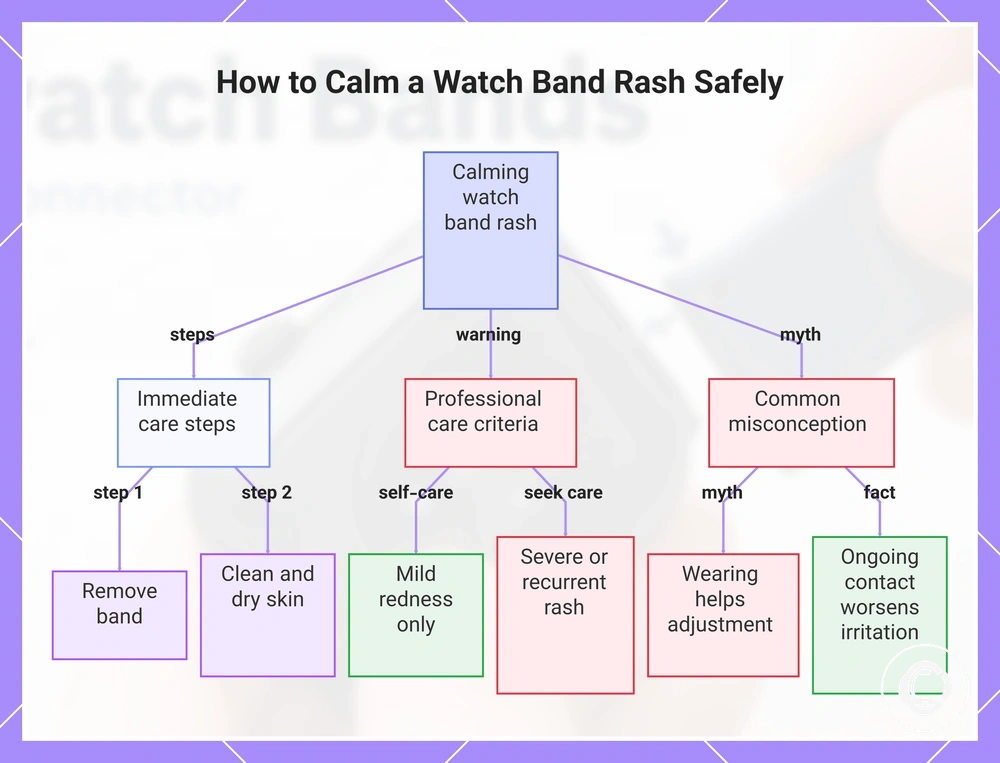
When a watch band rash appears, remove the band, clean skin gently, dry skin completely, and avoid rubbing the irritated area. Safe calming starts by reducing contact, moisture, and friction so the wrist can rest from wear and reduce contact.
When irritation develops after smartwatch use, conservative care focuses on preventing further aggravation. Gentle washing, careful drying, avoiding harsh skin products, and limiting contact with a suspected trigger can help calm irritation while reducing additional stress on the skin. The steps below focus on immediate care only.
- Remove the band: Stop wearing the smartwatch temporarily to reduce contact, friction, and irritation.
- Clean skin gently: Use a gentle wash to remove sweat, residue, or buildup from the wrist.
- Dry skin fully: Make sure the affected area is completely dry before covering it again.
- Avoid rubbing: Reduce pressure and rubbing that may continue to irritate the skin.
- Monitor before re-wear: Monitor changes and avoid re-exposure to a suspected trigger until the wrist has had a break from wear.
If the watch band rash is limited to mild redness, reducing contact and monitoring the area may be a reasonable first step. If the rash becomes spreading, painful, persistent, worsening, or repeatedly returns after re-exposure to a suspected trigger, professional care may be appropriate.
A common myth is that continuing to wear the watch helps the skin adjust. In many cases, ongoing contact can continue irritation, while improvement or recurrence may depend on the underlying cause rather than a single response.
This chart shows the immediate steps to calm a watch band rash, when to seek professional care, and a common misconception.
How to prevent irritation while still wearing the band
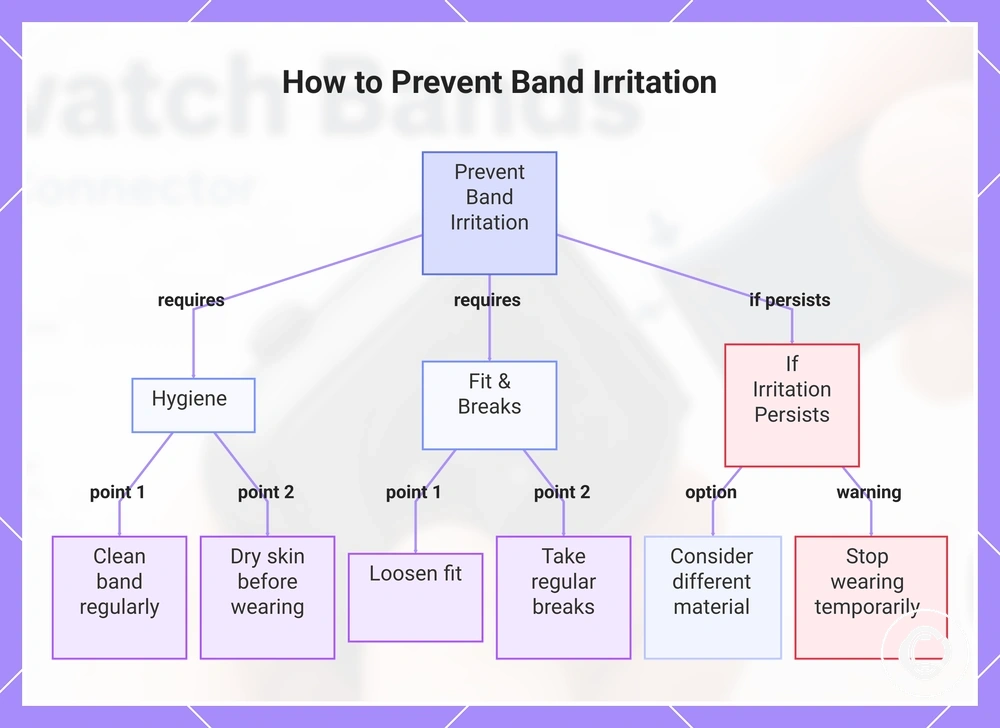
Prevent irritation while wearing the band by focusing on cleanliness, dryness, fit, breaks, and material tolerance. Prevention depends on reducing recurring triggers such as sweat, residue, pressure, friction, and extended wear time.
When irritation keeps returning, prevention habits can be more useful than changing only one factor. A clean band, dry skin, balanced fit, regular breaks, and attention to material tolerance may help reduce rash risk while supporting daily wear. Use the checklist below as a practical prevention framework.
- Keep the band clean: Remove sweat, residue, and buildup from the band regularly.
- Keep skin dry: Dry skin before wearing the band again, especially after sweating or exposure to water.
- Check fit: A slightly looser fit that reduces unnecessary pressure and repeated friction may lower irritation risk.
- Take breaks: Regular breaks can provide a skin break and support recovery from constant contact.
- Manage wear time: Shorter wear time may help when irritation appears during extended daily wear.
- Use a rotated wrist when appropriate: A rotated wrist can reduce repeated contact on the same area of skin.
- Consider material tolerance: If recurrence continues, a different material may be worth considering because material tolerance varies by person.
If prevention habits keep irritation limited and recurrence becomes less frequent, continuing to wear the band may be reasonable. If irritation remains persistent, repeatedly returns despite prevention efforts, or worsens during wear, stop wearing the band temporarily and allow the skin to recover before considering further use.
This chart shows the key prevention habits to reduce band irritation and what to do if irritation persists.
Clean and dry the band after sweat or water exposure
A clean and dry band reduces contact with sweat, salt, soap, and grime that can remain against the wrist after sweat or water exposure. Moisture control and residue removal help keep the band and skin contact area cleaner after daily wear, exercise, or exposure to water.
When sweat, water exposure, or residue collects on the band, simple band care can help reduce buildup before re-wear.
- Wipe the band: Wipe away sweat, soap residue, and visible grime after wear.
- Rinse when appropriate: If the material allows it, rinse the band to help remove salt and remaining residue.
- Clean after workouts: Sweat and salt can remain on the band after exercise, so clean the band when buildup is present.
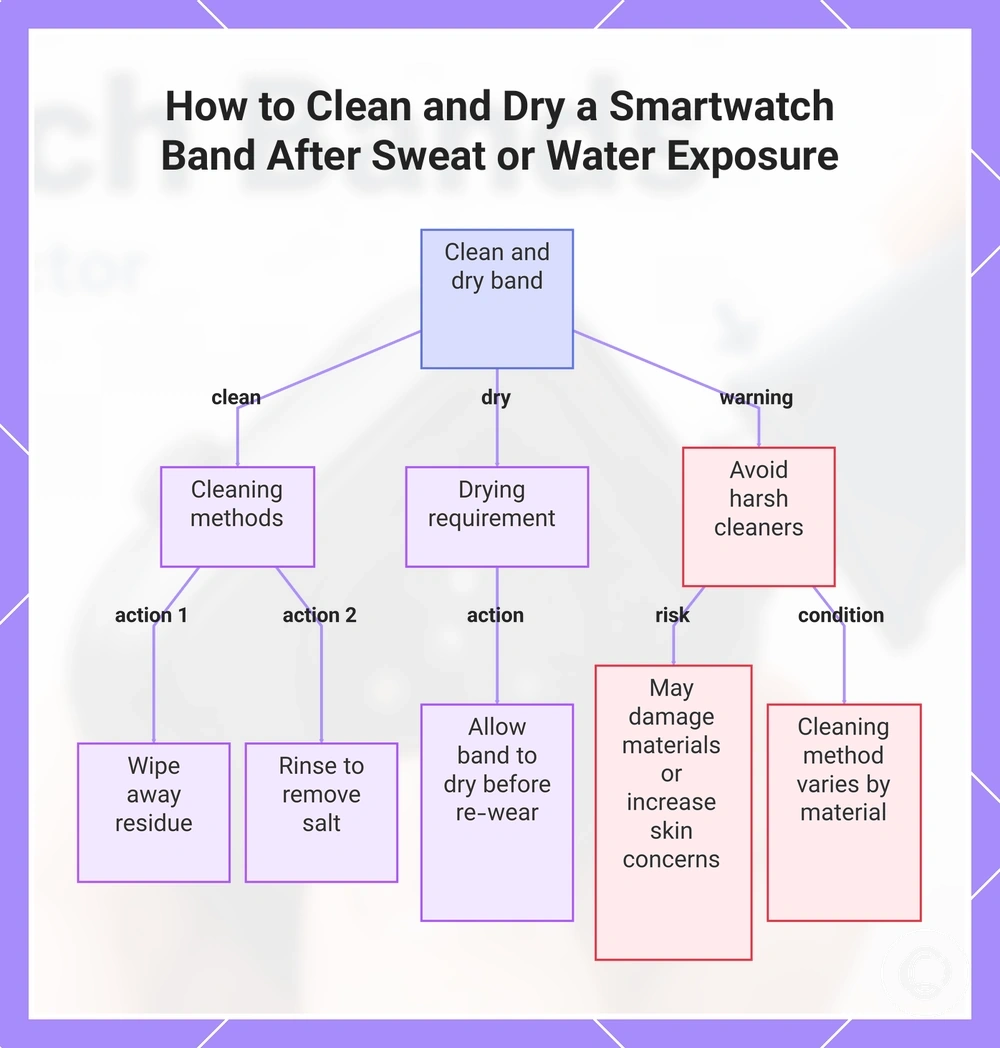
- Avoid harsh cleaners: Harsh cleaners may damage certain materials or increase skin-related concerns depending on the band type.
- Dry before re-wear: Allow the band to dry before re-wear so moisture is not returned to the wrist contact area.
A common myth is that the same cleaning method suits every band. Material care can vary between silicone, nylon, leather, and other materials, so cleaning methods may depend on the band type; for broader material-aware guidance, see cleaning smartwatch bands.
This chart shows the main steps to clean and dry a smartwatch band after exposure to sweat or water, along with a warning about harsh cleaners.
Adjust fit and rotate wear time
Adjust fit and rotate wear time to reduce repeated pressure and trapped moisture on the skin. Prevention depends on both band tension and the amount of time the smartwatch band stays in contact with the wrist.
When daily wear feels comfortable but irritation still returns, fit adjustment and breaks may help reduce recurrence. Daily wear and workouts can require different decisions because sensor needs during activity may justify temporary workout tightening, while longer wear periods may benefit from more band looseness, wrist rotation, and regular breaks. Use the checklist below to manage tension and time on skin.
- Maintain band looseness: Adjust fit so the band stays secure without creating unnecessary pressure marks or discomfort.
- Use workout tightening only when needed: Temporary workout tightening may help meet sensor needs during activity, but loosening the band afterward can reduce prolonged pressure.
- Practice wrist rotation: An alternate wrist may help reduce repeated contact, moisture, and friction on the same area of skin.
- Take overnight wear breaks: Overnight wear may not be necessary for every user, and a wearing break can reduce continuous skin contact.
- Check for pressure marks: After removal, look for persistent pressure marks, discomfort, or worsening irritation that may suggest further fit adjustment is needed.
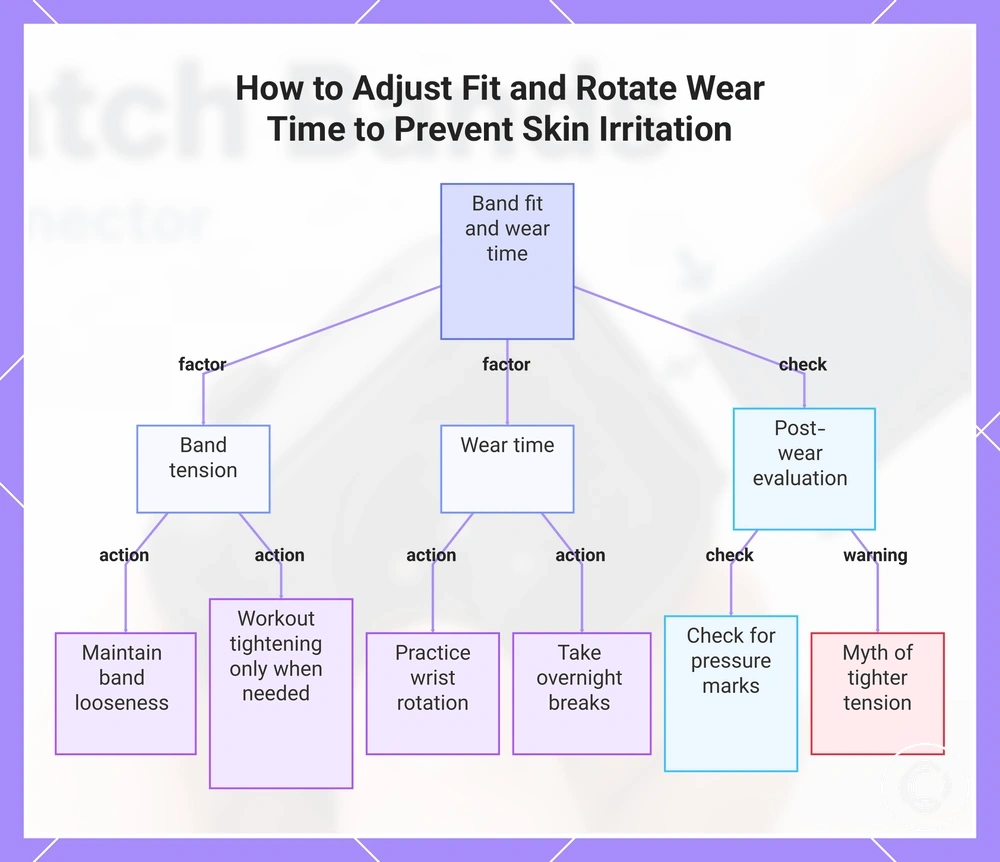
A common myth is that tighter strap tension always improves wear. In practice, fit should balance comfort and sensor needs, and painful pressure or persistent marks are signals to reduce tension or stop wearing the band temporarily.
This chart shows the key factors (band tension and wear time) and the recommended actions to prevent skin irritation, plus a post-wear check and a common myth to avoid.
What a hypoallergenic band can and cannot fix
A hypoallergenic band may help when smartwatch band irritation is linked to material sensitivity or direct contact with a band material. It may not solve irritation caused by moisture, dirt, pressure, friction, drying behavior, or wear habits.
When choosing a band for sensitive skin, evaluate the band against the likely cause of irritation rather than the hypoallergenic label alone. Breathable materials may help manage moisture, a soft surface may reduce friction discomfort, adjustability may help reduce pressure, and lower metal contact may matter when direct contact is a concern. The comparison below highlights the main selection criteria.
| Selection criterion | Possible comfort benefit | Remaining irritation consideration |
|---|---|---|
| Breathable material | May support drying behavior and reduce trapped moisture | Wear habits and moisture buildup can still contribute to irritation |
| Soft surface | May reduce friction discomfort during wear | Pressure and prolonged contact may still cause irritation |
| Adjustable fit | May help balance comfort and pressure | Poor fit adjustment can still create pressure or movement issues |
| Reduced metal contact | May help when material sensitivity involves direct metal contact | Other material or skin-contact factors may still remain |
| Easy-clean material | May make residue removal easier | Cleaning and drying habits still affect irritation risk |
A common myth is that a hypoallergenic label guarantees a low-irritation option for everyone. In practice, a hypoallergenic band can be relevant for material sensitivity, but the label alone does not remove every possible source of irritation.
If irritation appears linked to direct contact with a band surface, material choice may be worth evaluating. For additional decision criteria focused on comfort, material sensitivity, and band attributes, see bands for sensitive skin.
How long smartwatch band rash may take to improve
How long a smartwatch band rash may take to improve depends on the likely cause, the severity of irritation, and whether continued exposure occurs. Improvement varies, so a fixed recovery period cannot be assumed.
When may a smartwatch band rash start to improve after you remove the band?
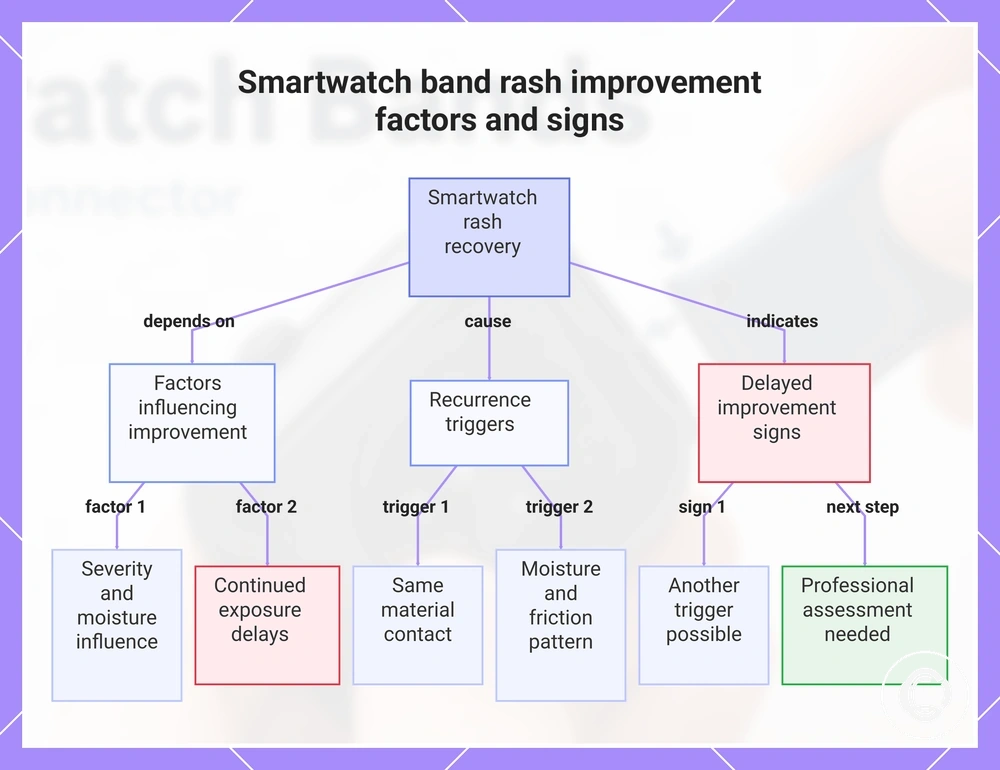
If the smartwatch band rash is related to band contact, improvement may begin after you remove the band. Rash severity, moisture, friction, and continued exposure can influence how quickly symptoms settle down. Improvement depends on the underlying trigger and whether irritation continues.
Why does a smartwatch band rash sometimes come back after re-wear?
If the original trigger remains, re-wear can lead to recurrence. A smartwatch band rash may flare up again when the same material contact, moisture, or friction pattern continues. Recurrence suggests the underlying cause may still be present.
Should a smartwatch band rash clear after the band is removed?
If the smartwatch band rash is mainly linked to band contact, it may improve after you remove the band. Continued exposure can delay improvement, and a suspected allergy may affect whether the rash fully clears. Slow improvement or repeated flare-ups may justify professional assessment.
Does delayed improvement suggest a different trigger?
If improvement remains limited after removing the band, another trigger may be involved. A suspected allergy, ongoing exposure, or a factor unrelated to the smartwatch band may contribute to delayed improvement. Worsening symptoms, persistent irritation, or repeated recurrence may warrant professional assessment.
This chart shows the factors that influence how quickly a smartwatch band rash improves, why it may recur, and what delayed improvement indicates.
When smartwatch band irritation may need medical attention
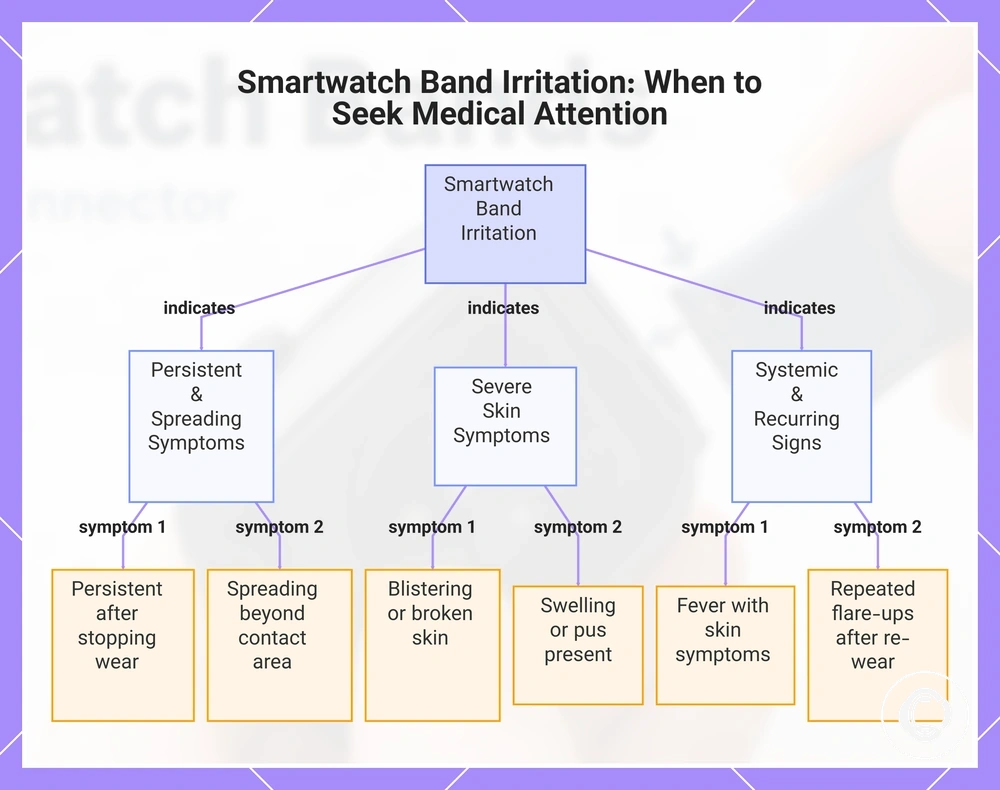
Medical attention may be appropriate when smartwatch band irritation becomes persistent irritation, spreading, painful, blistering, infected-looking, or repeatedly recurring. Not every watch mark is urgent, but persistent irritation and worsening symptoms can exceed routine band troubleshooting.
When irritation does not improve after you stop wearing the band, warning signs can help identify when professional care or medical advice may be appropriate. Rather than assuming a specific cause, use the checklist below to recognize symptoms that may require more than routine band-related troubleshooting.
- Persistent irritation: Symptoms continue despite stopping wear and reducing exposure to the suspected trigger.
- Spreading symptoms: Irritation extends beyond the original smartwatch band contact area.
- Painful symptoms: Pain, tenderness, or increasing discomfort develops instead of improving.
- Blistering or open skin: Blistering, broken skin, or open skin appears in the affected area.
- Swelling or pus: Swelling, pus, or worsening skin changes are present.
- Fever: Fever occurs alongside skin symptoms.
- Severe itching: Severe itching persists or significantly affects comfort.
- Repeated flare-ups: Symptoms repeatedly return after contact with the suspected trigger, re-wear, or when a known allergy is a concern.
A common myth is that appearance alone can confirm a specific skin condition. In reality, symptoms that may resemble allergy, contact dermatitis, eczema, infection, or another condition should not be self-diagnosed with certainty. Stop wearing the suspected trigger, reduce further exposure, and seek professional care when warning signs are present or symptoms continue to worsen.
This chart shows the key warning signs that indicate smartwatch band irritation may require medical attention, including persistent, spreading, blistering, swelling, fever, and recurring symptoms.