Smartwatch Band Buying Mistakes That Lead to the Wrong Replacement Band
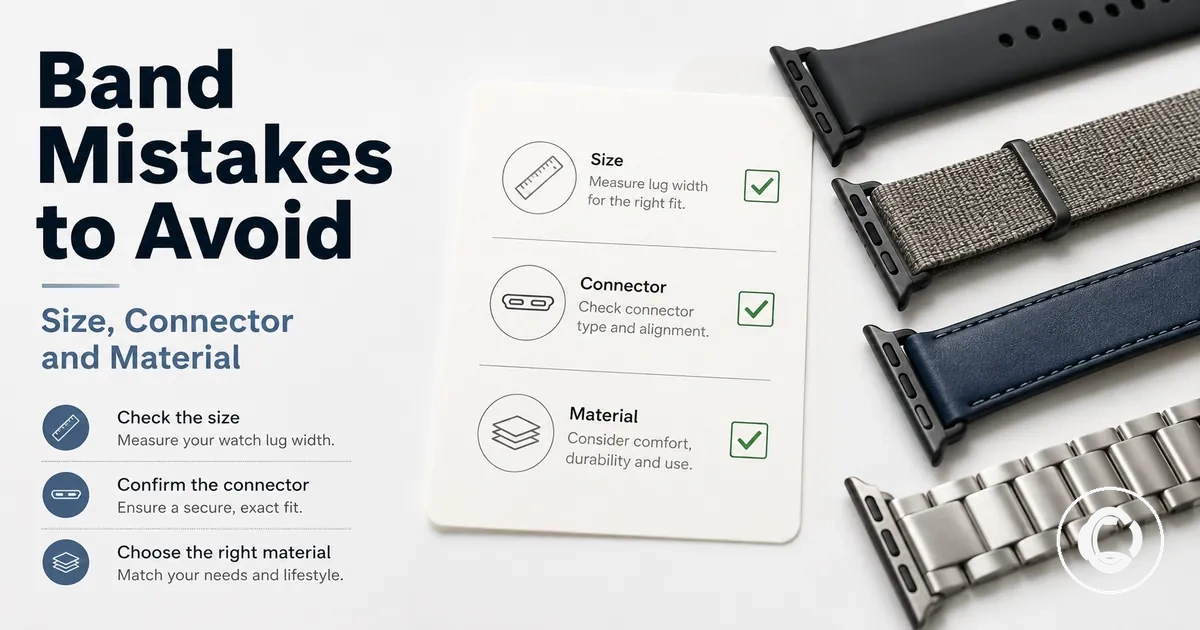
Smartwatch band buying mistakes usually happen when fit, compatibility, material, comfort and value are assumed before the replacement band is checked against the watch and the wearer. A band can look suitable but still mismatch the case size, connector style, wrist size, adjustment range, material tolerance or daily use condition.
The safest way to choose a replacement smartwatch band is to treat the purchase as a criteria check, not a style choice alone. The watch model, case size, connection point, strap width, wrist fit and fastening design should be verified before appearance, colour or price becomes the deciding factor.
Size and compatibility mistakes are different from general preference mistakes. A full size or compatibility guide can explain the measurement details, while this buyer guide focuses on the assumptions that often lead people to choose the wrong replacement band in the first place.
Material and comfort mistakes can also create poor outcomes even when the band attaches correctly. Sweat exposure, skin sensitivity, breathability, strap stiffness, clasp position and adjustment limits may affect whether a band feels suitable for daily wear, workouts or long wear periods.
Value mistakes happen when the lowest price or the most familiar style hides weak fit signals, unclear connector details, poor adjustment options or uncertain return flexibility. A replacement smartwatch band may be a better choice when its fit, compatibility, material and build signals match the actual watch and use case before the purchase path continues.
Purchase Assumptions That Lead to the Wrong Smartwatch Band
Purchase assumptions are a common source of smartwatch band mismatch because they replace verification with guesswork. A replacement smartwatch band may appear suitable, yet fit, compatibility, wrist size, comfort, budget expectations or intended use can differ from what the buyer expects.
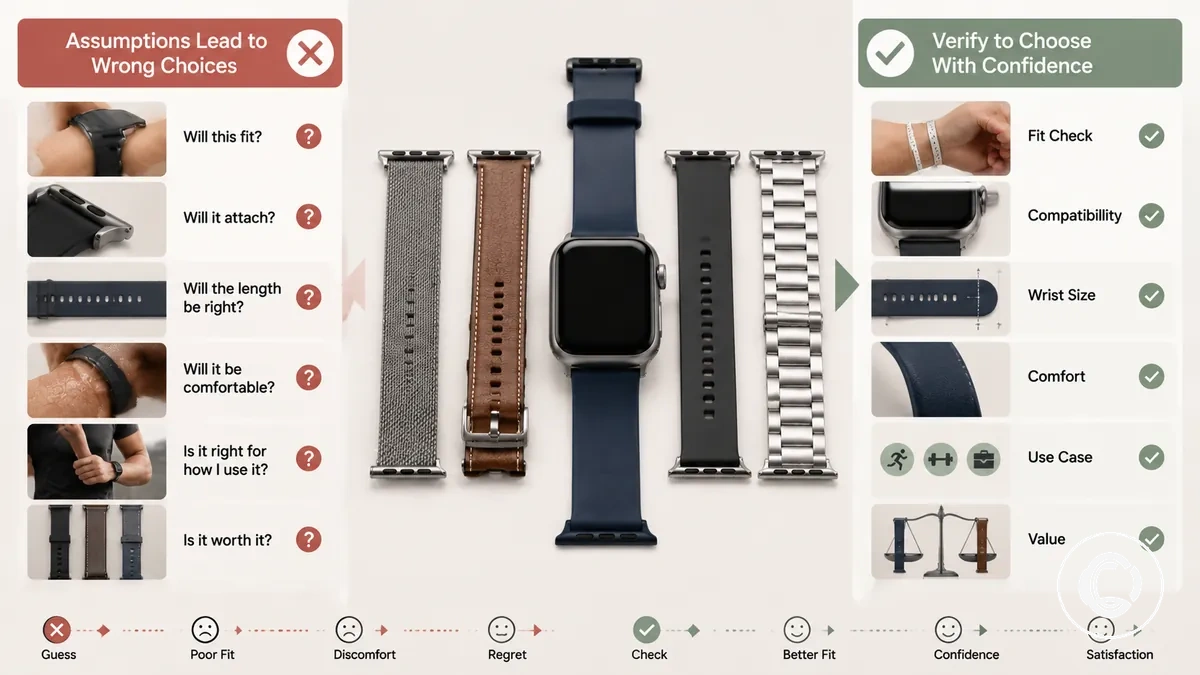
Many replacement purchases begin with the assumption that the old band, watch model name or visual appearance provides enough information for a decision. In practice, replacement intent should be checked against the watch connection system, fit requirements and daily use conditions. This distinction helps separate assumption-based decisions from criteria-based selection and applies across different smartwatch bands.
Fit assumptions can create mismatch risk when wrist size, band length or adjustment range are overlooked. A band that attaches to the watch may still feel too loose, too tight or less comfortable than expected depending on wrist measurements and fastening design.
Comfort assumptions often occur when appearance receives more attention than wear conditions. Material feel, flexibility, breathability and skin response can vary by user, so comfort expectations may not match actual daily use.
Budget assumptions can also lead to the wrong choice when price becomes the main decision factor. A more suitable replacement band is usually identified by checking fit, compatibility, comfort and intended use before evaluating overall value.
- Assumption: The watch model name alone confirms suitability. Check: Verify compatibility details and connection requirements.
- Assumption: A similar-looking band will fit the same way. Check: Confirm fit-related specifications before choosing.
- Assumption: Wrist comfort depends only on material. Check: Consider adjustment range, band length and wear conditions.
- Assumption: Price alone indicates the right choice. Check: Compare value against fit, comfort and intended use requirements.
Size Mistakes With Wrist Fit, Strap Length and Lug Width
Size mistakes usually happen when wrist fit, strap length and lug width are treated as the same measurement even though they affect different parts of smartwatch band selection. A replacement band may attach to the watch but still feel uncomfortable, fit poorly on the wrist or fail to match the required connection width.
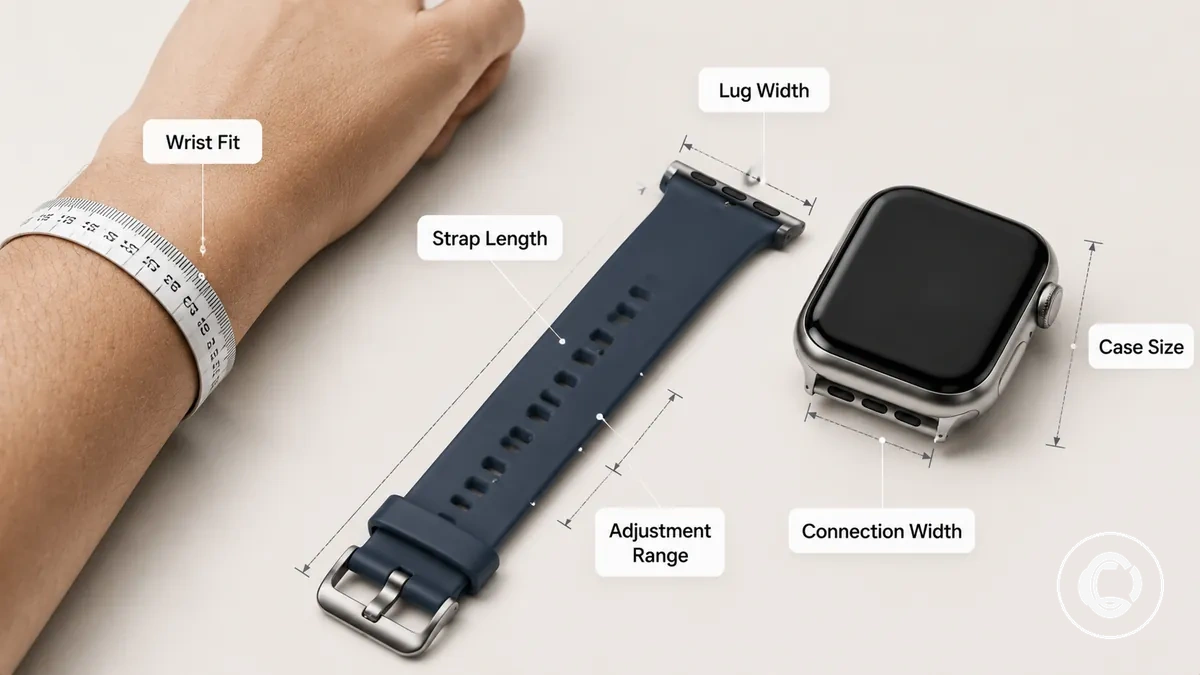
Wrist circumference determines how much band length may be needed around the wrist, while strap length affects the available adjustment range. Lug width and watch connection width relate to how the band attaches to the watch case. Case size can influence overall proportions, but it should not be used alone to judge band suitability.
Confusion between these measurements is a common source of size mistakes. A sizing decision is usually more reliable when wrist measurements, attachment width and adjustment requirements are checked separately rather than treated as a single specification.
| Sizing Factor | What It Refers To | Potential Mistake |
|---|---|---|
| Wrist Circumference | The size of the wearer's wrist | Assuming every band length will fit comfortably |
| Strap Length | The wearable length of the band | Ignoring available adjustment range |
| Lug Width | The width where the band attaches | Choosing a band with a mismatched attachment size |
| Watch Connection Width | The connection requirement of the watch | Focusing on appearance instead of attachment requirements |
| Case Size | The dimensions of the watch case | Assuming case size alone determines band suitability |
Adjustment range can be as important as overall band length. Even when a band appears long enough, hole spacing, clasp position or fastening design may affect how securely and comfortably the band sits during daily wear.
Checking wrist circumference, strap length, lug width, watch connection width and adjustment range individually can reduce the risk of choosing a replacement smartwatch band that suits the watch but not the wearer.
Measuring the Old Strap Instead of the Watch Connection Point
Measuring the old strap is not always the most reliable sizing reference because the watch connection point is often the more relevant source for replacement band selection. An existing strap may differ from the watch-side attachment requirements due to design changes, previous replacements or strap-specific dimensions.
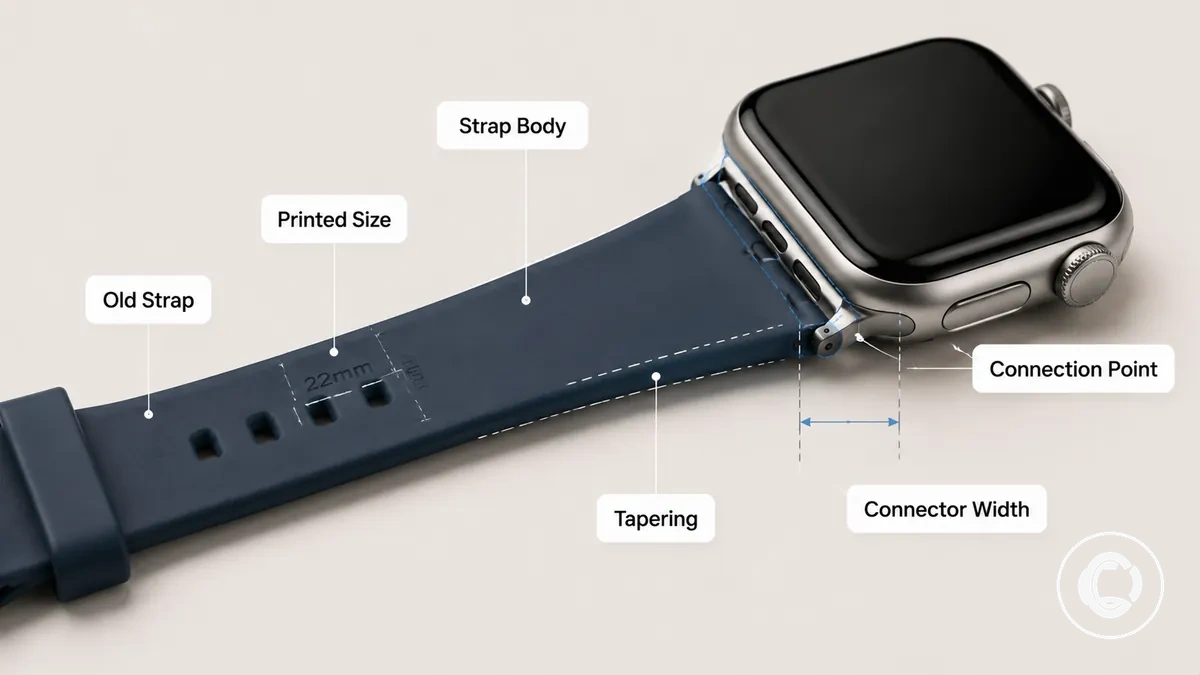
The strap body and the watch connection point do not always represent the same measurement. A strap body can appear wider or narrower than the section that attaches to the watch, which may lead to incorrect sizing assumptions when only the visible strap width is considered.
Printed size information on an old strap can provide a useful reference, but it may not fully confirm current attachment requirements. Wear, replacement history or design differences can make watch-side measurements more relevant when sizing information appears uncertain.
Tapering can create additional confusion because a strap may narrow as it moves away from the watch. In that situation, a measurement taken from the middle of the strap body may differ from the lug spacing or connector width at the attachment point.
When old-strap measurements and watch-side measurements do not appear to match, the difference may come from tapering, connector design or a previously fitted replacement strap rather than the watch connection point itself.
Ignoring Wrist Size, Band Length and Adjustment Range
Wrist fit depends on the relationship between wrist size, band length and adjustment range, not on band length alone. A replacement smartwatch band may appear suitable, but comfort and security can vary when available adjustment options do not align with the wearer's wrist size.
Small wrists may experience fit limitations when the adjustment range begins too far from the fastening point. In those situations, excess strap tail length may remain after fastening, or the band may not tighten to the preferred position.
Large wrists can encounter a different issue when the band length or hole range provides limited adjustment. Even when the watch connection is suitable, the wearable portion of the band may feel restrictive if available adjustment positions are insufficient.
Adjustment range involves more than the overall band length. Hole range, loop position and clasp placement can influence how securely and comfortably the band sits on the wrist during daily wear.
Stretch behavior can also affect perceived fit. Materials with greater flexibility may feel different over time than more rigid designs, so wearable comfort can depend on both material characteristics and adjustment options.
Ignoring wrist size, band length and adjustment range can result in a replacement band that attaches correctly but feels too loose, too tight or difficult to wear comfortably. Evaluating these fit-related attributes together can provide a more dependable sizing assessment than relying on a single measurement.
This chart shows how wrist fit for replacement smartwatch bands depends on the relationship between wrist size, band length, and adjustment range, and the issues that affect small and large wrists when these factors are ignored.
Compatibility Mistakes With Watch Models, Case Sizes and Connectors
Smartwatch band compatibility depends on the relationship between the watch model, case size, connector design, attachment width and fastening system rather than any single specification alone. A replacement band may appear compatible based on one matching detail while still creating attachment or fit issues when other compatibility factors differ.
Many compatibility mistakes occur when the watch model name is treated as the only requirement. While model identification can provide useful guidance, connector design, band width, case variations and attachment mechanisms may also influence whether a replacement band is suitable for a specific watch configuration.
Case size can contribute to compatibility assessment, but it should not be used as a standalone indicator. Watches with similar case dimensions may use different connector systems, while watches within the same product family may have variations that affect replacement band selection. This distinction is a common source of compatibility mistakes when sizing and attachment requirements are assumed rather than verified.
| Compatibility Factor | What It Helps Identify | Potential Limitation |
|---|---|---|
| Watch Model | General compatibility reference | May not reflect all configuration differences |
| Case Size | Overall watch dimensions | Does not confirm connector compatibility by itself |
| Connector Design | Attachment method between watch and band | Can vary between similar-looking watches |
| Band Width | Attachment width requirement | Matching width alone may not confirm compatibility |
| Quick-Release Hardware | Band installation method | Does not replace connector compatibility checks |
Connector compatibility is often evaluated alongside band width rather than separately. A matching width may still require a compatible connector shape, attachment mechanism or watch-specific interface before a replacement band can be considered suitable.
Quick-release hardware can simplify band changes, but it should not be treated as proof of compatibility. The attachment method may work differently depending on the watch design, connector style and band construction.
A more reliable compatibility assessment usually considers watch model, case size, connector design, band width and attachment hardware together. Evaluating these attributes as a combined compatibility profile can reduce the risk of selecting a replacement smartwatch band that appears compatible but does not match the watch attachment requirements.
Assuming All Smartwatch Bands Are Interchangeable
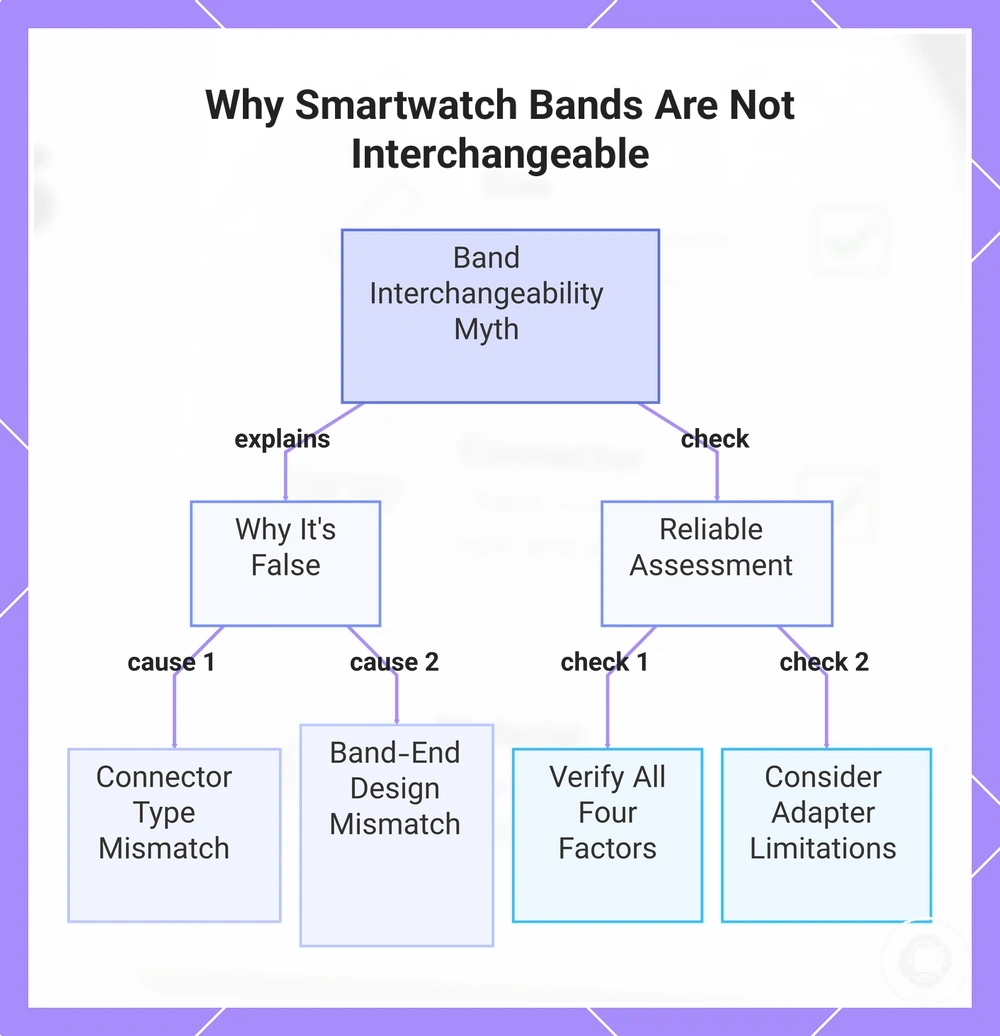
Smartwatch bands are not automatically interchangeable because compatibility depends on the watch model, connection system and attachment design rather than appearance alone. Two bands may look similar while using different connection methods that affect whether they can attach to the same watch.
Watch model identification can provide an important compatibility reference, but model similarity does not necessarily mean that every replacement band uses the same attachment system. Differences in connection design may affect whether a band is suitable for a specific watch configuration.
Connector type is a common source of compatibility mistakes. A band designed for a proprietary connector may not attach in the same way as a band intended for a standard lug-width system, even when both bands appear visually similar.
Standard lug-width designs can expand compatibility options in many situations, but compatibility may still depend on attachment dimensions, connector shape and band-end construction. Matching a single attribute alone may not confirm overall compatibility.
Adapters can sometimes connect a band to a different attachment system, but adapter use may introduce additional compatibility considerations. Suitability can depend on the watch design, adapter configuration and replacement band construction.
Model-specific band ends can also affect interchangeability. A replacement band that appears similar may not align correctly with the watch case when the band end is designed for a different watch configuration. Checking the watch model, connection system, connector style and band-end design together can provide a more reliable compatibility assessment than assuming all smartwatch bands use the same attachment standard.
This chart explains why the assumption that all smartwatch bands are interchangeable is false and what factors to check for reliable compatibility.
Confusing Band Width, Connector Type and Quick-Release Hardware
Band width, connector type and quick-release hardware are related compatibility signals, but they identify different requirements. Band width refers to the attachment width, connector type refers to the watch-to-band connection method, and quick-release hardware refers to the mechanism used to install or remove the band.
| Compatibility Signal | What It Identifies | What It Does Not Confirm |
|---|---|---|
| Band Width | The attachment width requirement | Connector compatibility by itself |
| Connector Type | The watch-to-band connection method | Whether quick-release hardware is present |
| Quick-Release Hardware | The installation and removal mechanism | Overall watch compatibility |
Band width is often checked first because it is a visible sizing attribute, but a matching width alone may not indicate that a replacement band can attach correctly. Connector design can still differ even when width measurements appear suitable.
Connector type serves a separate compatibility role because it determines how the watch and band interface with each other. Two bands with the same width may use different connector designs, which can affect whether they are suitable for the same watch.
Quick-release hardware is commonly mistaken for a compatibility standard when it is primarily an installation feature. A band may include quick-release hardware and still depend on the correct connector type and attachment width.
A common compatibility mistake occurs when a replacement band has the correct width but the wrong connector. In that situation, the sizing attribute appears correct while the attachment system does not match the watch requirements. Checking band width, connector type and quick-release hardware as separate criteria can provide a more reliable compatibility assessment than relying on a single hardware cue.
Material Mistakes That Affect Comfort, Skin Safety and Use Conditions
Material choice affects comfort, use conditions, skin feel and maintenance expectations, so a replacement smartwatch band should be selected according to how and where it will be worn rather than appearance alone. A material that feels suitable in one environment may feel less suitable in another depending on sweat exposure, moisture, temperature, activity level and personal skin sensitivity.
Comfort is influenced by more than softness. Flexibility, surface texture, weight, airflow and how a material rests against the skin can affect long-term wear experience. Material preferences may also vary between daily wear, exercise, office use and occasional use conditions.
| Material | Common Wear Characteristics | Use-Condition Considerations |
|---|---|---|
| Silicone | Flexible and easy to clean | Often chosen for active or moisture-prone use |
| Leather | Traditional appearance and natural feel | May require additional care in wet conditions |
| Metal | Structured feel and adjustable links in some designs | Weight and skin feel can vary by construction |
| Nylon | Lightweight and fabric-based feel | Comfort may depend on weave and drying conditions |
| Mesh | Open construction with airflow potential | Wear experience can vary by fit and fastening style |
Skin comfort can depend on both the material and the individual wearer. People with sensitive skin may respond differently to prolonged contact, trapped moisture, friction or certain finishes. For that reason, skin-safety expectations should remain personal and condition-dependent rather than assumed from material type alone.
Sweat exposure can influence material suitability. Bands used during exercise, outdoor activity or warm conditions may benefit from different comfort characteristics than bands intended primarily for casual or professional settings.
Breathability and skin feel are closely connected to wear conditions. Different surface structures can create different airflow, moisture and contact experiences, which means comfort often depends on the combination of material choice, fit and daily usage patterns.
Material mistakes commonly occur when style becomes the primary decision factor. Evaluating silicone, leather, metal, nylon and mesh against comfort preferences, skin considerations, sweat exposure and expected use conditions can provide a more reliable material-selection process for a replacement smartwatch band.
Choosing Material by Appearance Instead of Wear Conditions
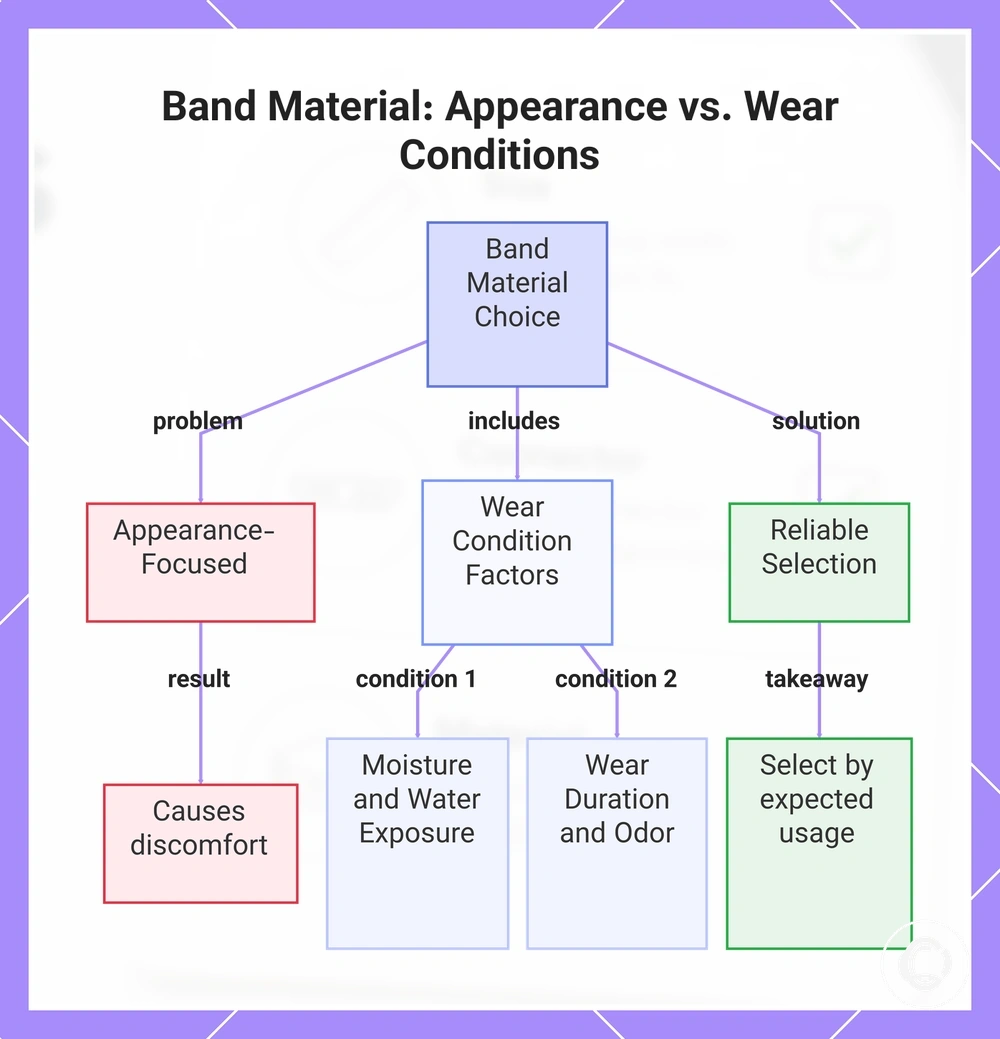
Choosing a smartwatch band material based only on appearance can lead to discomfort when actual wear conditions differ from expected use. A material that looks appealing may feel less suitable during exercise, long daily wear, sleep, water exposure or warm-weather use if its characteristics do not align with those conditions.
Wear conditions can influence comfort more than visual style alone. Sweat exposure, moisture, movement, temperature changes and wear duration may affect how a material feels against the skin throughout the day, which is why material selection is often more reliable when expected usage patterns are considered alongside appearance.
- Sweat exposure: Materials with different breathability and moisture-handling characteristics may feel different during workouts or extended activity.
- Water exposure: Drying behavior can influence how comfortable a band feels after contact with water or frequent moisture.
- Work environments: Flexibility, surface feel and overall comfort may affect wear experience during long periods of desk work or physical activity.
- Sleep tracking: Lighter or more flexible materials may feel different during overnight wear depending on individual comfort preferences.
- Long daily wear: Breathability, skin feel and moisture retention characteristics can become more noticeable as wear time increases.
- Odor tendency: Material structure and wear conditions may influence how easily a band retains moisture or develops lingering odors over time.
Appearance-focused decisions often overlook the relationship between material attributes and daily use conditions. A smartwatch band selected according to expected wear conditions, activity level and wear duration may provide a more consistent experience than a material chosen primarily for visual appeal.
This chart compares the pitfalls of choosing smartwatch band material by appearance with the more reliable approach of considering wear conditions, and shows key factors to evaluate.
Ignoring Sweat, Skin Sensitivity and Chemical-Safety Signals
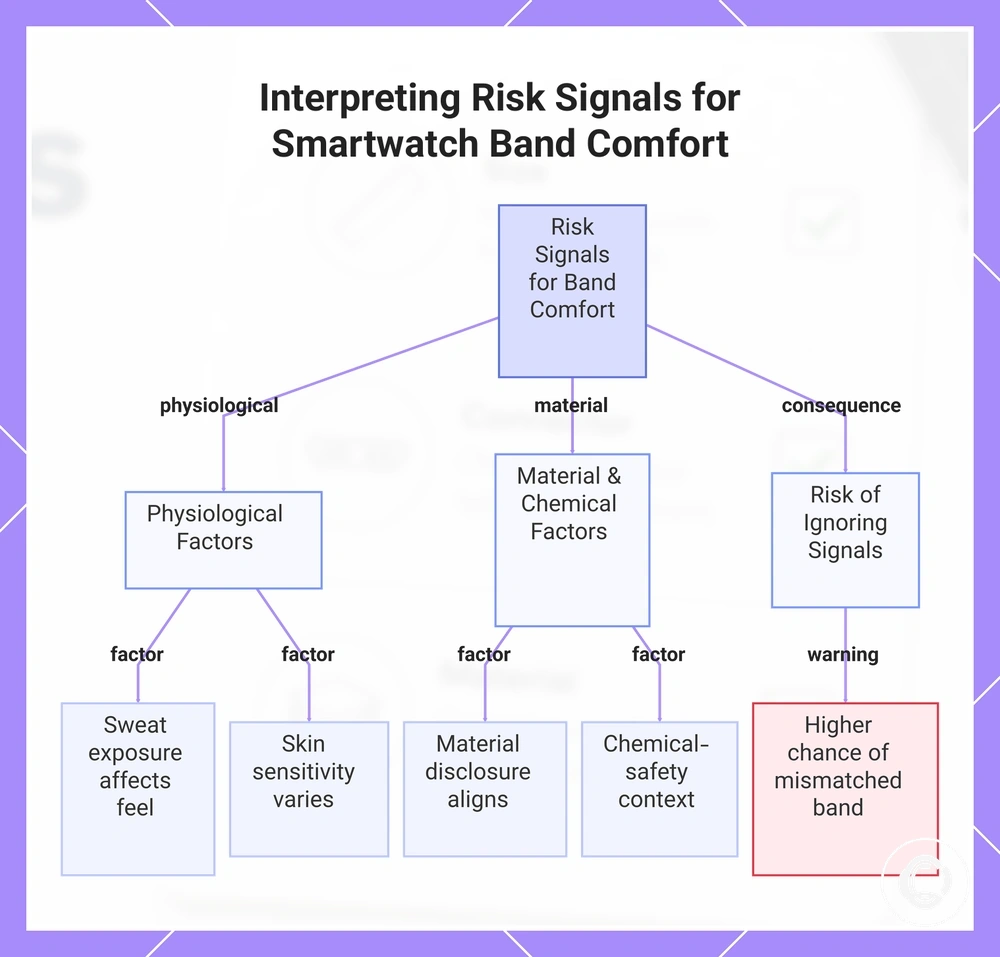
Sweat, skin sensitivity and chemical-safety concerns should be treated as potential risk signals rather than proof that a smartwatch band will cause discomfort or adverse reactions. Material suitability can vary by wearer, usage conditions and contact duration, which makes these factors more useful as evaluation criteria than as certainty-based conclusions.
Sweat exposure can influence how a smartwatch band feels during daily wear, exercise or warm-weather use. Moisture retention, airflow and surface texture may affect comfort over time, especially when a band remains in contact with the skin for extended periods.
Skin sensitivity can differ between individuals. A material that feels comfortable for one wearer may feel less comfortable for another depending on personal sensitivity, friction levels, cleaning habits and wear conditions. Comfort expectations should therefore remain conditional rather than assumed from material type alone.
- Material disclosure: Clear material information may help identify whether a band aligns with personal preferences or known sensitivities.
- Nickel exposure: Metal components can vary in composition, so material details may provide useful context when evaluating potential contact points.
- Ventilation: Band designs with different airflow characteristics may feel different during long wear periods or sweat-producing activities.
- Cleaning: Regular cleaning may help reduce the buildup of sweat, residue or debris that can affect wear comfort.
- Return flexibility: Flexible return options, when offered by a seller, may reduce purchase uncertainty if comfort expectations are not met.
- Chemical-safety signals: Material transparency, finish information and product details may provide additional context, but they should not be interpreted as medical or safety conclusions on their own.
Ignoring these signals can increase the likelihood of selecting a smartwatch band that appears suitable but does not align with the intended wear environment. Reviewing material information, comfort-related attributes and maintenance considerations can support a more informed replacement-band decision.
This chart shows how physiological and material factors serve as evaluation criteria rather than proof of discomfort, and the consequence of ignoring these signals.
Durability and Value Mistakes When Comparing Smartwatch Bands
Smartwatch band value depends on the relationship between price, durability, build quality and expected use intensity rather than purchase cost alone. A lower-priced band may suit occasional wear, while a higher-priced option may provide stronger long-term value when its construction aligns with usage demands.
Durability is often influenced by smaller components as much as visible materials. Pins, buckles, loops, stitching, coating quality and clasp mechanisms can affect how a smartwatch band performs during repeated use. When these attributes are overlooked, a band may appear cost-effective initially but require replacement sooner than expected.
Comparing value through durability rather than price alone can reduce common value mistakes. A more useful comparison is often whether the band's construction matches expected wear conditions, adjustment frequency and long-term usage patterns.
| Value Factor | What to Evaluate | Potential Mistake |
|---|---|---|
| Price | Initial purchase cost | Assuming lower cost always means better value |
| Build Quality | Overall construction and finishing | Focusing only on appearance |
| Pins and Hardware | Attachment and fastening components | Ignoring wear-prone connection points |
| Buckles and Clasps | Closure durability and adjustment use | Evaluating style without function |
| Loops and Stitching | Daily wear and retention features | Overlooking long-term wear areas |
| Coating and Finish | Surface condition during use | Assuming appearance reflects durability |
| Replacement Frequency | Expected replacement cycle | Ignoring long-term ownership considerations |
Use intensity can influence value outcomes. A smartwatch band used during frequent activity, regular adjustment or extended daily wear may place different demands on materials and hardware than a band worn occasionally. Durability expectations therefore depend on usage conditions as well as construction quality.
Evaluating price, build quality, hardware components, finishing details and expected replacement frequency together can provide a more balanced value assessment when comparing replacement smartwatch bands.
Buying the Cheapest Band Without Checking Build Quality
A smartwatch band with the lowest upfront price can become poor value when observable build quality is weak, because long-term usability often depends on construction details rather than cost alone. An affordable smartwatch band is not automatically a poor choice, but price should be evaluated alongside visible quality indicators.
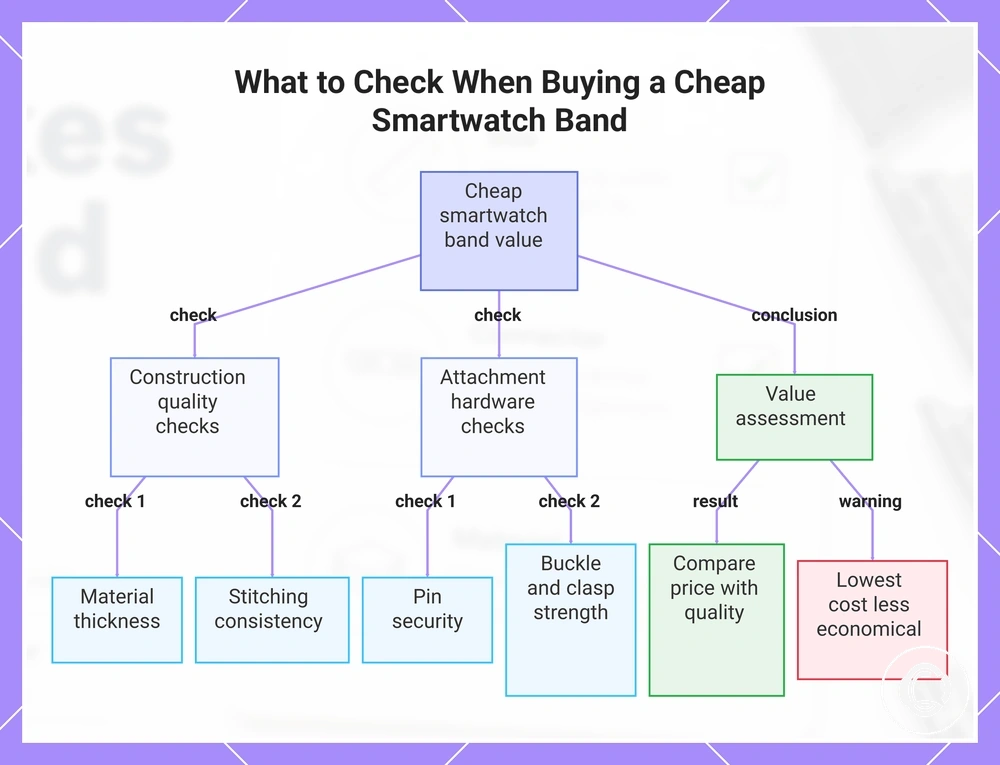
Build quality can often be assessed through material thickness, attachment construction, stitching consistency and overall hardware quality. When these attributes appear weak, a lower purchase price may be offset by earlier wear, reduced durability or more frequent replacement needs.
Attachment components are especially important because they experience repeated movement during daily use. Pins, buckles, loops and clasp mechanisms may affect how securely and consistently a smartwatch band performs over time. Weak hardware can reduce perceived value even when the band material appears acceptable.
Surface finishing is another factor that can influence value. Coatings and decorative finishes may change with regular wear, while the underlying construction quality often has a greater impact on long-term ownership experience. Appearance alone may not reflect overall durability.
- Material thickness: May influence resistance to repeated bending and daily wear.
- Stitching quality: Can indicate construction consistency and finishing attention.
- Pin security: May affect attachment reliability during normal use.
- Buckle and clasp strength: Can influence fastening stability and adjustment durability.
- Loop construction: May affect how securely excess strap length is retained.
- Coating quality: Can influence long-term appearance under regular wear conditions.
Comparing build quality alongside price can provide a more balanced value assessment. A well-constructed affordable smartwatch band may offer strong value, while the lowest-cost option may become less economical when construction quality, hardware durability or finishing quality are compromised.
This chart shows key build quality checks and the value trade-off when choosing a low-cost smartwatch band.
Overlooking Pins, Buckles, Loops and Strap-End Wear Points
Pins, buckles, loops, strap ends and other small hardware components can affect smartwatch band security and durability because these areas often experience repeated stress during daily wear. Visible hardware condition can provide useful purchase-risk signals, especially when wear points appear loose, weak or inconsistently finished.
Wear-point inspection is most useful when focused on components that a buyer can evaluate directly. Small hardware parts and stress areas may reveal construction quality, potential wear patterns and long-term durability expectations without requiring repair or installation assessment.
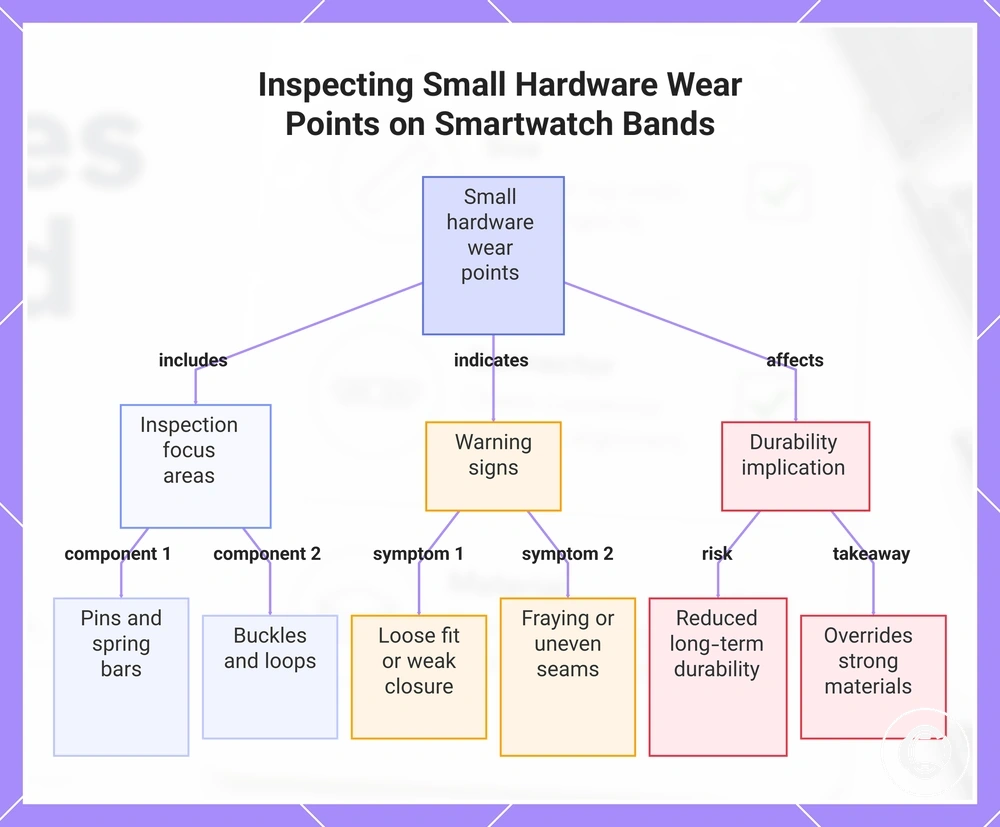
- Pins and spring bars: Loose fit, visible movement or weak construction may increase attachment-related wear risk.
- Buckles and clasp tension: Weak closure feel or inconsistent fastening may indicate reduced long-term durability.
- Loops and keepers: Loose, thin or poorly secured keepers may wear more quickly during frequent adjustment.
- Strap ends: Fraying, splitting, deformation or uneven finishing can indicate higher stress exposure at common wear points.
- Stitching: Uneven stitching, loose threads or inconsistent seams may signal weaker construction quality.
- Adapters: Visible gaps, movement or inconsistent alignment may indicate attachment-quality concerns.
- Stress points: Areas around bends, attachment zones and fastening points deserve closer inspection because repeated movement can concentrate wear.
Small hardware components should be evaluated as part of overall durability and value. Strong strap materials may offer less long-term benefit when pins, buckles, keepers or strap-end construction show visible warning signs, while well-finished wear points can support a more balanced value assessment.
This chart shows the key components to inspect and the warning signs that indicate reduced durability and security of a smartwatch band.
Final Checks Before Buying a Replacement Smartwatch Band
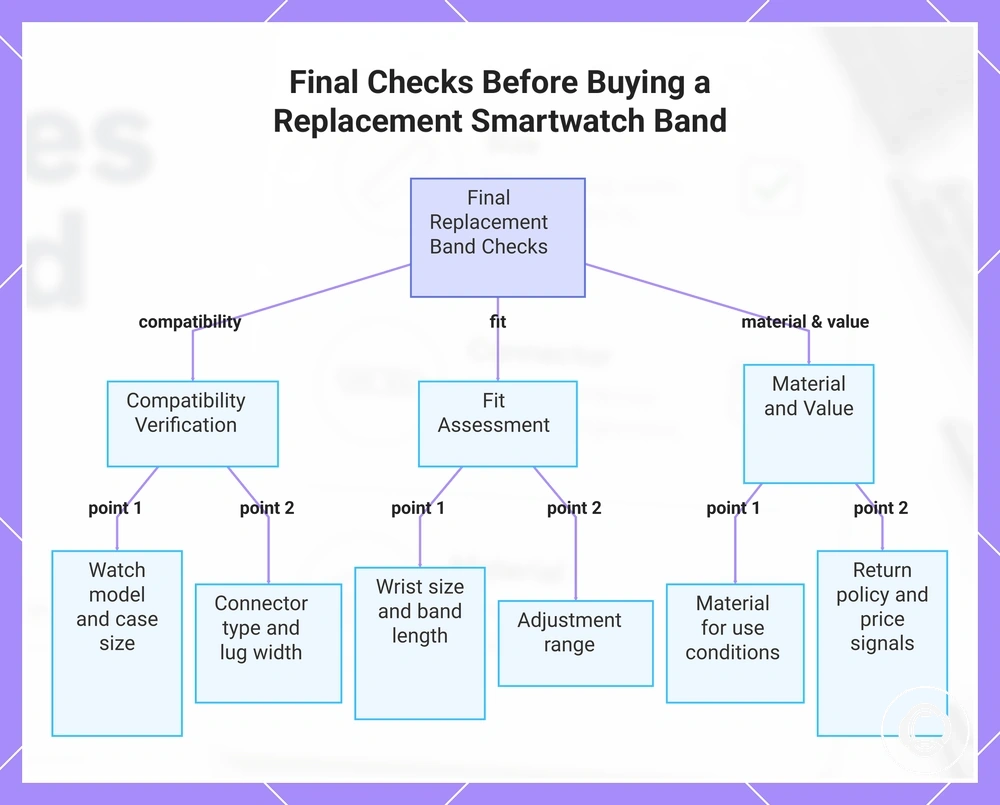
Final replacement smartwatch band selection depends on confirming fit, compatibility, comfort and value together rather than relying on a single specification. Before making a decision, verify that the band matches the watch connection requirements, suits the intended wrist size and aligns with expected daily use conditions.
A practical final review starts with compatibility. Check the watch model, case size, connector type and lug width to reduce the risk of selecting a band that appears suitable but may not match the watch attachment system. Compatibility assessment is usually more reliable when these attributes are evaluated together rather than individually.
Fit-related checks should focus on wrist size, band length and adjustment range. A compatible connector does not guarantee comfortable wear if the available adjustment positions do not align with the intended wrist size. Reviewing wearable dimensions alongside attachment requirements can provide a more complete sizing assessment.
Material selection should reflect expected use conditions, comfort preferences and skin-contact considerations. Sweat exposure, moisture, daily wear duration and activity level may influence how suitable a material feels over time. Material choice is often more dependable when practical wear conditions are considered alongside appearance.
- Watch model: Confirm the intended compatibility reference.
- Case size: Verify that case-related compatibility requirements have been checked.
- Connector type: Ensure the attachment system matches the watch.
- Lug width: Confirm the attachment width requirement where applicable.
- Wrist size: Check that the band suits the intended wrist dimensions.
- Adjustment range: Review available fastening positions for comfort and fit.
- Material: Consider wear conditions, comfort preferences and maintenance expectations.
- Return flexibility: Review available seller policies when uncertainty remains.
- Price-to-quality signals: Compare construction details, hardware quality and visible wear-point indicators rather than price alone.
For readers seeking a broader framework for choosing smartwatch bands, these final checks can help consolidate fit, compatibility, material and value considerations into a more informed replacement-band decision.
This chart shows the three main categories of final checks—compatibility, fit, and material & value—to help you confirm the right replacement smartwatch band.